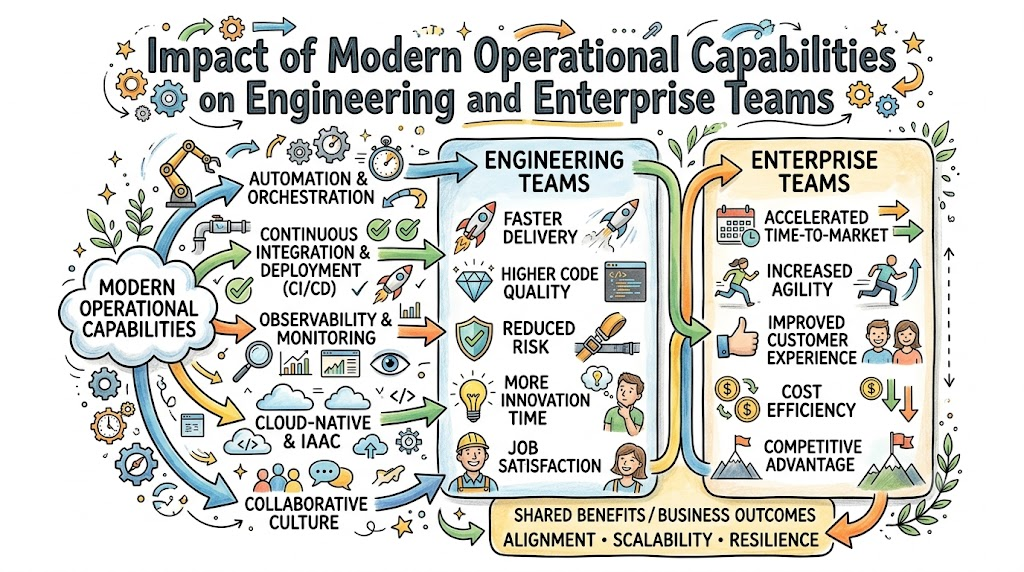
Traditional software delivery models often suffer from persistent friction between application developers and system administrators. Therefore, bridging this operational divide has become a primary objective for organizations striving to maintain competitive delivery speeds and system stability. By pursuing structured industry programs through DevOpsSchool, professionals acquire hands-on proficiency across continuous integration pipelines, automated infrastructure provisioning, and distributed monitoring workflows. Consequently, technical staff learn to eliminate cross-department bottlenecks and deliver reliable cloud services with precision.
Furthermore, engineering teams no longer evaluate software delivery merely by how fast code gets written. Instead, success hinges on how safely, frequently, and predictably software reaches end users. Thus, modern operational capabilities empower both development and infrastructure specialists to take collective ownership of applications throughout their entire operational lifespan.
When enterprises implement unified deployment mechanisms, operational errors drop while incident remediation times shrink dramatically. In turn, organizations establish resilient digital platforms that support rapid business growth without sacrificing platform availability or security compliance.
Strategic Value of Unified Operational Capabilities Across Modern Organizations
Software development without automated deployment workflows frequently produces configuration drift, unpredictable deployment delays, and unstable staging environments. However, establishing unified operational practices transforms software delivery into a standardized, predictable assembly line.
Developers write code while operations engineers configure dynamic environments programmatically. As a result, technical teams reduce delivery friction, uncover regressions earlier in the release cycle, and maintain consistent runtime behavior across development, testing, and production environments.
Core Architectural Foundations
+-------------------------------------------------------------------+
|               Modern Operational Delivery Lifecycle               |
+-------------------------------------------------------------------+
|  Code & Commit  -->  Continuous Integration  -->  Automated Test  |
|        |                     |                           |        |
|  Version Control      Artifact Building           Quality Scans   |
+-------------------------------------------------------------------+
|  Continuous Feedback <-- Observability  <-- Infrastructure as Code|
+-------------------------------------------------------------------+
Essential Competency Breakdown
- Automated Code Integration: Development teams merge application updates into shared repositories multiple times per day, immediately triggering automated test suites.
- Declarative Infrastructure Provisioning: Platform specialists define virtual networks, compute instances, and storage buckets using structured, version-controlled configuration templates.
- Continuous Staging and Verification: Delivery systems push validated builds into simulated staging clusters to catch edge-case configuration failures automatically.
- Proactive System Observability: Engineers collect telemetry metrics, application traces, and structured log streams to pinpoint system anomalies before end users experience outages.
Key Operational Concepts You Must Know
Managing modern production workloads requires a solid understanding of fundamental architectural principles that guarantee platform resilience and delivery velocity.
Version Control and Configuration Traceability
First, modern operations demand that every runtime configuration, container manifest, and pipeline definition live inside a centralized version control system. This single source of truth ensures that technical teams track every modification made to the production environment.
Moreover, version-controlled architectures facilitate rapid disaster recovery. Whenever an unintended defect enters the production environment, platform engineers roll back changes to a known stable state with a single commit reversal.
Automated Pipelines and Artifact Generation
Next, automated continuous integration engines eliminate manual build errors by packaging code into immutable release artifacts. By running unit tests, linting tools, and security scanners against every incoming pull request, teams catch system flaws immediately.
Additionally, continuous delivery engines automate the distribution of these artifacts across server clusters. Consequently, releases happen continuously without requiring late-night maintenance windows or prolonged service downtime.
Declarative Environments and Containerization
Furthermore, container technology isolates application binaries, dependencies, and environment variables into lightweight runtimes. This uniformity resolves inconsistencies between local developer workstations and multi-cloud production clusters.
Meanwhile, orchestration engines automatically balance containerized workloads across compute fleets to maintain service availability. When application traffic spikes unexpectedly, orchestration controllers spin up additional replicas automatically to absorb the load.
Platform Implementation vs. Culture — What’s the Real Difference?
Many enterprise organizations assume that purchasing licenses for modern tools guarantees operational efficiency. Nevertheless, platform automation yields poor results without an underlying shift in organizational mindset and communication.
| Dimension | Platform Implementation (Tooling) | Cultural Transformation (People & Mindset) |
|---|---|---|
| Core Objective | Automating build steps, cloud deployment, and system monitoring | Cultivating collective accountability, transparent feedback, and psychological safety |
| Primary Output | Scripted pipelines, container templates, observability dashboards | Blameless retrospective analysis, rapid cross-team alignment, continuous skill growth |
| Success Metric | Deployment frequency, change failure rate, server provisioning time | Mean time to recovery, employee retention, cross-functional collaboration scores |
| Handling Incidents | Auto-healing pods, alerting engineers, spinning up failover nodes | Conducting root-cause analyses, documenting learnings, eliminating systemic risk |
Building a Collaborative Culture
Implementing automated platforms produces instant tactical benefits, but sustained success requires collaborative accountability. When development and infrastructure teams share responsibility for runtime stability, software engineers design applications with operational constraints in mind from day one.
Simultaneously, infrastructure engineers shift from acting as gatekeepers to functioning as platform enablers. They provide developers with self-service provisioning environments, which eliminates bureaucratic handoffs and accelerates cycle times.
Real-World Use Cases of Modern Operations
Forward-thinking organizations across diverse industries leverage unified operational engineering to improve agility and platform reliability.
Digital Banking Platforms and Real-Time Settlements
Financial banking institutions must adhere to strict regulatory guidelines while processing hundreds of thousands of transactions per minute. Therefore, financial platform teams embed compliance checks and automated policy verification directly inside deployment workflows.
Every pipeline run checks code against data protection standards, vulnerability registries, and role-based access rules. Consequently, banking teams ship platform enhancements continuously while satisfying stringent auditing requirements.
Large-Scale Retail and E-Commerce Infrastructure
Major e-commerce retailers face volatile traffic spikes during seasonal shopping events. By adopting automated container autoscaling and infrastructure-as-code models, engineering teams provision elastic computing capacity dynamically in response to consumer demand.
Moreover, retail organizations execute canary deployments to expose new checkout workflows to small percentages of users before full rollout. Thus, teams validate payment flows safely without risking broad service disruptions during peak sales periods.
Telecommunications and Edge Network Orchestration
Telecommunications providers manage distributed workloads across thousands of edge sites to support ultra-low-latency applications. These organizations employ declarative configuration management to distribute firmware and microservice updates uniformly across remote nodes.
When network anomalies degrade localized services, automated traffic controllers reroute connections to operational edge nodes instantly. As a result, network customers experience uninterrupted service connectivity across distributed regions.
Common Mistakes in Operations Engineering
Even experienced engineering organizations encounter significant hurdles when transforming their delivery pipelines and infrastructure workflows.
- Treating Pipelines as Secondary Scripting Tasks: Writing unmaintained, monolithic pipeline scripts without version pinning or modular templates creates fragile delivery paths.
- Neglecting Telemetry and Distributed Tracing: Focusing heavily on build automation while ignoring metrics aggregation leaves teams blind during live production outages.
- Postponing Security Reviews to Pre-Production: Delaying code audits until deployment day introduces critical delivery bottlenecks and exposes systems to preventable vulnerabilities.
- Over-Engineering Platforms Prematurely: Implementing complex distributed service meshes before mastering basic container deployments increases cognitive load without delivering value.
- Preserving Siloed Departmental Incentives: Rewarding software developers solely for delivery speed while judging operations teams solely on platform uptime perpetuates organizational friction.
How to Become an Operations Expert — Career Roadmap
Transitioning into an advanced operational engineering role requires a systematic learning approach that spans software engineering, distributed systems, and modern platform architecture.
+--------------------------------------------------------------------+
|               Operational Mastery Career Progression               |
+--------------------------------------------------------------------+
|  Phase 1: Foundations  --> Linux Internals, Shell, Networking, Git |
|  Phase 2: CI/CD & Build--> Automated Testing, Artifact Generation  |
|  Phase 3: Containers   --> Docker Engine, Kubernetes Ecosystem     |
|  Phase 4: Cloud & IaC  --> Terraform, Cloud Providers, Governance  |
|  Phase 5: Reliability  --> Distributed Tracing, SRE, Chaos Testing |
+--------------------------------------------------------------------+
Structured Career Progression Milestones
- Operating System and Network Fundamentals: Gain an in-depth understanding of Linux process management, file permissions, TCP/IP network layers, and DNS routing architectures.
- Version Control and Pipeline Construction: Build automated pipelines using version-controlled configuration files to compile code, trigger unit tests, and store artifacts.
- Containerization and Cluster Management: Package distributed microservices into lean container images and deploy them across multi-node orchestration clusters.
- Declarative Cloud Infrastructure: Master declarative infrastructure provisioning tools to spin up cloud networks, managed databases, and load balancers programmatically.
- Reliability Engineering and Observability: Configure metric scrapers, distributed tracing agents, and alerting thresholds to analyze system health and conduct chaos experiments.
FAQ Section
- Why do software developers need operational skills today?Software developers need operational expertise to understand runtime constraints, configure reproducible test environments, and write resilient cloud-native applications.
- How do operational skills improve software delivery timelines?Operational automation replaces manual deployments and gatekeeping approvals with continuous, automated testing pipelines that deliver code to production rapidly.
- What is the difference between platform engineering and site reliability engineering?Platform engineering focuses on building self-service delivery platforms for developers, whereas site reliability engineering emphasizes operational uptime, incident response, and latency metrics.
- Can smaller engineering teams benefit from adopting these operational methods?Yes, smaller engineering teams benefit substantially because automation eliminates repetitive manual administrative tasks, enabling lean teams to support complex cloud services easily.
- Which programming language should platform engineers prioritize first?Python and Go represent the top choices for platform engineers due to their extensive native support across cloud provider APIs and container orchestration tooling.
Final Summary
Acquiring modern operational skills is no longer optional for organizations striving to maintain high software delivery velocity and platform reliability. By unifying development velocity with automated operational controls, engineering teams eliminate deployment risks and accelerate time to market.
Moreover, combining declarative infrastructure with a culture of transparency ensures that teams respond swiftly to production incidents while continually strengthening platform resilience. Embracing these core practices empowers software and IT teams to build robust, scalable platforms that deliver lasting business impact.
Leave a Reply