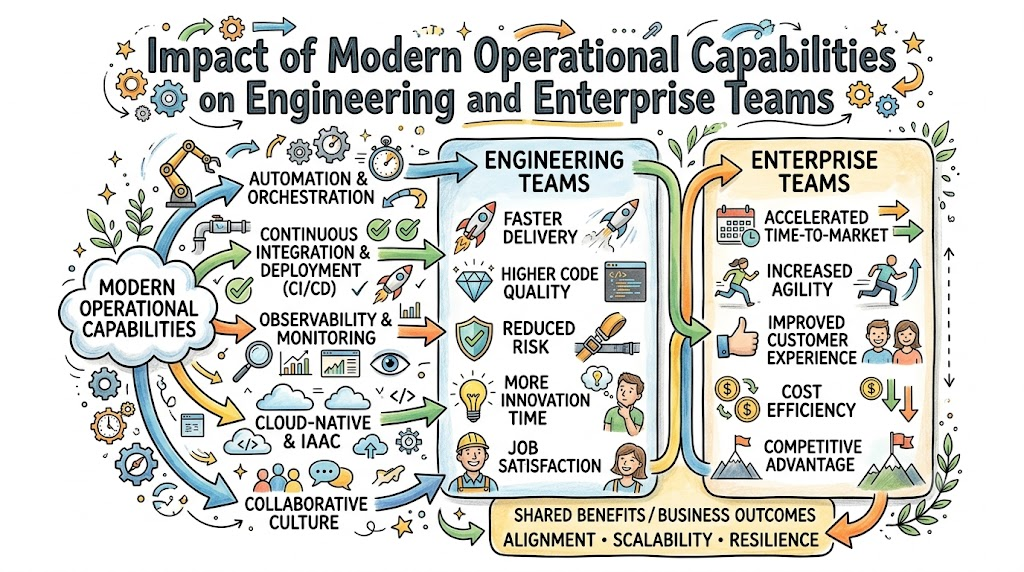
Tag: #InfrastructureAsCode

  • Empowering Industry Professionals to Master Scaled Cloud Systems and DevOps Engineering

    Modern enterprise engineering requires professionals to deliver software rapidly while maintaining absolute infrastructure stability across distributed environments. Consequently, technical teams face immense pressure to replace obsolete deployment practices with automated, resilient delivery workflows. By turning to industry-grade platforms such as DevOpsSchool, aspiring engineers and senior practitioners acquire practical competencies across containerization, continuous delivery pipelines, and cloud orchestration. This structured immersion transforms traditional sysadmins and software developers into confident architects capable of navigating intricate production ecosystems.

    Today, enterprise platforms demand continuous agility rather than sporadic quarterly release cycles. Organizations therefore seek practitioners who understand automated governance, resilient multi-cloud architectures, and zero-downtime release strategies. As technical stacks grow increasingly distributed, engineers who bridge the divide between rapid development and operational resilience become indispensable assets.

    Furthermore, acquiring these skills requires immersive, hands-on experimentation rather than passive theoretical study. When engineers configure real infrastructure environments, debug failing automated builds, and remediate production bottlenecks, they cultivate practical problem-solving capabilities that directly serve enterprise digital transformation initiatives.

    Overcoming the Industry Technical Competency Divide

    Enterprise technology stacks have evolved dramatically over the last decade, leaving many IT departments struggling with critical skill shortages. Consequently, traditional infrastructure teams often struggle to manage declarative cloud platforms and automated testing frameworks.

    Meanwhile, software developers frequently lack deep visibility into container networking, Linux kernel parameters, and production runtime diagnostics. This knowledge asymmetry creates delivery friction, prolonged maintenance windows, and avoidable service interruptions during major releases.

    The Practitioner-Driven Learning Paradigm

    Engineers master distributed systems most effectively when they learn directly from active industry practitioners who manage production systems daily. Therefore, practical mentoring focuses on genuine production architectural designs rather than contrived academic exercises.

    +-------------------------------------------------------------------------+
    |                  Enterprise Competency Acceleration Engine              |
    +-------------------------------------------------------------------------+
    |  Real-World Scenarios   -->  Automated Feedback   -->  Production Labs  |
    |          |                            |                         |       |
    |  Live Troubleshooting         Pipeline Validation      Cloud Staging    |
    +-------------------------------------------------------------------------+
    |  Continuous Mentoring   <--  Architecture Design  <-- Multi-Cloud IaC   |
    +-------------------------------------------------------------------------+
    

    Moreover, hands-on lab environments allow learners to trigger controlled failures safely. By diagnosing split-brain cluster states, broken continuous integration configurations, and network timeouts, engineers develop the composure necessary to manage mission-critical enterprise outages.

    Strategic Skill Pillars for Enterprise Engineering

    • Collaborative Automation: Engineers integrate version control mechanisms with automated validation test suites to accelerate release velocity.
    • Declarative Orchestration: System specialists model container fleets and service meshes using programmatic configuration files.
    • Continuous Security Integration: Platform architects embed static code analysis, vulnerability scanning, and secret management directly inside delivery pipelines.
    • Dynamic Cloud Provisioning: Teams deploy multi-cloud infrastructure dynamically through reusable code templates rather than manual dashboard clicks.

    Key Operational Concepts You Must Know

    Navigating modern infrastructure environments requires a thorough grasp of fundamental architectural principles that govern high-availability distributed systems.

    Version Control and Trunk-Based Delivery

    First, distributed version control serves as the single immutable source of truth for both application logic and infrastructure definitions. Consequently, modern platform teams avoid long-lived feature branches, choosing trunk-based development strategies instead.

    This discipline forces developers to merge incremental updates into a shared mainline branch multiple times per day. As a result, automated integration engines test small increments immediately, which dramatically reduces merge conflicts and identifies regressions early.

    Continuous Integration and Continuous Delivery Frameworks

    Next, continuous integration engines eliminate manual build bottlenecks by compiling code, executing automated test suites, and creating container artifacts automatically. Whenever an engineer submits a pull request, the pipeline triggers rigorous quality gates.

    Furthermore, continuous delivery platforms automate deployment into staging and production clusters via canary or blue-green patterns. Hence, deployment risk drops significantly because teams test application health against real production traffic before completing full rollouts.

    Declarative Infrastructure as Code

    Additionally, provisioning cloud infrastructure through graphical web consoles creates drift, documentation gaps, and security oversights. Conversely, declarative Infrastructure as Code allows teams to define virtual networks, compute instances, and database clusters programmatically.

    +---------------------------------------------------------------------+
    |                      Declarative IaC Lifecycle                      |
    +---------------------------------------------------------------------+
    |  1. Author Template   -->  Version Control Commit (Git)             |
    |  2. Automated Review  -->  Spec Validation & Security Scanning      |
    |  3. Execution Plan    -->  Dry-Run State Diff Verification          |
    |  4. Cloud Apply       -->  Automated Provisioning (Zero Manual GUI) |
    |  5. State Tracking    -->  Continuous Drift Detection & Healing     |
    +---------------------------------------------------------------------+
    

    Consequently, operations teams treat infrastructure templates with the same engineering rigor as application software. Version-controlled repositories store these templates, enabling immediate disaster recovery and identical environment provisioning across multiple geographic cloud regions.

    Deep Observability and Distributed Tracing

    Moreover, modern microservices architectures render traditional server-level monitoring checks obsolete. Instead, engineering teams depend on telemetry pillars consisting of structured metrics, centralized logs, and distributed traces.

    Distributed tracing tracks individual user requests as they traverse dozens of containerized microservices across cloud boundaries. Accordingly, when latency spikes occur, on-call engineers pinpoint the exact failing database query or slow third-party API call within seconds.

    Platform Implementation vs. Culture — What’s the Real Difference?

    Many organizations mistakenly believe that purchasing modern software subscriptions and adopting container platforms automatically guarantees operational success. Nevertheless, technical tooling yields minimal value if organizational habits remain siloed and adversarial.

    Operational DimensionPlatform Implementation (Tools & Code)Cultural Transformation (Mindset & Habits)
    Primary FocusAutomation pipelines, Kubernetes clusters, cloud APIsEmpathy, cross-functional collaboration, psychological safety
    Core DeliverableDeployment manifests, telemetry dashboards, scriptsShared operational ownership, transparent communication, blameless reviews
    Performance MetricPipeline execution speed, deployment frequency, cluster densityMean time to recovery, change failure rate, engineer retention
    Approach to OutagesAutomated failovers, container restarts, threshold alertsRoot-cause analysis, system resilience learning, preventive engineering
    Execution StyleScripted automation and programmatic infrastructureContinuous feedback, collaborative problem solving, proactive support

    The Mechanics of Platform Engineering

    Platform implementation supplies the tangible technical machinery that automates repetitive administrative duties. For instance, platform engineers design internal developer portals that allow product developers to spin up compliant testing environments independently.

    Therefore, automated platforms remove ticketing queues and eliminate administrative gatekeeping. This self-service automation accelerates delivery timelines and frees operations specialists from handling mundane server provisioning requests.

    The Supremacy of Cultural Collaboration

    Nevertheless, organizational culture determines how teams use these automated systems when complex production challenges arise. In a blame-heavy workplace, engineers hide mistakes, postpone releases out of fear, and resist taking ownership of production reliability.

    Conversely, a mature operational culture celebrates transparency and encourages blameless incident post-mortems. When production outages happen, the organization examines systemic architectural flaws rather than punishing individual contributors. Consequently, psychological safety flourishes, driving sustained technical innovation across the entire company.

    Real-World Use Cases of Modern Operations

    Leading global organizations apply these technical workflows to handle demanding scale, stringent compliance mandates, and high-frequency deployment demands.

    FinTech High-Volume Payment Processing

    Financial technology institutions handle millions of transactional updates daily while adhering strictly to international data security mandates. Accordingly, engineering teams embed automated compliance verifications directly inside continuous integration pipelines.

    Before any service artifact deploys to production, security linters scan dependencies for known vulnerabilities, verify cryptographic signatures, and audit access control configurations. Thus, financial platforms deploy feature updates continuously while meeting demanding security governance guidelines.

    E-Commerce Elasticity During Global Flash Sales

    During seasonal sales events, global e-commerce websites experience unpredictable, massive traffic surges. Using horizontal pod autoscalers and dynamic cloud infrastructure groups, these platforms scale microservices dynamically in response to incoming request queues.

    +--------------------------------------------------------------------+
    |                Dynamic Cloud Elasticity Architecture               |
    +--------------------------------------------------------------------+
    |  Incoming Traffic Surge --> Load Balancer Telemetry Evaluator       |
    |                                    |                               |
    |                         Autoscaling Trigger                        |
    |                                    |                               |
    |           +------------------------+------------------------+      |
    |           |                                                 |      |
    |   Worker Pod Replicas Spawn                Cloud Compute Nodes Join|
    |   (Scale: 10 -> 250 Units)                 (Capacity Multiplies)   |
    +--------------------------------------------------------------------+
    

    Furthermore, automated traffic routing channels isolate failing third-party payment gateways smoothly, ensuring the core shopping catalog remains responsive. Hence, digital retailers maintain revenue throughput and deliver responsive user experiences during peak demand.

    Autonomous Fleet Telematics and Edge Computing

    Autonomous mobility platforms collect gigabytes of continuous telemetry from thousands of connected vehicles simultaneously. Operations teams deploy containerized edge computation nodes to parse sensor readings locally before transmitting aggregated summaries back to central cloud repositories.

    Consequently, edge nodes filter out redundant sensor data locally, conserving substantial network bandwidth costs. Meanwhile, centralized infrastructure pipelines push firmware and algorithm updates safely to remote vehicle edge nodes using progressive rollout strategies.

    Common Mistakes in Operations Engineering

    Even highly experienced infrastructure teams occasionally adopt counterproductive practices that create technical debt and destabilize production environments.

    • Treating Infrastructure Code as Ad-Hoc Scripts: Engineers often author shell scripts lacking parameterization, automated linting, or modular structure, creating unmaintainable infrastructure spaghetti.
    • Adopting Overly Complex Stacks Prematurely: Implementing multi-region service meshes and distributed key-value stores for basic applications introduces unneeded operational overhead without clear justification.
    • Neglecting Telemetry and Actionable Alerting: Configuring hundreds of noisy metric alerts causes alert fatigue, leading exhausted engineers to ignore critical production warnings during genuine outages.
    • Postponing Security Validation to Late Release Stages: Isolating security evaluations to the end of development cycles generates friction, triggering severe deployment delays and costly refactoring.
    • Ignoring Cloud FinOps and Resource Optimization: Failing to configure container resource limits and clean up orphaned cloud storage buckets causes runaway monthly cloud infrastructure expenditures.

    How to Become an Operations Expert — Career Roadmap

    Transitioning into an advanced operational engineering role demands a deliberate, progressive learning path covering systems programming, automated infrastructure, and resilience design.

    +-------------------------------------------------------------------------+
    |                  Operations Expertise Mastery Roadmap                   |
    +-------------------------------------------------------------------------+
    |  Tier 1: Foundations     --> Linux Internals, Bash Scripting, Networking|
    |  Tier 2: Versioning & CI --> Git Flow, Pipeline Architecture, Automation|
    |  Tier 3: Containers      --> Docker Packaging, Kubernetes Orchestration |
    |  Tier 4: Cloud & IaC     --> Declarative Provisioning, Multi-Cloud APIs |
    |  Tier 5: SRE & Chaos     --> Observability, SLOs, Chaos Engineering     |
    +-------------------------------------------------------------------------+
    

    Progressive Engineering Milestones

    1. Operating System and Network Fundamentals: Master core Linux system administration concepts, including file permissions, systemd service lifecycle management, kernel performance tuning, and TCP/IP networking primitives.
    2. Automated Continuous Integration Pipelines: Design automated testing pipelines that validate source code, execute security checks, and assemble production-ready binary artifacts automatically upon every commit.
    3. Container Packaging and Cluster Orchestration: Containerize complex multi-tiered applications using optimized container images, then manage clustered workloads using production container orchestrators.
    4. Declarative Cloud Architecture and Policy Enforcement: Construct reusable infrastructure definitions to manage cloud compute, storage, and networking layers programmatically, while enforcing automated policy-as-code guardrails.
    5. Site Reliability Engineering and Fault Injection: Define Service Level Objectives (SLOs) and Error Budgets, and implement proactive chaos engineering tests to validate system self-healing capabilities before catastrophic outages occur.

    Strategic Role Pathways and Focus Areas

    • Cloud Infrastructure Architect: Specializes in multi-cloud network topologies, enterprise identity federation, and automated disaster recovery architectures across hybrid environments.
    • Site Reliability Engineer: Focuses on distributed tracing, automated incident mitigation, platform availability metrics, and proactive failure-injection testing.
    • DevSecOps Specialist: Implements static and dynamic code vulnerability analysis, container runtime security, automated secret management, and regulatory compliance validation.
    • Platform Experience Engineer: Builds internal developer portals, golden deployment paths, and self-service automation tooling to enhance developer productivity across the organization.

    FAQ Section

    1. What foundational competencies should an engineer build before pursuing platform automation?Engineers should first gain practical fluency in Linux operating systems, basic networking protocols, version control workflows using Git, and a scripting language such as Python or Go.
    2. How does platform automation differ from legacy system administration?Legacy systems administrators manage hardware and server installations through manual interventions, whereas modern platform engineers design programmatic software solutions that automate dynamic cloud infrastructure.
    3. Why do organizations emphasize container orchestration over conventional virtual machines?Containers share the host operating system kernel, making them significantly lighter, faster to launch, and more resource-efficient than traditional virtual machines while guaranteeing environment consistency.
    4. What role does Site Reliability Engineering play alongside continuous delivery pipelines?Site Reliability Engineering provides the operational metrics, availability targets, and resilience engineering practices that ensure continuous delivery pipelines release software without degrading production stability.
    5. How can engineering teams prevent cloud cost overruns when adopting automated provisioning?Teams should implement strict resource quotas, configure automated schedule policies for non-production environments, tag all cloud resources systematically, and monitor expenditures using automated FinOps dashboards.
    6. How long does it take for an IT professional to become proficient in modern operational tools?Dedicated engineers typically require six to nine months of consistent, hands-on lab work and project building to acquire production-grade operational proficiency across the entire ecosystem.

    Final Summary

    Modern software delivery demands speed, technical precision, and unbreakable operational stability across complex cloud environments. By mastering version control, continuous integration pipelines, container orchestration, and declarative infrastructure code, technical professionals unlock transformative career growth.

    Furthermore, integrating advanced automation platforms with a healthy, blameless engineering culture ensures organizations innovate rapidly while maintaining superior platform reliability. Immersive, hands-on practice remains the single most effective way to internalize these capabilities. Commit to practical experimentation, build end-to-end delivery systems, and lead the future of modern enterprise engineering.

  • Empowering Modern Engineering Teams Through Resilient Cloud Infrastructure and Automation

    Introduction

    Engineering organizations achieve market dominance when they master rapid delivery, platform resilience, and continuous modernization. Outdated delivery routines and unstable infrastructure drain engineering resources while frustrating end users. Many enterprises discover that simply purchasing trendy developer platforms fails to eliminate structural delivery friction. Sustainable speed requires businesses to restructure operational habits, automate manual chores, and cultivate a disciplined reliability mindset.

    Specialized platform partners guide technology departments as they construct scalable, self-healing software environments. Adopting modern engineering frameworks enables product teams to slash deployment cycles from multiple weeks to a few minutes while elevating baseline service performance.

    Realizing Measurable Business Value Through Automated DevOps Workflows

    DevOps unifies software developers and system administrators into a cohesive, high-velocity delivery engine. Breaking down traditional departmental silos empowers teams to release creative software features without compromising live system availability. Automated compilation runs, standardized test suites, and continuous delivery pipelines permanently replace risky manual handoffs.

    As an immediate outcome, technology executives observe lower defect rates and fewer unexpected outages. Fast feedback loops allow product managers to test new commercial features against real user behavior without delay. Furthermore, automated policy verifiers ensure that cloud environments continuously satisfy strict compliance baselines without slowing feature throughput.

    Understanding the Industry-Wide Transition Toward Continuous Delivery

    Fast-moving technology startups pressure traditional enterprises daily by shipping software enhancements continuously. Outdated development practices that rely on disconnected teams and bureaucratic gatekeeping cannot match modern market demands. Industry research confirms that elite delivery organizations experience vastly lower release failure rates and recover from unexpected outages in a fraction of the time.

    Delivery Performance AreaLegacy Siloed FrameworkModern High-Velocity Architecture
    Release FrequencyTeams ship monthly or quarterlyEngineers deploy updates multiple times per day
    Change Failure RateExceeds 25% of production releasesRemains well under 5% across releases
    Mean Time to RecoveryRequires hours or days of triageRestores healthy service within minutes

    Therefore, adopting automated delivery methodologies represents an indispensable commercial strategy rather than a trivial technical tweak.

    Accelerating Modernization Through Strategic DevOps Consulting Services

    Modernizing legacy delivery pipelines often confronts internal teams with thorny architectural trade-offs. Targeted DevOps Consulting Services provide the technical leadership necessary to guide engineering organizations through complex platform overhauls. Veteran consultants pinpoint hidden bottlenecks across existing value streams, dismantle redundant manual review gates, and construct reliable delivery automation.

    During a recent infrastructure modernization initiative, a global payment processor cut release turnaround from forty-five days to thirty minutes after introducing container standards and automated deployment pipelines alongside dedicated technical advisors.

    Maximizing Efficiency With Managed DevOps Services for Growing Teams

    Software teams quickly suffer burnout when leadership forces them to divide attention between customer feature development and around-the-clock server maintenance. Comprehensive Managed DevOps Services solve this dilemma by assuming operational responsibility for infrastructure health, cluster maintenance, pipeline reliability, and incident escalation.

    • High-Growth Startups: Implement mature platform foundations immediately without recruiting hard-to-find senior infrastructure specialists.
    • Mid-Market Software Companies: Enable internal developers to dedicate their entire focus to core software development.
    • Global Cloud Fleets: Guarantee uniform security policies and continuous patching routines across hundreds of cloud accounts.

    Consequently, delegating operational duties stabilizes infrastructure spending and protects developer productivity.

    Harnessing Cloud Computing to Redefine Modern Software Architecture

    Programmable cloud infrastructure frees technology groups from the slow purchasing cycles of physical server facilities. Rather than waiting on manual hardware provisioning, software engineers launch comprehensive virtual platforms in seconds using declarative scripts. Dynamic resources allow enterprise systems to absorb dramatic user spikes effortlessly and release unused capacity during off-peak periods to curb expenses.

    In addition, modern cloud environments facilitate loosely coupled microservice designs, allowing separate product squads to push discrete updates independently. Leveraging programmable cloud infrastructure converts static hardware from an expensive liability into a flexible agility catalyst.

    Securing Scalability and Governance Through Cloud Consulting Services

    Deploying complex cloud architectures without mature governance leads to runaway expenses, over-privileged access accounts, and fragile infrastructure. Professional Cloud Consulting Services direct enterprise leadership toward building resilient, cost-effective architectures across AWS, Microsoft Azure, and Google Cloud Platform. Seasoned consultants define immutable infrastructure configurations, enforce centralized billing transparency, and apply strict identity controls.

    Veteran platform architects frequently emphasize that expanding cloud footprints without clear blueprints merely multiplies technical debt. Partnering with specialized cloud consultants ensures that engineering teams build secure, scalable foundations from the initial deployment.

    Executing Seamless Transitions With Proven Cloud Migration Services

    Migrating monolithic enterprise workloads into cloud environments without careful planning drives up infrastructure costs and causes performance regressions. Engineering leaders must evaluate and categorize legacy portfolios using proven migration strategies: Rehost, Refactor, Replatform, or Retain.

    • Audit Application Dependencies: Map complex backend connections and shared databases before planning production cutovers.
    • Establish Secure Networking: Configure private subnets, dedicated interconnects, and resilient transit routing networks.
    • Model Operational Expenses: Forecast active data transfer fees, storage retention costs, and compute instances accurately.

    Deploying focused Cloud Migration Services guarantees that legacy enterprise systems move smoothly into the cloud without disrupting business continuity.

    Orchestrating Scalable Distributed Applications Using Containerization and Kubernetes

    Containers package application binaries alongside their runtime dependencies, ensuring that software behaves identically across developer workstations and production servers. Managing thousands of ephemeral microservice containers by hand, however, invites operational disaster. Kubernetes solves this distribution puzzle by orchestrating workload schedules, self-healing failed instances, routing ingress traffic, and optimizing hardware consumption across compute fleets.

    Because of this automated orchestration, Kubernetes operates as the universal foundation for distributed cloud computing. Engineering teams deploy resilient platforms that automatically replace failing containers and distribute heavy user traffic across active instances.

    Solving Complex Container Management Challenges With Kubernetes Consulting Services

    Running production-grade Kubernetes clusters demands deep familiarity with container network plugins, ingress controllers, persistent storage drivers, and access protocols. Knowledgeable Kubernetes Consulting Services assist engineering departments in deploying, securing, and tuning platforms like Amazon EKS, Azure AKS, and Google Cloud GKE.

    Specialists help teams configure automated pod scaling, introduce service meshes, and implement zero-trust network boundaries. Partnering with container specialists helps teams avoid painful production outages and lets engineers consume container infrastructure without wrestling with complex cluster internals.

    Embedding Proactive Security Controls Through DevSecOps Consulting Services

    Old security practices operated as an adversarial bottleneck at the end of the release cycle, sparking panic fixes and delayed launches. In contrast, modern DevSecOps Consulting Services inject security controls directly into routine coding activities. Automated scanners evaluate code bases, third-party libraries, and container configurations the moment a developer submits a pull request.

    Moving security analysis into earlier development phases allows engineers to remediate flaws while the code context remains fresh in their minds. Thus, weaving automated security gates directly into daily delivery workflows protects critical corporate assets while maintaining rapid development velocity.

    Eliminating Delivery Bottlenecks Through Automated DevSecOps Governance

    Manual compliance reviews cannot match the pace of top-tier engineering organizations that push software updates continuously. Human reviews create severe backlogs, tempting software squads to bypass security gates to satisfy launch deadlines. Automated vulnerability scanners remove this friction by checking application code, open-source libraries, and server configurations against real-time threat registries.

    Static analysis engines inspect infrastructure templates before technicians ever provision live resources. Relying on automated policy engines enables organizations to enforce compliance baselines continuously without subjecting developers to tedious manual audits.

    Guaranteeing System Availability and Performance With SRE Consulting Services

    Site Reliability Engineering treats operations as an engineering problem that software solutions can resolve. Incorporating SRE Consulting Services redirects engineering teams away from unrealistic uptime goals toward mathematically grounded Service Level Indicators (SLIs) and Service Level Objectives (SLOs).

    Product teams manage error budgets to strike a healthy balance between rapid feature releases and continuous system availability. When an outage consumes the allocated error budget, developers pause risky updates and focus on hardening system foundations. Embracing SRE principles safeguards digital user experiences, enhances brand loyalty, and protects corporate revenue.

    Diagnosing Microservice Health Using Full-Stack Observability Solutions

    Simple server uptime monitors cannot provide meaningful visibility into distributed modern microservices. Engineering teams require unified telemetry platforms that synthesize distributed execution traces, application logs, and system metrics inside a central interface. Deep observability enables platform engineers to pinpoint intermittent database delays and network timeouts across sprawling clusters.

    Consequently, operations teams reduce mean time to resolution during critical production incidents. Developers track requests through complex microservice topologies effortlessly, fixing latent bugs before isolated glitches disrupt user workflows.

    Streamlining Internal Workflows Through Platform Engineering Consulting Services

    Modern distributed cloud environments impose immense cognitive strain on application engineers. Developers squander valuable hours writing infrastructure declarations and troubleshooting broken delivery pipelines instead of creating business value. Strategic Platform Engineering Consulting Services solve this challenge by building Internal Developer Platforms (IDPs).

    Platform engineering teams treat their internal tooling as an intuitive product that empowers internal software engineers. Giving developers self-service access to cloud environments reduces context switching, ensures operational consistency, and boosts overall engineering throughput.

    Empowering Developers Using Standardized Golden Paths and Self-Service

    Golden paths provide supported, thoroughly documented templates that allow software engineers to deploy new application services safely and independently. Instead of designing continuous delivery workflows from scratch, developers choose curated starter templates loaded with pre-configured security guardrails, test runners, and deployment routines.

    • Effortless Team Onboarding: Software developers provision production-ready microservices in minutes through clear self-service portals.
    • Standardized Infrastructure Blueprints: Service manifests adopt company-wide security standards, monitoring agents, and logging configurations by default.
    • Preserved Engineering Autonomy: Teams retain the freedom to customize configurations for unusual edge cases while standard paths remain the easiest choice.

    Curated workflows relieve developers from repetitive infrastructure plumbing while guaranteeing consistent operational standards across the whole enterprise.

    Building High-Impact Internal Talent Using Corporate DevOps Training

    Purchasing modern developer platforms fails to yield business results when technical personnel lack the skills to operate them effectively. Structured Corporate DevOps Training eliminates knowledge deficits across developer, operations, and security departments.

    Practical training programs build hands-on mastery in declarative infrastructure code, pipeline scripting, container orchestration, and reliability concepts. Furthermore, shared learning builds common communication habits across disparate departments, removing old organizational barriers. Upskilling existing engineers boosts workplace retention and creates a resilient engineering culture that drives technical innovation.

    Harmonizing Cloud, Kubernetes, Automation, and Reliability Disciplines

    Modern software engineering triumphs when organizations harmonize complementary practices into an integrated platform vision. Elastic cloud environments supply on-demand computing capacity, which Kubernetes organizes into robust container clusters. DevOps pipelines deliver automated code changes to these container clusters smoothly. Concurrently, SRE frameworks maintain system uptime through proactive monitoring and automated failovers.

    Combined, these operational disciplines form a resilient launchpad for enterprise growth. Organizations that master these interconnected disciplines consistently outperform their industry rivals in deployment velocity, platform resilience, and overall product quality.

    Overcoming Common Roadblocks During Large-Scale Technical Transformations

    Cultural inertia and entrenched operational silos present the most difficult roadblocks to successful organizational transformation. Departmental managers often defend territory, while application developers may treat security reviews as frustrating barriers. Uncontrolled tool adoption also creates friction when independent teams implement incompatible software without central technical alignment.

    Furthermore, launching an operational reorganization without sustained executive sponsorship leaves engineering teams without the time needed to fix technical debt. Overcoming these hurdles requires empathetic leadership, transparent communication, and steady incremental achievements that prove tangible business value to executive stakeholders.

    Tracking Measurable Success Through Industry-Standard DORA Metrics

    Measuring the genuine return on engineering investments demands objective, data-driven telemetry. The DORA metric system provides a clear, reliable standard for evaluating release velocity and operational resilience:

    Metric IndicatorPerformance Gap in Legacy TeamsElite Delivery Capabilities
    Deployment CadenceReleases occur once a month or lessDeployments run several times daily
    Commit Lead TimeSpans more than one monthCompletes within an hour
    Change Failure RateExceeds 25% across pushesRemains under 5% consistently
    Restoration SpeedRequires days of manual interventionResolves automatically in minutes

    Monitoring these primary indicators exposes delivery friction clearly, enabling technology executives to guide engineering investments with precision.

    Formulating a Five-Stage Practical Enterprise Modernization Roadmap

    Attaining lasting engineering transformation demands an incremental platform strategy rather than an abrupt, risky overhaul. Technology leaders must craft rollout initiatives that eliminate immediate operational headaches while methodically building foundational technical capabilities.

    1. Phase One (Foundations): Unify source version control, centralize artifact repositories, and implement automated build and test pipelines.
    2. Phase Two (Infrastructure as Code): Provision server environments using declarative templates, eliminating manual infrastructure changes.
    3. Phase Three (Container Adoption): Package application services into containers and run them on managed Kubernetes clusters to achieve consistent behavior.
    4. Phase Four (Reliability & Security Integration): Embed vulnerability analyzers into delivery pipelines, define service level objectives, and launch unified telemetry dashboards.
    5. Phase Five (Developer Platforms): Build an internal developer platform with clear golden paths that let engineers deploy microservices independently.

    Executing an incremental delivery roadmap guarantees continuous progress, controls delivery risk, and maintains high engineering velocity throughout the journey.

    Accelerating Engineering Velocity Through Specialized DevOps Outsourcing Services and Cotocus

    Modernizing enterprise delivery systems demands seasoned technical leadership, battle-tested architectural frameworks, and reliable operational support. Organizations that require immediate engineering capacity rely on DevOps Outsourcing Services from Cotocus to embed top-tier DevOps, Kubernetes, and reliability specialists directly into their delivery squads.

    Whether your organization requires focused DevOps Consulting Services, end-to-end cloud migrations, or targeted Corporate DevOps Training, Cotocus supplies experienced engineers who align technical tasks directly with core commercial goals. Our specialists collaborate with your internal teams to design dependable release pipelines, build resilient cloud environments, and cultivate an exceptional engineering culture.

    Frequently Asked Questions

    1. Which specialized technical solutions does Cotocus deliver to clients?

    Cotocus delivers high-impact technical services including DevOps consulting, managed cloud operations, Kubernetes platform engineering, DevSecOps pipeline automation, SRE enablement, and corporate technology upskilling.

    2. How do Managed DevOps Services support internal development teams?

    Managed operations assume full ownership of platform monitoring, routine cloud upgrades, and pipeline maintenance, allowing internal developers to concentrate on creating customer-facing product features.

    3. Does Cotocus guide organizations through complex cloud migrations?

    Cotocus designs and completes enterprise-scale cloud migrations, shifting mission-critical applications and data stores onto AWS, Microsoft Azure, or Google Cloud Platform without disrupting operations.

    4. How do Cotocus engineers embed automated security checks into release pipelines?

    Engineers integrate automated code analyzers, container scanners, secret detectors, and policy checkers directly into the continuous integration flow to catch defects before code reaches production.

    5. Which specific container environments does Cotocus support?

    Cotocus deploys, secures, and oversees container platforms across leading distributions, such as Amazon EKS, Azure AKS, Google Cloud GKE, and on-premises enterprise Kubernetes clusters.

    6. How do SRE consulting engagements enhance enterprise reliability?

    SRE practitioners establish Service Level Objectives, configure centralized telemetry dashboards, and build automated incident response mechanisms to minimize downtime and speed up recovery times.

    7. Can businesses outsource engineering capacity through Cotocus?

    Cotocus offers flexible staff augmentation, supplying experienced DevOps, cloud architecture, and platform engineers who integrate directly into your internal teams to hit delivery goals.

    8. What key technical competencies do corporate training workshops cover?

    Training curriculums provide practical, hands-on instruction in CI/CD pipeline automation, cloud infrastructure, container orchestration, DevSecOps principles, and site reliability methods.

    9. How do internal developer platforms enhance developer velocity?

    Internal developer platforms provide standardized self-service environments using curated golden paths, eliminating infrastructure bottlenecks and freeing programmers from mundane operational work.

    10. How can technology leaders start an engagement with Cotocus?

    Leadership teams can schedule an initial discovery session with Cotocus platform architects to review current delivery pipelines, assess cloud architecture, and draft a practical modernization roadmap.

    Final Thoughts

    Mastering distributed infrastructure and continuous deployment requires intentional architectural choices and consistent technical leadership. Simply purchasing container software or shifting workloads into cloud environments never cures delivery gridlock on its own. Exceptional delivery performance appears when organizations connect continuous deployment workflows, proactive security policies, and developer-friendly internal platforms.

    Emphasizing pipeline automation, instituting platform engineering principles, and continuously upskilling staff generates lasting technical strength. Collaborating with experienced platform advisors accelerates this modernization journey, empowering your company to release resilient software updates swiftly and securely.

  • Complete Guide to DevOps Training for Modern Engineers in Enterprise Tech

    Modern software delivery demands speed, stability, and seamless collaboration between software developers and IT operations teams. Therefore, mastering end-to-end automation pipelines has become essential for anyone looking to scale enterprise platforms reliably. Enrolling in structured programs through DevOpsSchool provides professionals with hands-on exposure to industry-standard toolchains, real-time debugging workflows, and cloud infrastructure management. Consequently, engineers transition from basic scripting tasks to leading multi-cloud architecture projects with confidence.

    Modern engineering environments no longer tolerate siloed teams, manual server deployments, or fragmented communication channels. Instead, cross-functional engineering teams manage platform lifecycles through automated delivery systems, containerized clusters, and continuous feedback loops. Thus, technical teams improve product delivery velocity while maintaining zero-downtime availability for critical user services.

    Furthermore, adopting unified operational workflows reduces production incident resolution times significantly. When engineers learn to integrate security, cloud orchestration, and automated testing into their daily work, product quality increases dramatically across every release cycle.

    Understanding Modern Engineering Methodologies and Architecture

    Engineering teams often struggle with slow deployments when they maintain manual handoffs between development and infrastructure management. However, adopting unified operational methodologies bridges this operational gap by standardizing code integration, automated testing, and dynamic infrastructure provisioning into a single, cohesive lifecycle.

    Consequently, developers write code while operations specialists define the runtime environments programmatically. This collaborative integration ensures fast feedback loops, early defect detection, and reliable rollouts across hybrid enterprise environments.

    Core Architectural Foundations

    +-------------------------------------------------------------------+
    |                        Unified Pipeline Lifecycle                 |
    +-------------------------------------------------------------------+
    |  Plan & Code  -->  Continuous Integration  -->  Continuous Deploy |
    |       |                     |                          |          |
    |  Git Versioning       Automated Testing         Container Rollout |
    +-------------------------------------------------------------------+
    |  Operate & Monitor  <--  Infrastructure as Code  <--  Secure Build|
    +-------------------------------------------------------------------+
    

    Essential Competency Breakdown

    • Continuous Integration: Developers commit code changes frequently to a shared repository, which automatically triggers build scripts and comprehensive unit tests.
    • Continuous Delivery and Deployment: Automated staging systems package, validate, and push production-ready artifacts to target runtime clusters seamlessly.
    • Infrastructure as Code: System engineers define cloud networks, storage volumes, and server clusters using version-controlled configuration templates.
    • Observability and Monitoring: Distributed tracing, centralized log aggregation, and real-time metric tracking detect performance bottlenecks before users experience service degradation.

    Key Operational Concepts You Must Know

    To manage modern production infrastructure effectively, engineers must understand core operational primitives that govern high-availability distributed systems.

    Version Control and Distributed Repositories

    First, distributed version control serves as the absolute source of truth for application logic, runtime configuration, and platform orchestration scripts. Modern teams maintain branching strategies, such as trunk-based development, to prevent code drift and simplify concurrent feature releases.

    Moreover, version-controlled repositories enable instant rollbacks during platform outages. As a result, operations teams restore stable configurations within seconds by reverting misconfigured commits directly in the repository history.

    Continuous Integration and Automated Delivery Pipelines

    Next, continuous integration engines eliminate painful manual code merges by validating every pull request automatically. When automated suites execute unit tests, static code analysis, and artifact generation, regressions get blocked before hitting staging environments.

    In addition, continuous delivery pipelines deploy validated software packages into testing and production environments without manual intervention. This reliable flow minimizes human error and guarantees consistent deployment standards across every environment.

    Immutable Infrastructure and Container Orchestration

    Furthermore, containerization packages application dependencies, binaries, and system libraries into lightweight, reproducible execution units. Containers eliminate the classic runtime mismatch where software works on local machines but fails in production clusters.

    Meanwhile, orchestration engines schedule, scale, and heal containerized workloads dynamically across server fleets. Consequently, platforms handle sudden traffic spikes automatically by launching additional container replicas without manual administration.

    Platform Implementation vs. Culture — What’s the Real Difference?

    Organizations often mistake buying modern cloud tools for achieving operational excellence. However, tools alone cannot fix broken organizational workflows or eliminate team friction.

    DimensionPlatform Implementation (Tooling)Cultural Transformation (People & Mindset)
    Primary FocusAutomation pipelines, cloud platforms, container enginesCollaborative ownership, psychological safety, transparent communication
    Key DeliverablesScripts, dashboards, deployment pipelines, infrastructure templatesShared operational responsibility, blameless reviews, continuous learning
    Measurement MetricsDeployment frequency, lead time for changes, server uptimeMean time to recover, team trust scores, cross-functional agility
    Failure ResponseTriggering alerts, spinning up backup instances automaticallyConducting blameless post-mortems, identifying root systemic causes

    The Power of Cultural Transformation

    Adopting automation platforms provides immediate tactical efficiency, yet establishing a collaborative culture drives long-term organizational success. When teams share operational accountability, developers proactively write resilient code because they understand production deployment constraints.

    Similarly, operations engineers assist product developers early in the development lifecycle by provisioning standardized self-service developer environments. Therefore, technical teams reduce delivery friction and eliminate long-standing departmental rivalries.

    Real-World Use Cases of Modern Operations

    Enterprise organizations across diverse business sectors rely on modern operational engineering practices to stay competitive and secure.

    High-Frequency Financial Trading Platforms

    Financial institutions manage strict regulatory compliance requirements while processing millions of transactions per second. Consequently, financial engineering teams implement automated compliance checking directly inside their deployment pipelines.

    Every code change undergoes automated vulnerability scanning, access-control auditing, and unit testing before reaching production clusters. As a result, banks release secure features rapidly while satisfying demanding regulatory oversight mandates.

    Global E-Commerce Platforms During Peak Traffic Events

    During major shopping holidays, global retail platforms experience massive surges in user traffic. By leveraging dynamic container orchestration and auto-scaling policies, these platforms scale server capacity up and down based on real-time consumer demand.

    Furthermore, automated canary deployments allow engineering teams to test new checkout algorithms on small user cohorts safely. Thus, technical teams release new promotional tools during live sales events without risking sitewide downtime.

    Streaming Media Services Handling Distributed Content Delivery

    Global streaming networks distribute petabytes of video data daily to millions of concurrent connected devices. These organizations deploy continuous telemetry collectors and real-time observability dashboards to track edge network performance.

    When regional connection latencies spike, automated routing systems shift network traffic to healthy edge servers instantly. Therefore, global viewers enjoy uninterrupted streaming quality without noticing underlying infrastructure adjustments.

    Common Mistakes in Operations Engineering

    Even experienced engineering teams encounter operational pitfalls when modernizing their infrastructure architectures.

    • Treating Automation Scripts as Throwaway Assets: Teams frequently write shell scripts without version control, modular structures, or unit tests, creating technical debt.
    • Over-Engineering Toolchains Too Early: Adopting complex multi-cloud orchestration platforms before standardizing basic container builds introduces needless operational complexity.
    • Ignoring Observability and Distributed Tracing: Focusing entirely on deployment pipelines while neglecting centralized logging makes troubleshooting live production outages nearly impossible.
    • Siloing Security into an Isolated Stage: Postponing vulnerability assessments until late deployment stages causes severe release delays and leaves infrastructure vulnerable.
    • Neglecting Blameless Post-Mortems: Blaming individual engineers for production failures destroys team psychological safety and hides systemic architectural flaws.

    How to Become an Operations Expert — Career Roadmap

    Transitioning into an advanced operational engineering role requires a clear, structured learning strategy across software development, systems administration, and cloud architecture.

    +--------------------------------------------------------------------+
    |                      Operations Career Roadmap                     |
    +--------------------------------------------------------------------+
    |  Phase 1: Foundations   --> Linux, Bash, Git, Networking           |
    |  Phase 2: Automation    --> CI/CD Pipelines, Python, Scripting     |
    |  Phase 3: Containers    --> Docker, Kubernetes, Service Meshes     |
    |  Phase 4: Cloud & IaC   --> Terraform, Multi-Cloud Orchestration   |
    |  Phase 5: Observability --> Prometheus, Grafana, Distributed Tracing|
    +--------------------------------------------------------------------+
    

    Structured Career Progression Milestones

    1. System Administration and Networking Fundamentals: Master Linux distributions, shell scripting, process scheduling, memory diagnostics, DNS configuration, and TCP/IP networking models.
    2. Version Control and Pipeline Automation: Build end-to-end continuous integration pipelines using modern automation engines to compile code, run test suites, and produce versioned binaries.
    3. Containerization and Orchestration: Package multi-tier microservice architectures into optimized container images and manage production deployments using container orchestration systems.
    4. Declarative Infrastructure Management: Write modular Infrastructure as Code templates to provision virtual networks, database instances, and load balancers programmatically.
    5. Observability, Site Reliability, and Chaos Engineering: Implement metric dashboards, distributed tracing collectors, alerting policies, and proactive fault-injection testing to build resilient platforms.

    FAQ Section

    1. What technical prerequisites do I need before starting this learning path?You should understand basic command-line navigation, fundamental networking concepts, and at least one programming or scripting language, such as Python or Bash.
    2. How does an operations engineer differ from a traditional systems administrator?Systems administrators traditionally manage physical hardware and manual configurations, whereas modern operations engineers write software code to automate dynamic cloud infrastructure.
    3. Which scripting language should aspiring platform engineers learn first?Python and Go remain the most effective languages to learn because enterprise tools, cloud APIs, and container platforms integrate natively with their ecosystems.
    4. Is continuous deployment safe for enterprise organizations with strict compliance standards?Yes, continuous deployment incorporates automated compliance scanning, static security analysis, and policy-as-code validations directly into the pipeline to enforce compliance continuously.
    5. How long does it take to gain production-ready operations engineering skills?Most engineers require between six to nine months of consistent, hands-on project work to master containerization, infrastructure provisioning, and continuous delivery systems.

    Final Summary

    Modern software delivery relies heavily on automation, cross-functional collaboration, and resilient cloud architectures. By mastering continuous integration pipelines, container orchestration, and infrastructure as code, engineers empower organizations to ship high-quality features rapidly.

    Furthermore, combining modern platform tooling with a blameless culture creates high-performing technical teams capable of scaling enterprise platforms reliably. Embracing continuous learning and adopting practical hands-on labs ensures you remain competitive, adaptable, and successful throughout your engineering career.