Introduction
Think about your favorite online game suddenly freezing during a big match. Blank screens and loading wheels make players mad.
Clever tech workers stop these sudden freezes before they ruin your fun. They use a powerful discipline called Site Reliability Engineering.
This practice makes computers and phone apps run fast and stay strong. It stops servers from crashing when millions of users log in together.
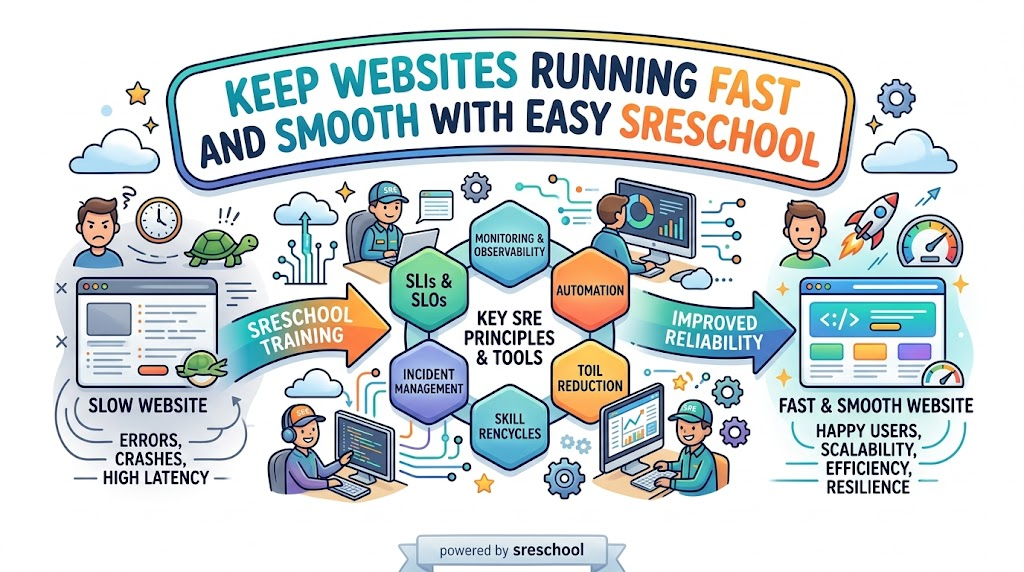
Anyone can learn these vital skills with easy practice. A hands-on training hub named SRESchool shows learners how to build unbreakable systems.
What Makes This System Work So Well
Let us look at how modern teams build better apps. Here are three key rules they follow every day:
- Measure what matters: Track page load speeds using clear health numbers.
- Automate dull chores: Build smart software scripts that handle routine maintenance.
- Plan for surprise errors: Expect computers to glitch and prepare instant backup steps.
Easy Words That Explain Big Systems
Tech pros use short terms to describe server health. For example, an SLI acts like a speedometer that measures true website speed.
Next, an SLO sets a clear goal for that speed. A shopping site might promise to run fast 99% of the time.
Then, error budgets provide a safe cushion for fun tests. Coders use this wiggle room to roll out cool new features safely.
Because numbers stay clear, team members never argue about updates. Everyone knows when to move fast and when to fix small errors.
Build Real Skills With SRE Training
Reading dry documents puts people right to sleep. Real mastery happens when you fix things with your own two hands.
Structured SRE Training lets you control safe practice computers. You resolve fake server fires without hurting real users on the web.
You learn how to spot glowing warning lights on computer screens. Also, you create smart robots that fix broken files all on their own.
Because practice builds quick confidence, you solve hard puzzles easily. Soon, you can fix giant server hiccups without breaking a sweat.
Five Steps To Stop A System Emergency
When a web app breaks, smart engineers follow an easy rescue path:
- Spot the red light: Check the monitoring panel to find the broken server.
- Alert the crew: Send a quick note so helpful teammates join in.
- Turn off broken parts: Disable minor features to protect the main homepage.
- Fix bad code lines: Write clean instructions so the crash never returns.
- Write down notes: Share what happened so everyone learns from the mishap.
Learn In A Site Reliability Engineering Course
Structured classes show you how giant websites operate behind the scenes. A complete Site Reliability Engineering Course guides you through real production platforms.
Helpful coaches walk you through realistic disaster drills step by step. You discover how to turn off noisy alarms and catch real trouble.
Next, you install neat sensors that warn you before databases fill up. You learn to launch cool updates while keeping servers safe.
This practical training turns complex network puzzles into simple ideas. You gain powerful skills that impress tech managers everywhere.
Explore Quick Lessons In An SRE Tutorial
Curious beginners can learn great skills at their own pace. A short SRE Tutorial breaks big ideas into quick weekend reads.
These guides share simple sketches and code samples you can run at home. You never need to untangle messy math formulas.
Each brief lesson tackles one small puzzle at a time. Next, you connect those pieces to build sturdy cloud systems.
Because these guides stay short, learning feels like playing a fun game. You boost your tech skills with every page you read.
Great SRE Tools Every Tech Team Needs
Modern builders use special software helpers to watch their networks. They run clever SRE Tools that scan servers day and night.
Some tools watch memory levels and flash warning lights before trouble starts. Other tools simulate safe server crashes to test emergency backup systems.
Here is a quick look at the top tools in action:
| Tool Group | What It Does Every Day | Why It Helps Your Team |
|---|---|---|
| Observability | Watches server speed and memory use | Catches sneaky bugs before outages occur |
| Alerting | Sends loud notifications during crashes | Brings fast help to fix broken web pages |
| Automation | Runs boring cleanups on a strict timer | Stops human mistakes during daily tasks |
| Chaos Testing | Breaks test systems on purpose | Creates tough networks that survive surprises |
How Modern Methods Beat Old Habits
Old computer workers often waited until things caught fire. Modern engineers prepare for hiccups ahead of time:
| Daily Task | Old Tech Habits | Modern Reliability Habits |
|---|---|---|
| Fixing Outages | Fixes every crash by hand | Writes smart programs that heal servers instantly |
| Boring Chores | Repeats dull steps manually | Removes repetitive work with clever code scripts |
| System Uptime | Hopes machines never break | Expects failure and automates instant recovery |
| New Updates | Delays releases out of fear | Uses error budgets to launch updates safely |
Earn A Respected SRE Certification
Showing your skills helps you land exciting jobs. An industry-backed SRE Certification proves your abilities to top employers.
Tests verify that you know how to trace and fix sudden outages. They check your talent for creating safe rules for busy cloud networks.
Companies hire certified pros because they protect valuable systems from breaking. A recognized badge shows everyone that you can handle large production platforms.
Preparing for this test speeds up your career growth. You stand out as an expert who keeps systems running smooth and clean.
Rise Up As A Certified Site Reliability Engineer
Reaching this high rank changes your career journey completely. As a Certified Site Reliability Engineer, other builders ask you for helpful advice.
You build tough cloud setups that survive huge crowds of online holiday shoppers. You teach junior coders how to write clean programs that resist bugs.
Also, you guide big decisions for apps that millions of people love. Top technology companies value your rare talents and offer great pay.
Fix Big Bottlenecks With SRE Consulting
Sometimes a busy company needs outside help to clean up its cloud. Seasoned SRE Consulting solves these hard problems fast.
Friendly experts look over your entire network layout with care. They track down hidden slowdowns before customers get upset.
Next, they show managers how to set fair uptime targets. They train your workers to handle sudden alarms calmly and quickly.
Because these pros have fixed hundreds of outages, they work fast. Your company enjoys smoother operations and happy customers.
Protect Small Platforms With SRE as a Service
Small companies rarely have big budgets to hire a full team. They pick SRE as a Service to get top protection on a friendly budget.
Experienced specialists watch your servers round the clock. You pay only for the exact help your business requires.
They patch security holes and balance web traffic without slowing down pages. If a server acts up at midnight, they repair it right away.
This freedom lets your small crew build awesome new products. You grow your business while experts protect your digital home.
Transform Enterprise Teams With Corporate SRE Training
Large companies have hundreds of coders who must row in the same direction. Tailored Corporate SRE Training unites whole departments under clear safety habits.
When software writers and system helpers share the same goals, projects ship smoothly. Coders stop tossing messy code over the fence for other people to fix.
Instead, everyone shares the job of keeping the platform alive and well. Teams study mistakes calmly without pointing fingers at each other.
As a result, companies save tons of money on preventable outages. Happy teams create superior products that users truly love.
Who Should Pick Up These Valuable Skills
Many bright workers can grow by learning these practices:
- Software Coders: Write neat programs that handle sudden traffic spikes.
- Cloud Architects: Construct safe networks that survive power blackouts.
- System Helpers: Turn boring daily typing tasks into quick automatic scripts.
- DevOps Leaders: Ship exciting features while keeping server health high.
- Tech Bosses: Set clear performance targets that make customers smile.
A Real Victory From The Field
A growing ticket website used to crash whenever a famous singer dropped concert tickets. Mad music fans walked away, and the website lost thousands of sales.
The company redesigned its setup using modern reliability rules. They installed smart traffic controllers and set up self-healing server groups.
During the next mega sale, ticket buyers flooded the site without a single hiccup. Fans bought their tickets in seconds, while the engineering team smiled and relaxed.
This win proves that good plans beat messy firefighting every single time. Smart planning keeps your favorite websites alive during huge traffic rushes.
Frequently Asked Questions About sreschool
Why do so many students join sreschool?
Learners join because practical labs teach real troubleshooting skills instead of boring slide shows.
Which jobs benefit the most from these classes?
Programmers, cloud admins, support workers, and team leads gain direct skills to prevent website crashes.
Can a total beginner take these courses?
Yes, because simple words and step-by-step labs explain hard concepts clearly from the very start.
Can business owners book custom workshops for their workers?
Companies can request custom training modules crafted around their own private software stacks and tools.
What practical tools do students test during labs?
Students use real health dashboards, fast alarm systems, and automated cloud tools used across the tech world.
Why do tech employers seek out reliability talent?
Leaders pay top wages to engineers who keep web pages running fast during heavy traffic spikes.
What is the real purpose of an error budget?
It acts like a safe cushion that lets builders launch creative features without fear of tiny mistakes.
Do students fix real computer issues during lessons?
Every course module features safe practice labs where you fix simulated outages just like true professionals do.
Can early-stage startups get help without hiring ten full-time workers?
Small teams can hire flexible on-demand reliability specialists to guard their cloud platforms on a light budget.
How do students earn an official graduation badge?
You complete the video modules, solve every hands-on practice lab, and pass the final skill test.
Moving Forward Toward Unbreakable Systems
Modern society runs on digital networks, from school portals to money apps and hospital tools. Whenever a core website stops working, real people face real struggles.
Mastering these easy habits turns you into a digital protector for everyone. You keep vital apps online, fast, and completely safe for millions of users.
Whether you want to learn independently or hire expert guidance, SRESchool provides the exact steps to build unbreakable systems. Pick up your tools today, and build digital services that everyone can count on!