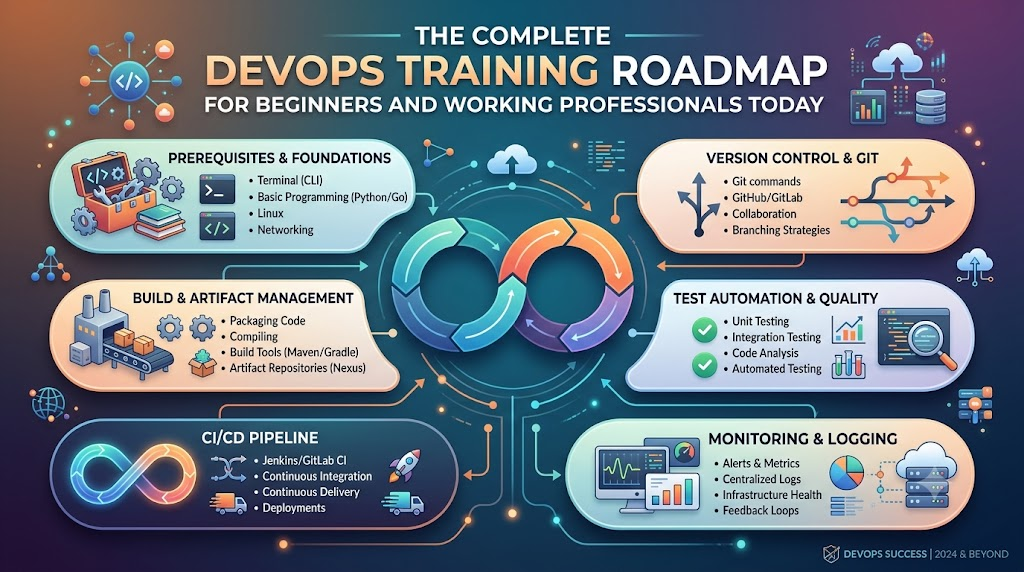
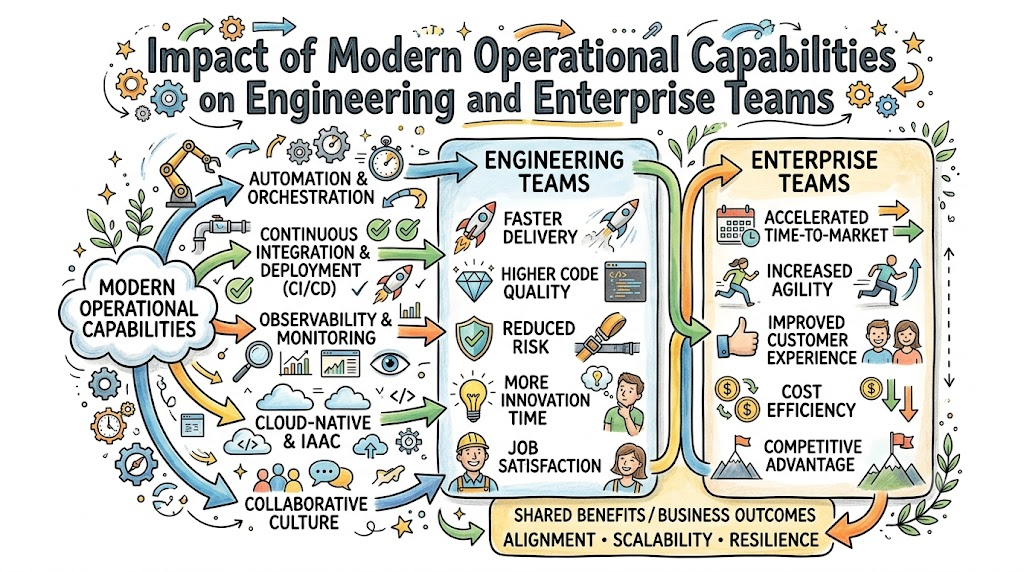
Computers run our world today, from video games to bank apps. But building computer software takes teamwork. People who write code must work well with people who run the servers. You can learn these teamwork tricks through DevOpsSchool to gain real skills fast.
Good training helps you learn how to fix bugs quickly. Also, you learn how to send updates to users without crashing the app.
When you study these tools, you help teams work as one unit. Next, we will look at how this teamwork actually works.
What Is DevOps and How Does It Work?
DevOps connects two different groups of tech workers. First, developers write the code for apps. Second, operations workers keep the computers and networks running.
In the past, these two teams worked in separate rooms. They often blamed each other when things broke down.
Now, they use shared tools to build and fix apps together. So, apps launch faster, and fewer errors happen.
Why Teams Need Fast Software Delivery
Today, users want new app features right away. If a game crashes, players want an instant fix.
DevOps uses smart robots and scripts to test code automatically. Because of this, teams can launch updates every single day.
How Automated Pipelines Work
An automated pipeline works like a factory belt for software. First, a coder writes new instructions and saves them.
Then, the system checks the code for mistakes right away. If the code passes every test, the pipeline sends it to users.
Key Operational Concepts You Must Know
To run modern software, you must understand a few basic ideas. These ideas keep big computer systems safe and fast.
Version Control and Saving Your Work
Version control works just like a magic save button for your code. It keeps track of every single change you make.
If you make a big mistake, you do not need to panic. You simply click a button to bring back the older, working code.
+-------------------------------------------------------------+
|                The Version Control Timeline                 |
+-------------------------------------------------------------+
| [Save 1: First Draft] -> [Save 2: New Feature] -> [Save 3]  |
|                                                     |       |
|    Roll back here if code breaks! <-----------------+       |
+-------------------------------------------------------------+
Automated Testing for Fewer Bugs
Computers can test code much faster than humans can. Automated testing runs hundreds of checks in just a few seconds.
So, developers find spelling errors and math bugs immediately. This habit keeps broken code away from real customers.
Cloud Computing and Virtual Servers
The cloud means renting computers over the internet instead of buying them. Big companies own huge rooms full of servers.
You can rent five new servers with one click. Then, you can turn them off when you finish your work.
Platform Implementation vs. Culture — What’s the Real Difference?
Many people buy expensive software tools and think they are done. But tools are only one half of the puzzle.
You also need a healthy team mindset to win. Let us compare the tools against the culture.
Part
Platform Implementation (Tools)
Team Culture (Mindset)
Main Goal
Set up robots, scripts, and cloud servers
Build trust, share goals, and help peers
Daily Tasks
Write code templates and watch dashboards
Talk openly, share notes, and solve issues
How to Measure
Count how many times you update an app
Check how happy and calm the team feels
When Things Break
Run auto-repair scripts to restart servers
Find why it broke without blaming people
Why Good Culture Matters More
Tools cannot fix an angry or fearful team. If workers fear getting blamed, they hide their mistakes.
A great culture encourages people to speak up early. Because of this trust, teams solve hard problems much faster.
How Tools Support the Team
Smart tools free up your time by doing boring chores. For example, robots can copy files across ten servers at night.
So, engineers get more free time to invent fun features. Good tools make happy teams even more productive.
Real-World Use Cases of Modern Operations
Every company you know uses these methods behind the scenes. Here are three real examples of how they work.
Online Video Streaming Services
When millions of kids watch cartoons at night, servers get busy. Streaming apps use smart scripts to spot traffic jumps.
The system quickly turns on extra servers to handle the crowd. Therefore, your cartoon never stops to buffer.
Shopping Apps on Big Sale Days
Shopping websites get millions of shoppers during big holiday sales. If a server stops, the shop loses money every minute.
Modern operations systems test the store’s code before the sale begins. So, shoppers can buy gifts without seeing error screens.
Mobile Bank Apps
Bank apps must protect your money from bad actors. These teams use automated security scanners on every single line of code.
The system blocks any code that has safety holes. Because of this, your account stays safe every day.
Common Mistakes in Operations Engineering
Beginners often make simple mistakes when they start out. Knowing these traps helps you avoid them early.
Skipping Backups: Forgetting to save safe copies of your data causes huge headaches later.
Doing Tasks by Hand: Typing manual setup commands over and over wastes time and invites typos.
Ignoring Computer Alerts: Turning off loud alarms leads to missed warnings when disks fill up.
Blaming Coworkers: Pointing fingers when an app breaks stops the team from fixing the real problem.
Skipping Security Checks: Leaving open doors in your code invites hackers into your private systems.
How to Become an Operations Expert — Career Roadmap
You can follow a clear, step-by-step path to master these skills. Take your time and practice each step on your computer.
+-------------------------------------------------------------+
|                   Your 5-Step Learning Path                 |
+-------------------------------------------------------------+
| Step 1: Learn Linux and type basic terminal commands.       |
| Step 2: Practice saving code with Git version control.      |
| Step 3: Put small web apps into Docker containers.          |
| Step 4: Rent cloud servers and set them up with code.       |
| Step 5: Build automated pipelines to test your work.        |
+-------------------------------------------------------------+
Steps to Build Real Skills
Master the Command Line: Learn how to move files and read logs using text commands in Linux.
Track Your Code: Practice saving project snapshots so you never lose your homework or code.
Use Containers: Box up your app with all its files so it runs anywhere without errors.
Learn Cloud Systems: Create virtual hard drives and networks using internet cloud platforms.
Set Up Pipelines: Connect your code box to an automated test engine that checks your work.
FAQ Section
What is DevOps in simple words?It is a way for software builders and computer runners to work as one happy team.
Do I need to be a math genius to learn this?No, you only need curiosity, patience, and a desire to solve fun computer puzzles.
What is a software container?A container is like a digital lunchbox that holds an app and everything it needs to run.
Why do teams use the cloud?Teams use the cloud because renting internet servers is faster and cheaper than buying heavy physical boxes.
How long does it take to learn these basic skills?Most new learners can pick up the core basics in about six months of steady daily practice.
Final Summary
Learning modern operations skills opens up great opportunities in technology. You learn how to build apps, fix errors, and run global servers with ease.
Always remember that good teamwork matters just as much as smart code. Treat your teammates with respect, automate boring chores, and keep practicing your skills every day.
Plan for surprise errors: Expect computers to glitch and prepare instant backup steps.
Easy Words That Explain Big Systems
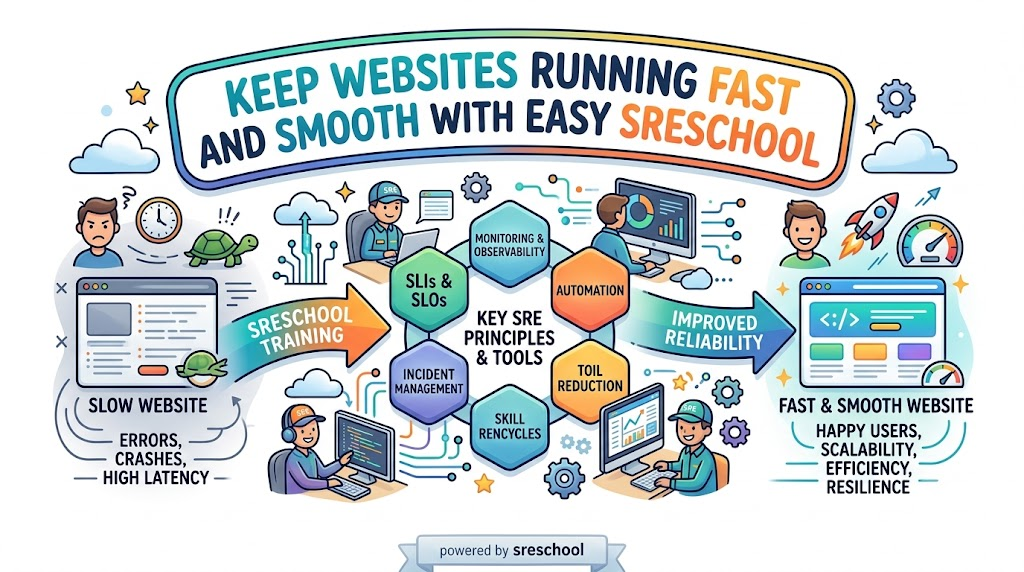
Tech pros use short terms to describe server health. For example, an SLI acts like a speedometer that measures true website speed.
Next, an SLO sets a clear goal for that speed. A shopping site might promise to run fast 99% of the time.
Then, error budgets provide a safe cushion for fun tests. Coders use this wiggle room to roll out cool new features safely.
Because numbers stay clear, team members never argue about updates. Everyone knows when to move fast and when to fix small errors.
Build Real Skills With SRE Training
Reading dry documents puts people right to sleep. Real mastery happens when you fix things with your own two hands.
Structured SRE Training lets you control safe practice computers. You resolve fake server fires without hurting real users on the web.
You learn how to spot glowing warning lights on computer screens. Also, you create smart robots that fix broken files all on their own.
Because practice builds quick confidence, you solve hard puzzles easily. Soon, you can fix giant server hiccups without breaking a sweat.
Five Steps To Stop A System Emergency
When a web app breaks, smart engineers follow an easy rescue path:
Spot the red light: Check the monitoring panel to find the broken server.
Alert the crew: Send a quick note so helpful teammates join in.
Turn off broken parts: Disable minor features to protect the main homepage.
Fix bad code lines: Write clean instructions so the crash never returns.
Write down notes: Share what happened so everyone learns from the mishap.
Learn In A Site Reliability Engineering Course
Structured classes show you how giant websites operate behind the scenes. A complete Site Reliability Engineering Course guides you through real production platforms.
Helpful coaches walk you through realistic disaster drills step by step. You discover how to turn off noisy alarms and catch real trouble.
Next, you install neat sensors that warn you before databases fill up. You learn to launch cool updates while keeping servers safe.
This practical training turns complex network puzzles into simple ideas. You gain powerful skills that impress tech managers everywhere.
Explore Quick Lessons In An SRE Tutorial
Curious beginners can learn great skills at their own pace. A short SRE Tutorial breaks big ideas into quick weekend reads.
These guides share simple sketches and code samples you can run at home. You never need to untangle messy math formulas.
Each brief lesson tackles one small puzzle at a time. Next, you connect those pieces to build sturdy cloud systems.
Because these guides stay short, learning feels like playing a fun game. You boost your tech skills with every page you read.
Great SRE Tools Every Tech Team Needs
Modern builders use special software helpers to watch their networks. They run clever SRE Tools that scan servers day and night.
Some tools watch memory levels and flash warning lights before trouble starts. Other tools simulate safe server crashes to test emergency backup systems.
Here is a quick look at the top tools in action:
Tool Group
What It Does Every Day
Why It Helps Your Team
Observability
Watches server speed and memory use
Catches sneaky bugs before outages occur
Alerting
Sends loud notifications during crashes
Brings fast help to fix broken web pages
Automation
Runs boring cleanups on a strict timer
Stops human mistakes during daily tasks
Chaos Testing
Breaks test systems on purpose
Creates tough networks that survive surprises
How Modern Methods Beat Old Habits
Old computer workers often waited until things caught fire. Modern engineers prepare for hiccups ahead of time:
Daily Task
Old Tech Habits
Modern Reliability Habits
Fixing Outages
Fixes every crash by hand
Writes smart programs that heal servers instantly
Boring Chores
Repeats dull steps manually
Removes repetitive work with clever code scripts
System Uptime
Hopes machines never break
Expects failure and automates instant recovery
New Updates
Delays releases out of fear
Uses error budgets to launch updates safely
Earn A Respected SRE Certification
Showing your skills helps you land exciting jobs. An industry-backed SRE Certification proves your abilities to top employers.
Tests verify that you know how to trace and fix sudden outages. They check your talent for creating safe rules for busy cloud networks.
Companies hire certified pros because they protect valuable systems from breaking. A recognized badge shows everyone that you can handle large production platforms.
Preparing for this test speeds up your career growth. You stand out as an expert who keeps systems running smooth and clean.
Rise Up As A Certified Site Reliability Engineer
Reaching this high rank changes your career journey completely. As a Certified Site Reliability Engineer, other builders ask you for helpful advice.
You build tough cloud setups that survive huge crowds of online holiday shoppers. You teach junior coders how to write clean programs that resist bugs.
Also, you guide big decisions for apps that millions of people love. Top technology companies value your rare talents and offer great pay.
Fix Big Bottlenecks With SRE Consulting
Sometimes a busy company needs outside help to clean up its cloud. Seasoned SRE Consulting solves these hard problems fast.
Friendly experts look over your entire network layout with care. They track down hidden slowdowns before customers get upset.
Next, they show managers how to set fair uptime targets. They train your workers to handle sudden alarms calmly and quickly.
Because these pros have fixed hundreds of outages, they work fast. Your company enjoys smoother operations and happy customers.
Protect Small Platforms With SRE as a Service
Small companies rarely have big budgets to hire a full team. They pick SRE as a Service to get top protection on a friendly budget.
Experienced specialists watch your servers round the clock. You pay only for the exact help your business requires.
They patch security holes and balance web traffic without slowing down pages. If a server acts up at midnight, they repair it right away.
This freedom lets your small crew build awesome new products. You grow your business while experts protect your digital home.
Transform Enterprise Teams With Corporate SRE Training
Large companies have hundreds of coders who must row in the same direction. Tailored Corporate SRE Training unites whole departments under clear safety habits.
When software writers and system helpers share the same goals, projects ship smoothly. Coders stop tossing messy code over the fence for other people to fix.
Instead, everyone shares the job of keeping the platform alive and well. Teams study mistakes calmly without pointing fingers at each other.
As a result, companies save tons of money on preventable outages. Happy teams create superior products that users truly love.
Who Should Pick Up These Valuable Skills
Many bright workers can grow by learning these practices:
Software Coders: Write neat programs that handle sudden traffic spikes.
Cloud Architects: Construct safe networks that survive power blackouts.
System Helpers: Turn boring daily typing tasks into quick automatic scripts.
DevOps Leaders: Ship exciting features while keeping server health high.
Tech Bosses: Set clear performance targets that make customers smile.
A Real Victory From The Field
A growing ticket website used to crash whenever a famous singer dropped concert tickets. Mad music fans walked away, and the website lost thousands of sales.
The company redesigned its setup using modern reliability rules. They installed smart traffic controllers and set up self-healing server groups.
During the next mega sale, ticket buyers flooded the site without a single hiccup. Fans bought their tickets in seconds, while the engineering team smiled and relaxed.
This win proves that good plans beat messy firefighting every single time. Smart planning keeps your favorite websites alive during huge traffic rushes.
Frequently Asked Questions About sreschool
Why do so many students join sreschool?
Learners join because practical labs teach real troubleshooting skills instead of boring slide shows.
Which jobs benefit the most from these classes?
Programmers, cloud admins, support workers, and team leads gain direct skills to prevent website crashes.
Can a total beginner take these courses?
Yes, because simple words and step-by-step labs explain hard concepts clearly from the very start.
Can business owners book custom workshops for their workers?
Companies can request custom training modules crafted around their own private software stacks and tools.
What practical tools do students test during labs?
Students use real health dashboards, fast alarm systems, and automated cloud tools used across the tech world.
Why do tech employers seek out reliability talent?
Leaders pay top wages to engineers who keep web pages running fast during heavy traffic spikes.
What is the real purpose of an error budget?
It acts like a safe cushion that lets builders launch creative features without fear of tiny mistakes.
Do students fix real computer issues during lessons?
Every course module features safe practice labs where you fix simulated outages just like true professionals do.
Can early-stage startups get help without hiring ten full-time workers?
Small teams can hire flexible on-demand reliability specialists to guard their cloud platforms on a light budget.
How do students earn an official graduation badge?
You complete the video modules, solve every hands-on practice lab, and pass the final skill test.
Moving Forward Toward Unbreakable Systems
Modern society runs on digital networks, from school portals to money apps and hospital tools. Whenever a core website stops working, real people face real struggles.
Mastering these easy habits turns you into a digital protector for everyone. You keep vital apps online, fast, and completely safe for millions of users.
Whether you want to learn independently or hire expert guidance, SRESchool provides the exact steps to build unbreakable systems. Pick up your tools today, and build digital services that everyone can count on!
DevOps brings two main computer teams together to build awesome apps. First, developers write code to create new software games and helpful tools. Next, operations helpers run big cloud servers so these apps work smoothly every day.
You can learn these skills step by step with DevOpsSchool. Their friendly mentors show beginners how to use cool tools to deliver software fast. Therefore, learning these basic steps will help you build, test, and ship your ideas safely!
devopsschool.cn
What Is DevOps and Why Do Teams Need It?
Long ago, coders and server keepers worked in separate rooms. Coders wrote programs and tossed them over a tall wall. Then, the server keepers had to figure out how to run them.
Because the two teams did not talk, apps broke often. Users got mad because games crashed and took months to update. So, smart workers decided to join forces and work as one happy team.
Now, DevOps lets teams build and share new computer programs quickly. Everyone shares the work and helps each other fix small mistakes right away.
+--------------------------------------------------------------------+
|                      The Simple DevOps Loop                        |
+--------------------------------------------------------------------+
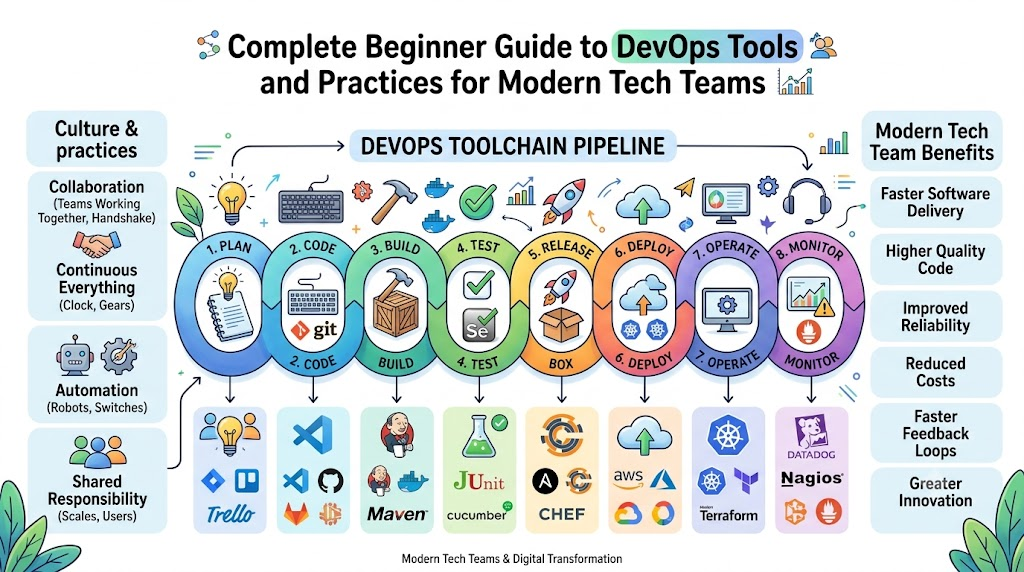
|  1. Plan App  -->  2. Write Code  -->  3. Test Program             |
|       ^                                     |                      |
|  6. Check Bugs  <--  5. Watch App  <--  4. Ship to Users           |
+--------------------------------------------------------------------+
Key Operational Concepts You Must Know
To keep modern software running fast, beginners must learn a few easy ideas.
The Big Magic Notebook for Code
First, coders use a system named version control to save their daily work. Think of it like a magical notebook that remembers every single word you write.
If you make a silly mistake, you can flip back to an older page. As a result, you never lose your work or ruin the whole program.
Git: This free tool records every line of code you change.
GitHub: This website stores your code online so friends can work together.
Branches: These are separate workspaces where you try new ideas safely.
The Friendly Assembly Line
Next, teams build an automated assembly line for their software. In tech speak, we call this continuous integration and continuous delivery.
When you finish writing your code, a robot helper tests it right away. If the robot finds an error, it sends you a message immediately.
+--------------------------------------------------------------------+
|                   The Software Assembly Line                       |
+--------------------------------------------------------------------+
|  Step 1: Save code to the shared project folder.                   |
|  Step 2: A robot checks the code for spelling mistakes.            |
|  Step 3: The robot runs tests to make sure games run fast.         |
|  Step 4: The system puts the finished game on the web.             |
+--------------------------------------------------------------------+
Neat Lunchboxes for Software
Also, modern engineers pack their apps into neat digital boxes called containers. Just like your school lunchbox keeps your sandwich safe, containers hold everything an app needs.
Because of this, the app runs the same way on your laptop as it does on huge cloud computers. You never have to worry about missing files or broken system settings.
Platform Implementation vs. Culture — What’s the Real Difference?
Many companies buy fancy computer programs and expect instant success. But shiny tools alone do not make a great team.
What We Look At
Setting Up Tools (The Tech Box)
Building Culture (The Team Spirit)
Main Goal
Set up robots, servers, and automated pipelines.
Help people talk nicely and work together every day.
Key Helpers
Code scripts, dashboards, and cloud storage systems.
Friendly chats, team support, and shared goals.
How to Measure
Count how fast updates reach user phones.
Check how much team members trust and help each other.
When Things Break
Robots restart servers and sound quick warning alarms.
The team meets to fix the issue without blaming anyone.
Tools Are Only Toys Without Teamwork
You can buy the best soccer ball in the world. But if players never pass the ball, the team will still lose the game.
Culture means people share goals and help each other learn new tricks. When coders and server helpers trust each other, they solve tough problems fast.
Real-World Use Cases of Modern Operations
Many popular apps you use every day rely on modern operations practices.
Online Video Streaming Services
Think about your favorite cartoon streaming site on a busy Saturday morning. Millions of kids log in at the very same time to watch new shows.
Smart systems spot the huge crowd and start up more servers right away. Then, when night comes and kids go to sleep, the extra servers turn off to save money.
Mobile Game Update Days
Have you ever played a mobile game that updates every single week? In the past, companies stopped the game for hours to fix bugs.
Now, teams send small updates to user phones while people play. The new features slip into the game quietly without stopping your fun.
Bank and Store Websites
Online stores get very busy during holiday sales events. Shoppers rush to buy toys and shoes before the items sell out.
DevOps tools test the checkout page thousands of times before the rush begins. So, parents can buy gifts quickly without the shop page freezing up.
Common Mistakes in Operations Engineering
Beginners often make a few easy-to-fix mistakes when they start their learning journey.
Doing Every Task by Hand: Click-happy workers waste hours clicking buttons when a simple script can do the job.
Buying Too Many Tools at Once: Using ten complex tools on day one confuses everyone and slows down the work.
Forgetting to Test Early: Skipping quick tests lets nasty bugs sneak directly onto user screens.
Blaming People for Mistakes: Pointing fingers hurts feelings and stops people from speaking up when things break.
Ignoring System Alarms: Turning off warning bells means you will not notice when your app runs out of memory.
How to Become an Operations Expert — Career Roadmap
You can grow from a curious beginner into an expert engineer with steady practice.
Step 1: Learn Basic Computer Commands
First, learn how to talk to computers using simple text commands. Linux is the operating system that runs most of the internet today.
So, practice typing short words to make folders, move files, and read system notes. Once you feel comfortable typing commands, you can manage any big server.
Step 2: Pick Up a Simple Code Language
Next, learn a beginner-friendly programming language like Python. Python reads almost like plain English books.
You can write short scripts to do your daily chores automatically. For example, your script can back up your files every day at dinner time.
+--------------------------------------------------------------------+
|                      Your Friendly Learning Steps                  |
+--------------------------------------------------------------------+
|  Level 1: Master Linux commands and Git file saving.               |
|  Level 2: Write small Python scripts to do simple chores.          |
|  Level 3: Pack apps inside Docker containers.                      |
|  Level 4: Run apps on cloud servers like AWS or Google Cloud.      |
|  Level 5: Set up watchtower alerts to catch broken parts fast.     |
+--------------------------------------------------------------------+
Step 3: Pack Apps and Send Them to the Cloud
After you learn basic code, start playing with container tools like Docker. Build a small website and pack it into a digital container.
Next, rent a tiny cloud server online and launch your container there. You will feel proud when your friends open your website on their phones!
FAQ Section
Do I need to be a math genius to learn these tools?No, you do not need hard math skills to work with these tools. You only need to think clearly, solve puzzles, and follow simple step-by-step instructions.
What is the first computer tool I should install on my laptop?You should install Git first because it teaches you how to save and track your work. It protects your practice projects from getting lost or accidentally deleted.
How is a container different from a regular computer program?A regular program needs specific software pieces already installed on your machine to work. A container carries all its own pieces inside, so it runs anywhere without extra setup.
Can I practice these tools for free at home?Yes, almost all core tools like Linux, Git, and Docker are completely free to download. Many cloud companies also offer free practice accounts for new learners.
How long will it take to build my first software pipeline?Most new students can build their first simple automated pipeline in just a few weeks. Taking friendly classes helps you practice the right steps quickly and safely.
Final Summary
Modern software delivery works best when people team up and use smart tools. By saving code with Git, packing apps into containers, and running automatic tests, you can build reliable platforms.
Always remember that working kindly with your team matters just as much as learning complex tools. Keep practicing your steps every day, stay curious, and enjoy building the next generation of amazing computer apps!
Tap a tablet screen and watch magic unfold right in front of you. Music streams instantly to your tiny earphones. Bright games load fresh, sunny worlds without a single pause.
Lots of quiet machinery hums deep in the background to bring you that joy. People write code on laptops to build those games. Other workers flip switches on tall server racks. Another group counts points and saves high scores.
Years ago, these workers sat in dark cubicles and never spoke a word. When a game crashed, they pointed fingers and argued angrily. Now, smart crews work as one united family to make software work like a charm.
What is XOps in Plain Words
Curious folks always pause to ask, What is XOps? Let us explain this idea using tiny words. The letter X stands for any computer job inside a company. The short word Ops means keeping machines running well.
So, this idea pulls every worker into one circle. Programmers chat with server helpers. Robot trainers join hands with data keepers. Everyone shares ideas, files, and tools.
Think of an orchestra playing a sweet song. The violin plays high notes, the drum keeps the beat, and the flute adds color. When they play together, they make beautiful music for the whole crowd.
Getting Ahead with Step-by-Step Lessons
Building big apps takes practice, just like baking a cake. If you open a helpful XOps Tutorial, you learn the craft step by step. You find out how to move code safely to the cloud.
Next, you set up smart check tools to test your work. These helper bots scan your code while you type. They catch mistakes early so your friends never see a glitch.
Taking a full XOps Course leads you even further. You learn how to run websites that welcome millions of visitors. You also learn how to build apps that never fall over when crowds rush in.
Meeting the Four Main Specialists
Four special helpers make this teamwork click every single day. Each person uses a neat talent to guide the team forward:
The App Launcher: Bridges coders and cloud hosts to ship software fast.
The Fact Washer: Cleans messy piles of numbers so managers make great choices.
The Robot Guide: Coaches smart computer brains to spot faces, voices, and pictures.
The Night Watchman: Employs clever AI scouts to spot broken wires before machines freeze.
How the Four Roles Compare
Specialist Name
Main Duty
Everyday Chore
The Big Prize
DevOps
Ship software
Build test bots
Speedy app releases
DataOps
Wash numbers
Filter messy lists
Spotless records
MLOps
Coach robot brains
Feed fresh facts to bots
Bright digital minds
AIOps
Watch servers
Catch sudden glitches
Zero server freezes
Shipping Code Fast with DevOps
Coders love to write fun software, but they need strong machines to run it. In the past, coders finished an app and dumped it on the server desk. The machines broke often, and workers yelled all day.
Taking active DevOps Training removes that wall once and for all. Programmers and cloud builders work side by side. They use clever tools like Kubernetes and Terraform to turn on hundreds of computers in seconds.
A busy shoe shop had trouble posting fresh sales. Their workers took two weeks to add one tiny button to their website. After adopting shared delivery pipelines, they pushed updates in eight minutes. Customers bought shoes faster, and the store cheered.
Coaching Smart Models with MLOps
Machine learning lets computers solve tricky puzzles on their own. Your phone uses it to spot your dog in a photo album. Even so, these clever brains need regular practice to stay sharp.
Through structured MLOps Training, engineers learn how to guide these digital minds. They feed clear pictures to the model, test its guesses, and ship it to phones. They also check the model weekly so it never forgets its tricks.
A team built a voice helper that kept mishearing children. The crew set up auto-checkers to feed fresh sound clips to the bot weekly. Thanks to that fix, the bot understood kids clearly. Smart systems need regular practice to stay helpful.
Washing Dirty Numbers with DataOps
Online stores collect giant piles of facts every single minute. They track what you buy, where you click, and what you search. But raw lists look like a pile of muddy shoes.
High-quality DataOps Training shows workers how to build clean data roads. Think of a bright water filter on your sink. Muddy water pours in, the filter traps the dirt, and sweet water fills your cup.
When records stay clean, managers make wise choices for their stores. But if dirty numbers slip through, owners order the wrong goods. Clean data pipelines keep teams safe from costly mistakes.
Guarding Web Health Around the Clock with AIOps
Global websites use thousands of computer boxes across the world. No human being can watch thousands of blinking screens all night. Eyes get tired, workers need lunch, and people must sleep.
Joining AIOps Training solves this tough puzzle using smart software bots. Clever AI scouts watch the machines every second. They spot tiny warning signs long before a computer blows a fuse.
Real studies show that smart helpers cut repair times by more than half. The bot fixes small errors on its own or calls an engineer for big trouble. Because of this helper, your favorite games stay online all weekend.
Exploring the Modern Tool Chest
Top mechanics never fix fast cars using only their bare fingers. They reach for shiny wrenches, jacks, and screwdrivers. Tech workers also pick up special digital tools to build modern software.
Learning popular XOps Tools makes your daily duties smooth and breezy. Some tools wrap your programs inside neat boxes. Other tools build giant cloud systems with just a few lines of text.
Here are four handy tools engineers use every day:
Docker: Wraps programs inside neat capsules so they run on any computer.
Kubernetes: Guides thousands of app capsules across the web safely.
Terraform: Creates giant cloud networks using short text files.
Prometheus: Listens to server pulses and rings a bell if trouble strikes.
Five Easy Steps to Level Up Your Team
Starting out in modern tech operations sounds huge at first glance. But you can start small and take one cheerful step at a time. Share this simple action plan with your group:
Meet Briefly: Talk with your teammates for five quick minutes every morning.
Save Files Together: Drop your project notes into one shared digital locker.
Run Auto-Checkers: Let helper bots scan your work for bugs before you share it.
Watch System Pulses: Turn on simple dashboards that glow green when machines run well.
Learn Together: Fix bugs side by side without blaming your friends.
Boosting Your Skills at XOpsSchool
Tech knowledge grows fast, so workers must practice often. Finding clean lessons in one friendly spot saves lots of time. That is why ambitious learners search for great XOps Training to grow their careers.
XOpsSchool.com provides crystal-clear lessons on automation, cloud engineering, and modern operations. Students discover how DevOps, DataOps, and AIOps snap together like building blocks. You build hands-on projects that mirror actual workplace challenges.
Finishing an XOps Certification lets you show off your practical talents to employers everywhere. This special badge proves you can ship apps, polish data, and keep servers safe. It gives you the confidence to chase great tech jobs.
Exciting Jobs in Modern Tech
Teaming up across operations creates plenty of neat jobs for people who love computers. Choose the path that matches your favorite interests:
Platform Builder: Crafts simple internal dashboards so other coders build apps faster.
Reliability Guard: Keeps massive websites alive even when millions of users log on at once.
Data Highway Engineer: Lays down smooth digital roads so numbers travel without crashing.
Cloud Safety Officer: Locks digital doors so sneaky intruders cannot steal private records.
Wisdom from an Expert Builder
Senior engineers always remind us that kindness and teamwork beat fancy code. Maya Lin, a lead system architect, shares this helpful rule: “Computers freeze when workers hide inside separate rooms. When we share our tools and cheer each other on, our software runs smoothly and our jobs feel fun.”
When coders and machine keepers look at the same dashboards, great things happen. They stop arguing about who created a bug. Instead, they fix the problem together and celebrate their win with high-fives.
Frequently Asked Questions
Which small step should a beginner take first? Begin by learning basic code and simple command lines. Next, practice placing small web apps into Docker containers. Once you feel comfortable, share your project files with others on Git.
Must a person master hard math to work here? No, you do not need advanced math to do this job well. You only need curiosity, steady logic, and patience. Solving system puzzles feels a lot like piecing together colorful jigsaw puzzles.
Why do modern server keepers invite AI to join their teams? AI acts like an energetic teammate who never takes a nap. It scans system logs instantly, catches tiny hiccups, and prevents server crashes before players notice any lag.
Should one person try to learn every single skill at once? Pick one area you love first, such as cloud machines or data pipelines. Once you master that craft, pick up bits of the other areas so you can chat easily with your friends.
Stepping Out into the Tech World
Clever teamwork makes our digital universe spin happily every day. When talented people join hands with smart automation, teams ship awesome apps faster than ever before.
You can clean numbers, coach robot minds, or guard cloud servers with pride. Pick up your tools, build neat things, and enjoy your exciting adventure in technology!
Software delivery used to feel like an endless game of telephone. One group wrote code, while another group tried to run it on servers.
Consequently, projects moved slowly, systems broke often, and teams blamed each other. If you want to learn these essential modern skills, DevOpsSchool provides hands-on training programs that guide engineers step by step.
Modern software engineering replaces that old wall of confusion with shared goals. As a result, teams release great apps faster and work together like a championship sports crew.
What Is DevOps in Everyday Words?
DevOps connects software development with IT operations. Development means creating features, writing code, and designing app interfaces. Operations means managing cloud networks, keeping servers running, and stopping platform crashes.
When both groups unite, work moves much faster. Programmers no longer throw unfinished code over a wall. Instead, both teams talk every single day and solve bugs early.
Furthermore, everyone shares ownership of the final product. Developers learn how their code behaves on real machines. Meanwhile, operations specialists help developers ship updates without breaking live systems.
+------------------------------------------------------------------+
|                     The Unified DevOps Flow                      |
+------------------------------------------------------------------+
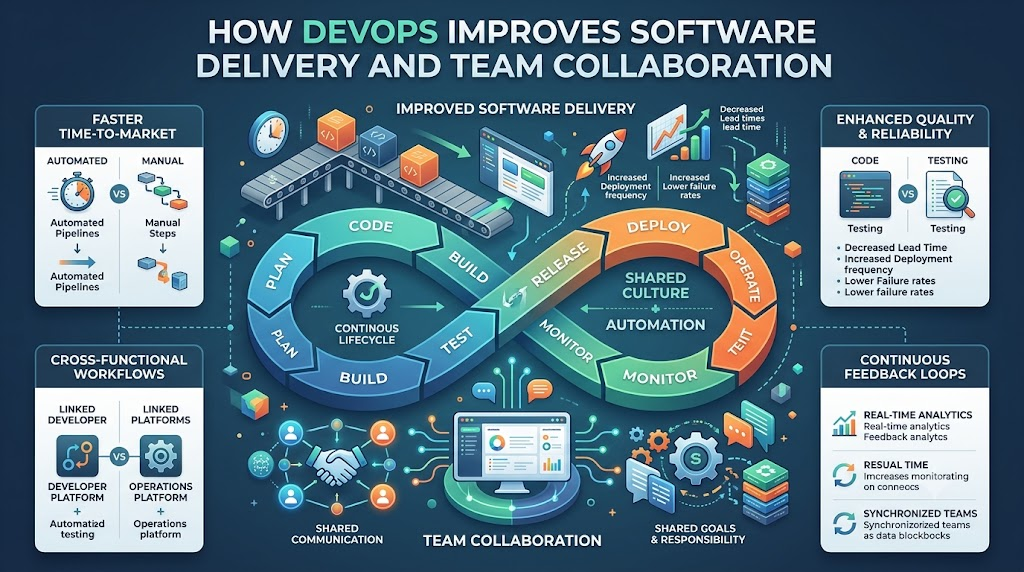
|  Plan Features  -->  Write Clean Code  -->  Run Auto Tests       |
|        ^                                           |             |
|        |                                           v             |
|  Share Feedback  <--  Monitor Live Apps  <--  Ship Update        |
+------------------------------------------------------------------+
The Big Problems of Old-Fashioned Workflows
In traditional setups, teams worked inside isolated silos. Developers cared only about writing brand-new features quickly. Meanwhile, operations teams cared only about keeping servers steady and safe.
Because their goals clashed, tension grew constantly. Developers complained when operations delayed new releases. At the same time, operations complained when new code caused painful outages.
Slow release cycles: Companies waited months or years to launch single software updates.
Manual deployment mistakes: Workers typed complex commands by hand, causing accidental typos and broken services.
Finger-pointing games: When an app failed, workers blamed each other instead of solving problems.
Burnout and late-night calls: Engineers spent weekends fixing sudden production emergencies.
Key Operational Concepts You Must Know
Modern engineering teams use a few simple principles to keep their work smooth, predictable, and error-free.
Version Control and Branching
First, version control acts like a time machine for your project files. Every engineer saves changes to a central repository with clear update notes.
If an error appears, the team rolls back to a safe point instantly. Moreover, team members work on separate branches without overwriting each other’s work.
Continuous Integration and Automated Testing
Next, continuous integration tests code changes the moment an engineer saves them. Automated bots build the whole project and execute safety checks immediately.
When a bug pops up, the bot notifies the author right away. Because errors get caught within minutes, bad code never reaches live user screens.
Continuous Delivery and Fast Shipments
In addition, continuous delivery packages validated code into ready-to-run releases automatically. The pipeline tests each build across test environments that mimic live platforms.
Therefore, releasing new software becomes a routine, low-risk event. Teams can push updates to customers multiple times a day with complete confidence.
Platform Implementation vs. Culture — What’s the Real Difference?
Many organizations buy expensive automation tools and expect instant miracles. However, tools alone cannot repair broken workplace relationships.
Comparison Area
Platform Implementation (The Machinery)
Culture (The Team Spirit)
Main Focus
Cloud servers, script bots, and test tools
Empathy, open communication, and trust
Everyday Task
Building pipelines and tracking CPU metrics
Sharing lessons and helping teammates
Biggest Benefit
Eliminating repetitive, boring manual tasks
Creating a fearless, creative work room
Handling Outages
Alerts trigger automated recovery actions
Teams conduct blameless post-mortems
Building a Safe and Honest Team Culture
Automation platforms provide the engine, but human culture provides the driver. When leaders remove fear, engineers report defects early instead of hiding them.
Similarly, blameless post-mortems focus on fixing fragile systems rather than punishing individuals. This honest mindset builds strong trust across the entire technical team.
Real-World Use Cases of Modern Operations
Leading organizations depend on these unified practices to keep their critical systems online around the clock.
Online Banking Platforms
Banks process millions of sensitive financial transactions every single hour. Therefore, security checks run directly inside their automated delivery pipelines.
Every code update gets scanned for safety vulnerabilities before hitting production. As a result, customers enjoy safe mobile banking without service interruptions.
Video Streaming Services
Streaming platforms experience huge viewer spikes during major sporting events. Automated systems watch server memory and launch extra cloud capacity in seconds.
When the big game concludes, the platform shuts down unused machines automatically. Consequently, streaming companies save money while preventing embarrassing buffer screens.
Ride-Sharing and Map Navigation
Ride-sharing applications push route improvements and pricing updates continuously. By using gradual rollouts, engineers test updates on small groups of drivers first.
If navigation remains accurate, the system releases the update globally. This careful deployment prevents citywide driver confusion.
Common Mistakes in Operations Engineering
Even smart teams fall into common traps when trying to modernize their workflows.
Treating tools as a magic silver bullet: Buying top-tier software will not fix poor team communication.
Skipping automated tests: Rushing deployments without automated tests sends hidden defects straight to customers.
Ignoring telemetry and system logs: Deploying code without monitoring leaves engineers blind during live outages.
Creating a separate DevOps silo: Handing all automation duties to an isolated team recreates the same old bottlenecks.
Automating broken processes: Writing scripts for inefficient manual steps only speeds up bad habits.
How to Become an Operations Expert — Career Roadmap
You can master modern delivery practices by following a clear, step-by-step learning progression.
Start by learning how to use the Linux command line. Practice navigating file trees, changing permissions, and tracking your project history using Git.
2. Build Automated Pipelines
Next, configure automated build systems that compile code and run unit tests. Understanding basic automation helps you eliminate tedious manual deployment tasks.
3. Package Apps inside Containers
Learn how to wrap applications and their dependencies inside tidy container units. Containers ensure that software behaves the exact same way on your laptop and on cloud servers.
4. Manage Infrastructure as Code
Discover how to build cloud servers, storage disks, and firewalls by writing simple text files. Managing infrastructure like software code prevents configuration drift across enterprise teams.
5. Add Live Monitoring and Telemetry
Finally, connect your running applications to real-time metric dashboards and alert systems. Watching live system health helps you identify performance bottlenecks before users ever notice them.
FAQ Section
How does DevOps make software delivery faster?It replaces slow manual steps with automated pipelines that test, build, and deploy code updates within minutes.
Does adopting these practices require learning to code?Yes, engineers need basic scripting skills in languages like Python or Bash to automate daily server tasks.
How does team collaboration improve under this model?Shared goals, transparent communication, and blameless post-mortems eliminate finger-pointing between developers and operations staff.
Is continuous delivery safe for critical production systems?Yes, automated tests and gradual canary rollouts catch defects early, making updates much safer than giant, risky releases.
How can small teams start using these methods?Start small by storing all project files in Git and automating a single repetitive testing step.
Final Summary
DevOps bridges the divide between software creation and system stability. By combining automated delivery pipelines with an open, collaborative culture, technical teams deliver robust features with incredible speed.
Furthermore, replacing tedious manual tasks with smart automation frees engineers to focus on creative problem-solving. Embracing shared accountability and continuous learning will keep your team resilient, fast, and ready for any challenge.
Imagine two groups of kids working together to make a video game. One team writes the fun game story. The other team makes sure the game runs smoothly on your tablet.
In the past, these two teams sat in different rooms and rarely spoke. The story team threw their work over a fence to the computer team. As a result, games crashed, work stopped, and everyone felt mad.
DevOps brings these two teams together so they work as one happy crew. If you want to learn these helpful skills step by step, you can start your journey with DevOpsSchool today. Their friendly classes teach beginners and working pros how to use smart computer tools to build great software together.
What Is DevOps in Simple Words?
DevOps combines two words: development and operations. Development means making new software, like drawing and coding an app. Operations means keeping that app alive and fast so people can use it every day.
When these groups join forces, magical things happen. First, they build software much faster. Next, they fix bugs quickly before players notice them.
Because both sides share the work, nobody blames each other when something breaks. Instead, they fix the problem together like a true sports team.
+------------------------------------------------------------------+
|                    The Friendly DevOps Loop                      |
+------------------------------------------------------------------+
|  Plan the Idea  -->  Write the Code  -->  Test the Build         |
|         ^                                      |                 |
|         |                                      v                 |
|  Learn and Improve  <--  Watch Systems  <--  Ship to Users       |
+------------------------------------------------------------------+
Why Beginners and Working Pros Need a Learning Map
Learning computer tools can feel like walking into a giant candy store with no guide. You might see hundreds of bright tools and wonder where to start.
Therefore, a clear roadmap keeps your learning easy and calm. Beginners learn the strong basics first so they do not get lost.
At the same time, working professionals can skip what they already know. They can jump right into fancy tools that make their daily work life easier.
Beginners build confidence: You learn simple steps one by one without feeling scared or lost.
Coders learn system safety: Programmers discover how to launch their code without breaking servers.
System helpers learn code tricks: Operations staff learn how to write simple scripts to do daily tasks automatically.
Teams deliver faster updates: Everyone understands the big picture so work flows smoothly.
The Main Parts of the Big Software Machine
Think of modern software delivery like a toy factory with a fast assembly line. Every toy must pass through several stations before children play with it.
First, the builders make the toy parts out of plastic blocks. Second, safety helpers check the toy to make sure no small parts fall off.
Finally, a delivery truck takes the toy to the store shelves safely. If any step fails, the whole assembly line stops right away so workers can fix it.
Important Factory Roles
Role Name
Everyday Example
Main Daily Job
Code Builder
The Toy Designer
Writes clean code for new app features.
Test Inspector
The Safety Checker
Runs automatic checks to catch mistakes early.
Release Helper
The Delivery Driver
Pushes good code to user screens safely.
System Guardian
The Watchful Guard
Monitors machines so apps never freeze or crash.
Key Operational Concepts You Must Know
To run healthy software systems, you must understand a few basic ideas. These ideas work like simple kitchen rules that keep cooking clean and safe.
Version Control and Safe Storage
First, you need a safe place to save all your project files. Version control tools work like an unlimited undo button for your homework.
If you make a silly mistake, you can jump back in time with one click. In addition, many team members can work on the same file without overwriting each other.
Furthermore, every change carries a short note explaining what the author fixed. This open history helps everyone understand how the software grew over time.
Continuous Integration and Testing Helpers
Next, robot helpers must test every single code update automatically. Whenever a coder finishes a feature, the robot builds the whole project.
Then, the robot runs hundreds of quick safety checks. If a test fails, the robot alerts the coder right away.
Because of this quick feedback, developers fix mistakes in minutes instead of weeks. This smooth routine keeps bad bugs away from real customers.
Container Boxes for Clean Packing
In the past, programs worked on a developer laptop but failed on big company servers. People wasted whole days asking why things broke.
Today, engineers wrap apps inside neat digital boxes called containers. Each container holds the code, the tools, and the settings inside one shell.
Therefore, the box runs the exact same way on any computer in the world. You pack the toy once, and it plays everywhere without surprises.
Platform Implementation vs. Culture — What’s the Real Difference?
Many companies buy expensive new tools and think their work is finished. However, tools cannot fix teams that refuse to talk to each other.
Feature
Platform Implementation (The Tools)
Culture (The Human Heart)
What It Is
Fast computers, cloud setups, and robot scripts
Trust, teamwork, and kind communication
Main Goal
Doing manual work through smart automation
Helping people share ideas without fear
Big Win
Faster releases and fewer typing mistakes
Happier workers who love solving problems
When Things Go Wrong
Shows a red alert on a monitor screen
Teams gather kindly to learn what happened
Why Good Culture Beats Fancy Tools
You can buy the fastest sports car in the world, but it helps nobody if the driver cannot steer. In the same way, automation tools fail when team members keep secrets from each other.
Therefore, strong teams practice blameless reviews whenever a server goes down. Nobody points fingers or yells at the person who made an error.
Instead, everyone sits down to ask how the system allowed that mistake to happen. Then, they build a better guardrail together so nobody falls into that trap again.
Real-World Use Cases of Modern Operations
Many popular apps that you use every single day rely on these smart methods to run smoothly.
Online Video Games with Huge Crowds
Popular multiplayer games welcome millions of players at the exact same hour. If too many players enter a room, servers might slow down or crash.
Smart monitoring systems notice the crowd right away. They order new cloud servers to wake up within seconds.
When the game ends and players go to bed, the system turns those extra servers off. This quick change saves lots of electricity and money.
Shopping Apps on Big Holiday Sales
Online stores see giant waves of visitors during special holiday gift sales. Shoppers get very upset if the checkout cart stops working during payment.
To prevent sadness, engineers use small deployment steps called canary releases. They show new checkout buttons to only one out of every hundred buyers first.
If those shoppers check out without any trouble, the team sends the update to everyone else. This careful test keeps the whole store safe from nasty surprises.
Hospitals and Doctor Records
Hospitals store important health files that doctors must read without any delays. If a computer goes down, a patient might not get their medicine on time.
Modern operations systems make extra backup copies across three different data centers. If a lightning storm hits one center, the other centers keep working instantly.
As a result, nurses and doctors always see patient files on their screens. Smart setups save real lives by keeping computers healthy and awake.
Common Mistakes in Operations Engineering
Beginners often make simple mistakes when they start their learning journey. You can skip lots of trouble by avoiding these common traps:
Trying to learn every tool at once: Focus on one simple tool first, like basic terminal commands, before touching big systems.
Skipping basic computer rules: Do not jump into cloud clouds before you understand how files and simple networks work.
Writing messy scripts with no notes: Always write clear notes inside your scripts so your teammates understand your steps.
Forgetting about security checks: Never leave passwords or secret keys inside your public project folders.
Working alone like a quiet island: Talk with your teammates every morning so nobody solves the same problem twice.
How to Become an Operations Expert — Career Roadmap
You do not need a fancy degree to become great at modern operations work. You just need to follow simple learning milestones one step at a time.
+--------------------------------------------------------------------+
|                      Step-by-Step Learning Path                    |
+--------------------------------------------------------------------+
|  Step 1: The Computer Base (Linux and Terminal Commands)          |
|  Step 2: Script Magic (Simple Python or Shell Code)                |
|  Step 3: Save Your Work (Git and Safe Repositories)                |
|  Step 4: Box Your Apps (Containers and Docker)                     |
|  Step 5: Cloud and Helpers (Cloud Servers and CI/CD Robots)        |
+--------------------------------------------------------------------+
1. Master the Linux Terminal
First, learn how to talk to a computer using only typed words instead of a mouse. Most servers around the world run on the Linux operating system.
Practice creating folders, moving files, and checking disk space with simple text commands. Once you feel comfortable typing in the terminal, you will feel like a computer wizard.
2. Learn a Helpful Scripting Language
Next, pick a friendly language like Python or Bash to write simple recipe instructions for your computer. You can write small scripts that clean up old files every midnight.
These tiny programs free you from doing boring manual tasks over and over again. As a result, you save time for fun, creative projects.
3. Track Changes with Version Control
Third, practice saving your project steps using distributed tracking tools. Learn how to create a branch, write clean updates, and combine your changes safely.
This skill lets you build projects with people from all across the globe. Everyone sees what you made, and nobody loses any hard work.
4. Package Apps inside Container Boxes
Fourth, learn how to place small web pages and services into clean digital containers. Write simple recipe files that explain how to build the container from scratch.
Once your app sits inside a container, you can run it anywhere without stress. This handy trick makes software testing super fast and fun.
5. Launch Cloud Servers with Code
Finally, discover how to build virtual computers in the cloud by writing simple instruction files. Instead of clicking buttons on a website, you write clear setup rules.
Then, you share those rules with your teammates so everyone has matching servers. Now you are ready to help companies build large, world-class platforms.
FAQ Section
Can I learn these operational skills if I have never written code before?Yes, you certainly can. Many great engineers start with simple terminal commands before they write their very first script.
How much time does it take to learn the core basics?Most learners gain strong, useful skills in about four to six months of regular daily practice.
Do I need a super expensive computer to start practicing?No, any regular laptop will work fine because most practice happens inside free cloud accounts and lightweight terminals.
What is the single most important skill for a beginner?Learning how to ask clear questions and work kindly with your team matters more than any single tool.
Why do companies pay good salaries for these skills?Companies want their websites to run smoothly without ever crashing, and these skills keep their digital businesses safe.
Final Summary
Modern software delivery works best when people join hands and use helpful automation tools together. Learning this friendly way of working helps you build apps that never crash and always stay fast.
Begin your adventure by mastering simple terminal commands and saving your work neatly. Next, practice packaging apps into clean containers and letting robot helpers test your daily updates.
Most importantly, stay curious and treat your teammates with kindness and patience. With regular practice and a clear map, you will grow into an amazing operations hero.
Traditional software delivery models often suffer from persistent friction between application developers and system administrators. Therefore, bridging this operational divide has become a primary objective for organizations striving to maintain competitive delivery speeds and system stability. By pursuing structured industry programs through DevOpsSchool, professionals acquire hands-on proficiency across continuous integration pipelines, automated infrastructure provisioning, and distributed monitoring workflows. Consequently, technical staff learn to eliminate cross-department bottlenecks and deliver reliable cloud services with precision.
Furthermore, engineering teams no longer evaluate software delivery merely by how fast code gets written. Instead, success hinges on how safely, frequently, and predictably software reaches end users. Thus, modern operational capabilities empower both development and infrastructure specialists to take collective ownership of applications throughout their entire operational lifespan.
When enterprises implement unified deployment mechanisms, operational errors drop while incident remediation times shrink dramatically. In turn, organizations establish resilient digital platforms that support rapid business growth without sacrificing platform availability or security compliance.
Strategic Value of Unified Operational Capabilities Across Modern Organizations
Software development without automated deployment workflows frequently produces configuration drift, unpredictable deployment delays, and unstable staging environments. However, establishing unified operational practices transforms software delivery into a standardized, predictable assembly line.
Developers write code while operations engineers configure dynamic environments programmatically. As a result, technical teams reduce delivery friction, uncover regressions earlier in the release cycle, and maintain consistent runtime behavior across development, testing, and production environments.
Core Architectural Foundations
+-------------------------------------------------------------------+
|               Modern Operational Delivery Lifecycle               |
+-------------------------------------------------------------------+
|  Code & Commit  -->  Continuous Integration  -->  Automated Test  |
|        |                     |                           |        |
|  Version Control      Artifact Building           Quality Scans   |
+-------------------------------------------------------------------+
|  Continuous Feedback <-- Observability  <-- Infrastructure as Code|
+-------------------------------------------------------------------+
Essential Competency Breakdown
Automated Code Integration: Development teams merge application updates into shared repositories multiple times per day, immediately triggering automated test suites.
Declarative Infrastructure Provisioning: Platform specialists define virtual networks, compute instances, and storage buckets using structured, version-controlled configuration templates.
Continuous Staging and Verification: Delivery systems push validated builds into simulated staging clusters to catch edge-case configuration failures automatically.
Proactive System Observability: Engineers collect telemetry metrics, application traces, and structured log streams to pinpoint system anomalies before end users experience outages.
Key Operational Concepts You Must Know
Managing modern production workloads requires a solid understanding of fundamental architectural principles that guarantee platform resilience and delivery velocity.
Version Control and Configuration Traceability
First, modern operations demand that every runtime configuration, container manifest, and pipeline definition live inside a centralized version control system. This single source of truth ensures that technical teams track every modification made to the production environment.
Moreover, version-controlled architectures facilitate rapid disaster recovery. Whenever an unintended defect enters the production environment, platform engineers roll back changes to a known stable state with a single commit reversal.
Automated Pipelines and Artifact Generation
Next, automated continuous integration engines eliminate manual build errors by packaging code into immutable release artifacts. By running unit tests, linting tools, and security scanners against every incoming pull request, teams catch system flaws immediately.
Additionally, continuous delivery engines automate the distribution of these artifacts across server clusters. Consequently, releases happen continuously without requiring late-night maintenance windows or prolonged service downtime.
Declarative Environments and Containerization
Furthermore, container technology isolates application binaries, dependencies, and environment variables into lightweight runtimes. This uniformity resolves inconsistencies between local developer workstations and multi-cloud production clusters.
Meanwhile, orchestration engines automatically balance containerized workloads across compute fleets to maintain service availability. When application traffic spikes unexpectedly, orchestration controllers spin up additional replicas automatically to absorb the load.
Platform Implementation vs. Culture — What’s the Real Difference?
Many enterprise organizations assume that purchasing licenses for modern tools guarantees operational efficiency. Nevertheless, platform automation yields poor results without an underlying shift in organizational mindset and communication.
Dimension
Platform Implementation (Tooling)
Cultural Transformation (People & Mindset)
Core Objective
Automating build steps, cloud deployment, and system monitoring
Cultivating collective accountability, transparent feedback, and psychological safety
Implementing automated platforms produces instant tactical benefits, but sustained success requires collaborative accountability. When development and infrastructure teams share responsibility for runtime stability, software engineers design applications with operational constraints in mind from day one.
Simultaneously, infrastructure engineers shift from acting as gatekeepers to functioning as platform enablers. They provide developers with self-service provisioning environments, which eliminates bureaucratic handoffs and accelerates cycle times.
Real-World Use Cases of Modern Operations
Forward-thinking organizations across diverse industries leverage unified operational engineering to improve agility and platform reliability.
Digital Banking Platforms and Real-Time Settlements
Financial banking institutions must adhere to strict regulatory guidelines while processing hundreds of thousands of transactions per minute. Therefore, financial platform teams embed compliance checks and automated policy verification directly inside deployment workflows.
Every pipeline run checks code against data protection standards, vulnerability registries, and role-based access rules. Consequently, banking teams ship platform enhancements continuously while satisfying stringent auditing requirements.
Large-Scale Retail and E-Commerce Infrastructure
Major e-commerce retailers face volatile traffic spikes during seasonal shopping events. By adopting automated container autoscaling and infrastructure-as-code models, engineering teams provision elastic computing capacity dynamically in response to consumer demand.
Moreover, retail organizations execute canary deployments to expose new checkout workflows to small percentages of users before full rollout. Thus, teams validate payment flows safely without risking broad service disruptions during peak sales periods.
Telecommunications and Edge Network Orchestration
Telecommunications providers manage distributed workloads across thousands of edge sites to support ultra-low-latency applications. These organizations employ declarative configuration management to distribute firmware and microservice updates uniformly across remote nodes.
When network anomalies degrade localized services, automated traffic controllers reroute connections to operational edge nodes instantly. As a result, network customers experience uninterrupted service connectivity across distributed regions.
Common Mistakes in Operations Engineering
Even experienced engineering organizations encounter significant hurdles when transforming their delivery pipelines and infrastructure workflows.
Treating Pipelines as Secondary Scripting Tasks: Writing unmaintained, monolithic pipeline scripts without version pinning or modular templates creates fragile delivery paths.
Neglecting Telemetry and Distributed Tracing: Focusing heavily on build automation while ignoring metrics aggregation leaves teams blind during live production outages.
Postponing Security Reviews to Pre-Production: Delaying code audits until deployment day introduces critical delivery bottlenecks and exposes systems to preventable vulnerabilities.
Over-Engineering Platforms Prematurely: Implementing complex distributed service meshes before mastering basic container deployments increases cognitive load without delivering value.
Preserving Siloed Departmental Incentives: Rewarding software developers solely for delivery speed while judging operations teams solely on platform uptime perpetuates organizational friction.
How to Become an Operations Expert — Career Roadmap
Transitioning into an advanced operational engineering role requires a systematic learning approach that spans software engineering, distributed systems, and modern platform architecture.
Operating System and Network Fundamentals: Gain an in-depth understanding of Linux process management, file permissions, TCP/IP network layers, and DNS routing architectures.
Version Control and Pipeline Construction: Build automated pipelines using version-controlled configuration files to compile code, trigger unit tests, and store artifacts.
Containerization and Cluster Management: Package distributed microservices into lean container images and deploy them across multi-node orchestration clusters.
Declarative Cloud Infrastructure: Master declarative infrastructure provisioning tools to spin up cloud networks, managed databases, and load balancers programmatically.
Reliability Engineering and Observability: Configure metric scrapers, distributed tracing agents, and alerting thresholds to analyze system health and conduct chaos experiments.
FAQ Section
Why do software developers need operational skills today?Software developers need operational expertise to understand runtime constraints, configure reproducible test environments, and write resilient cloud-native applications.
How do operational skills improve software delivery timelines?Operational automation replaces manual deployments and gatekeeping approvals with continuous, automated testing pipelines that deliver code to production rapidly.
What is the difference between platform engineering and site reliability engineering?Platform engineering focuses on building self-service delivery platforms for developers, whereas site reliability engineering emphasizes operational uptime, incident response, and latency metrics.
Can smaller engineering teams benefit from adopting these operational methods?Yes, smaller engineering teams benefit substantially because automation eliminates repetitive manual administrative tasks, enabling lean teams to support complex cloud services easily.
Which programming language should platform engineers prioritize first?Python and Go represent the top choices for platform engineers due to their extensive native support across cloud provider APIs and container orchestration tooling.
Final Summary
Acquiring modern operational skills is no longer optional for organizations striving to maintain high software delivery velocity and platform reliability. By unifying development velocity with automated operational controls, engineering teams eliminate deployment risks and accelerate time to market.
Moreover, combining declarative infrastructure with a culture of transparency ensures that teams respond swiftly to production incidents while continually strengthening platform resilience. Embracing these core practices empowers software and IT teams to build robust, scalable platforms that deliver lasting business impact.
Modern enterprise engineering requires professionals to deliver software rapidly while maintaining absolute infrastructure stability across distributed environments. Consequently, technical teams face immense pressure to replace obsolete deployment practices with automated, resilient delivery workflows. By turning to industry-grade platforms such as DevOpsSchool, aspiring engineers and senior practitioners acquire practical competencies across containerization, continuous delivery pipelines, and cloud orchestration. This structured immersion transforms traditional sysadmins and software developers into confident architects capable of navigating intricate production ecosystems.
Today, enterprise platforms demand continuous agility rather than sporadic quarterly release cycles. Organizations therefore seek practitioners who understand automated governance, resilient multi-cloud architectures, and zero-downtime release strategies. As technical stacks grow increasingly distributed, engineers who bridge the divide between rapid development and operational resilience become indispensable assets.
Furthermore, acquiring these skills requires immersive, hands-on experimentation rather than passive theoretical study. When engineers configure real infrastructure environments, debug failing automated builds, and remediate production bottlenecks, they cultivate practical problem-solving capabilities that directly serve enterprise digital transformation initiatives.
Overcoming the Industry Technical Competency Divide
Enterprise technology stacks have evolved dramatically over the last decade, leaving many IT departments struggling with critical skill shortages. Consequently, traditional infrastructure teams often struggle to manage declarative cloud platforms and automated testing frameworks.
Meanwhile, software developers frequently lack deep visibility into container networking, Linux kernel parameters, and production runtime diagnostics. This knowledge asymmetry creates delivery friction, prolonged maintenance windows, and avoidable service interruptions during major releases.
The Practitioner-Driven Learning Paradigm
Engineers master distributed systems most effectively when they learn directly from active industry practitioners who manage production systems daily. Therefore, practical mentoring focuses on genuine production architectural designs rather than contrived academic exercises.
Dynamic Cloud Provisioning: Teams deploy multi-cloud infrastructure dynamically through reusable code templates rather than manual dashboard clicks.
Key Operational Concepts You Must Know
Navigating modern infrastructure environments requires a thorough grasp of fundamental architectural principles that govern high-availability distributed systems.
Version Control and Trunk-Based Delivery
First, distributed version control serves as the single immutable source of truth for both application logic and infrastructure definitions. Consequently, modern platform teams avoid long-lived feature branches, choosing trunk-based development strategies instead.
This discipline forces developers to merge incremental updates into a shared mainline branch multiple times per day. As a result, automated integration engines test small increments immediately, which dramatically reduces merge conflicts and identifies regressions early.
Continuous Integration and Continuous Delivery Frameworks
Next, continuous integration engines eliminate manual build bottlenecks by compiling code, executing automated test suites, and creating container artifacts automatically. Whenever an engineer submits a pull request, the pipeline triggers rigorous quality gates.
Furthermore, continuous delivery platforms automate deployment into staging and production clusters via canary or blue-green patterns. Hence, deployment risk drops significantly because teams test application health against real production traffic before completing full rollouts.
Declarative Infrastructure as Code
Additionally, provisioning cloud infrastructure through graphical web consoles creates drift, documentation gaps, and security oversights. Conversely, declarative Infrastructure as Code allows teams to define virtual networks, compute instances, and database clusters programmatically.
Consequently, operations teams treat infrastructure templates with the same engineering rigor as application software. Version-controlled repositories store these templates, enabling immediate disaster recovery and identical environment provisioning across multiple geographic cloud regions.
Deep Observability and Distributed Tracing
Moreover, modern microservices architectures render traditional server-level monitoring checks obsolete. Instead, engineering teams depend on telemetry pillars consisting of structured metrics, centralized logs, and distributed traces.
Distributed tracing tracks individual user requests as they traverse dozens of containerized microservices across cloud boundaries. Accordingly, when latency spikes occur, on-call engineers pinpoint the exact failing database query or slow third-party API call within seconds.
Platform Implementation vs. Culture — What’s the Real Difference?
Many organizations mistakenly believe that purchasing modern software subscriptions and adopting container platforms automatically guarantees operational success. Nevertheless, technical tooling yields minimal value if organizational habits remain siloed and adversarial.
Root-cause analysis, system resilience learning, preventive engineering
Execution Style
Scripted automation and programmatic infrastructure
Continuous feedback, collaborative problem solving, proactive support
The Mechanics of Platform Engineering
Platform implementation supplies the tangible technical machinery that automates repetitive administrative duties. For instance, platform engineers design internal developer portals that allow product developers to spin up compliant testing environments independently.
Therefore, automated platforms remove ticketing queues and eliminate administrative gatekeeping. This self-service automation accelerates delivery timelines and frees operations specialists from handling mundane server provisioning requests.
The Supremacy of Cultural Collaboration
Nevertheless, organizational culture determines how teams use these automated systems when complex production challenges arise. In a blame-heavy workplace, engineers hide mistakes, postpone releases out of fear, and resist taking ownership of production reliability.
Conversely, a mature operational culture celebrates transparency and encourages blameless incident post-mortems. When production outages happen, the organization examines systemic architectural flaws rather than punishing individual contributors. Consequently, psychological safety flourishes, driving sustained technical innovation across the entire company.
Real-World Use Cases of Modern Operations
Leading global organizations apply these technical workflows to handle demanding scale, stringent compliance mandates, and high-frequency deployment demands.
FinTech High-Volume Payment Processing
Financial technology institutions handle millions of transactional updates daily while adhering strictly to international data security mandates. Accordingly, engineering teams embed automated compliance verifications directly inside continuous integration pipelines.
Before any service artifact deploys to production, security linters scan dependencies for known vulnerabilities, verify cryptographic signatures, and audit access control configurations. Thus, financial platforms deploy feature updates continuously while meeting demanding security governance guidelines.
E-Commerce Elasticity During Global Flash Sales
During seasonal sales events, global e-commerce websites experience unpredictable, massive traffic surges. Using horizontal pod autoscalers and dynamic cloud infrastructure groups, these platforms scale microservices dynamically in response to incoming request queues.
Furthermore, automated traffic routing channels isolate failing third-party payment gateways smoothly, ensuring the core shopping catalog remains responsive. Hence, digital retailers maintain revenue throughput and deliver responsive user experiences during peak demand.
Autonomous Fleet Telematics and Edge Computing
Autonomous mobility platforms collect gigabytes of continuous telemetry from thousands of connected vehicles simultaneously. Operations teams deploy containerized edge computation nodes to parse sensor readings locally before transmitting aggregated summaries back to central cloud repositories.
Consequently, edge nodes filter out redundant sensor data locally, conserving substantial network bandwidth costs. Meanwhile, centralized infrastructure pipelines push firmware and algorithm updates safely to remote vehicle edge nodes using progressive rollout strategies.
Common Mistakes in Operations Engineering
Even highly experienced infrastructure teams occasionally adopt counterproductive practices that create technical debt and destabilize production environments.
Treating Infrastructure Code as Ad-Hoc Scripts: Engineers often author shell scripts lacking parameterization, automated linting, or modular structure, creating unmaintainable infrastructure spaghetti.
Adopting Overly Complex Stacks Prematurely: Implementing multi-region service meshes and distributed key-value stores for basic applications introduces unneeded operational overhead without clear justification.
Neglecting Telemetry and Actionable Alerting: Configuring hundreds of noisy metric alerts causes alert fatigue, leading exhausted engineers to ignore critical production warnings during genuine outages.
Postponing Security Validation to Late Release Stages: Isolating security evaluations to the end of development cycles generates friction, triggering severe deployment delays and costly refactoring.
Ignoring Cloud FinOps and Resource Optimization: Failing to configure container resource limits and clean up orphaned cloud storage buckets causes runaway monthly cloud infrastructure expenditures.
How to Become an Operations Expert — Career Roadmap
Transitioning into an advanced operational engineering role demands a deliberate, progressive learning path covering systems programming, automated infrastructure, and resilience design.
Operating System and Network Fundamentals: Master core Linux system administration concepts, including file permissions, systemd service lifecycle management, kernel performance tuning, and TCP/IP networking primitives.
Automated Continuous Integration Pipelines: Design automated testing pipelines that validate source code, execute security checks, and assemble production-ready binary artifacts automatically upon every commit.
Container Packaging and Cluster Orchestration: Containerize complex multi-tiered applications using optimized container images, then manage clustered workloads using production container orchestrators.
Declarative Cloud Architecture and Policy Enforcement: Construct reusable infrastructure definitions to manage cloud compute, storage, and networking layers programmatically, while enforcing automated policy-as-code guardrails.
Site Reliability Engineering and Fault Injection: Define Service Level Objectives (SLOs) and Error Budgets, and implement proactive chaos engineering tests to validate system self-healing capabilities before catastrophic outages occur.
Strategic Role Pathways and Focus Areas
Cloud Infrastructure Architect: Specializes in multi-cloud network topologies, enterprise identity federation, and automated disaster recovery architectures across hybrid environments.
Site Reliability Engineer: Focuses on distributed tracing, automated incident mitigation, platform availability metrics, and proactive failure-injection testing.
DevSecOps Specialist: Implements static and dynamic code vulnerability analysis, container runtime security, automated secret management, and regulatory compliance validation.
Platform Experience Engineer: Builds internal developer portals, golden deployment paths, and self-service automation tooling to enhance developer productivity across the organization.
FAQ Section
What foundational competencies should an engineer build before pursuing platform automation?Engineers should first gain practical fluency in Linux operating systems, basic networking protocols, version control workflows using Git, and a scripting language such as Python or Go.
How does platform automation differ from legacy system administration?Legacy systems administrators manage hardware and server installations through manual interventions, whereas modern platform engineers design programmatic software solutions that automate dynamic cloud infrastructure.
Why do organizations emphasize container orchestration over conventional virtual machines?Containers share the host operating system kernel, making them significantly lighter, faster to launch, and more resource-efficient than traditional virtual machines while guaranteeing environment consistency.
What role does Site Reliability Engineering play alongside continuous delivery pipelines?Site Reliability Engineering provides the operational metrics, availability targets, and resilience engineering practices that ensure continuous delivery pipelines release software without degrading production stability.
How can engineering teams prevent cloud cost overruns when adopting automated provisioning?Teams should implement strict resource quotas, configure automated schedule policies for non-production environments, tag all cloud resources systematically, and monitor expenditures using automated FinOps dashboards.
How long does it take for an IT professional to become proficient in modern operational tools?Dedicated engineers typically require six to nine months of consistent, hands-on lab work and project building to acquire production-grade operational proficiency across the entire ecosystem.
Final Summary
Modern software delivery demands speed, technical precision, and unbreakable operational stability across complex cloud environments. By mastering version control, continuous integration pipelines, container orchestration, and declarative infrastructure code, technical professionals unlock transformative career growth.
Furthermore, integrating advanced automation platforms with a healthy, blameless engineering culture ensures organizations innovate rapidly while maintaining superior platform reliability. Immersive, hands-on practice remains the single most effective way to internalize these capabilities. Commit to practical experimentation, build end-to-end delivery systems, and lead the future of modern enterprise engineering.
Engineering organizations achieve market dominance when they master rapid delivery, platform resilience, and continuous modernization. Outdated delivery routines and unstable infrastructure drain engineering resources while frustrating end users. Many enterprises discover that simply purchasing trendy developer platforms fails to eliminate structural delivery friction. Sustainable speed requires businesses to restructure operational habits, automate manual chores, and cultivate a disciplined reliability mindset.
Specialized platform partners guide technology departments as they construct scalable, self-healing software environments. Adopting modern engineering frameworks enables product teams to slash deployment cycles from multiple weeks to a few minutes while elevating baseline service performance.
Realizing Measurable Business Value Through Automated DevOps Workflows
DevOps unifies software developers and system administrators into a cohesive, high-velocity delivery engine. Breaking down traditional departmental silos empowers teams to release creative software features without compromising live system availability. Automated compilation runs, standardized test suites, and continuous delivery pipelines permanently replace risky manual handoffs.
As an immediate outcome, technology executives observe lower defect rates and fewer unexpected outages. Fast feedback loops allow product managers to test new commercial features against real user behavior without delay. Furthermore, automated policy verifiers ensure that cloud environments continuously satisfy strict compliance baselines without slowing feature throughput.
Understanding the Industry-Wide Transition Toward Continuous Delivery
Fast-moving technology startups pressure traditional enterprises daily by shipping software enhancements continuously. Outdated development practices that rely on disconnected teams and bureaucratic gatekeeping cannot match modern market demands. Industry research confirms that elite delivery organizations experience vastly lower release failure rates and recover from unexpected outages in a fraction of the time.
Delivery Performance Area
Legacy Siloed Framework
Modern High-Velocity Architecture
Release Frequency
Teams ship monthly or quarterly
Engineers deploy updates multiple times per day
Change Failure Rate
Exceeds 25% of production releases
Remains well under 5% across releases
Mean Time to Recovery
Requires hours or days of triage
Restores healthy service within minutes
Therefore, adopting automated delivery methodologies represents an indispensable commercial strategy rather than a trivial technical tweak.
Accelerating Modernization Through Strategic DevOps Consulting Services
Modernizing legacy delivery pipelines often confronts internal teams with thorny architectural trade-offs. Targeted DevOps Consulting Services provide the technical leadership necessary to guide engineering organizations through complex platform overhauls. Veteran consultants pinpoint hidden bottlenecks across existing value streams, dismantle redundant manual review gates, and construct reliable delivery automation.
During a recent infrastructure modernization initiative, a global payment processor cut release turnaround from forty-five days to thirty minutes after introducing container standards and automated deployment pipelines alongside dedicated technical advisors.
Maximizing Efficiency With Managed DevOps Services for Growing Teams
Software teams quickly suffer burnout when leadership forces them to divide attention between customer feature development and around-the-clock server maintenance. Comprehensive Managed DevOps Services solve this dilemma by assuming operational responsibility for infrastructure health, cluster maintenance, pipeline reliability, and incident escalation.
Harnessing Cloud Computing to Redefine Modern Software Architecture
Programmable cloud infrastructure frees technology groups from the slow purchasing cycles of physical server facilities. Rather than waiting on manual hardware provisioning, software engineers launch comprehensive virtual platforms in seconds using declarative scripts. Dynamic resources allow enterprise systems to absorb dramatic user spikes effortlessly and release unused capacity during off-peak periods to curb expenses.
In addition, modern cloud environments facilitate loosely coupled microservice designs, allowing separate product squads to push discrete updates independently. Leveraging programmable cloud infrastructure converts static hardware from an expensive liability into a flexible agility catalyst.
Securing Scalability and Governance Through Cloud Consulting Services
Deploying complex cloud architectures without mature governance leads to runaway expenses, over-privileged access accounts, and fragile infrastructure. Professional Cloud Consulting Services direct enterprise leadership toward building resilient, cost-effective architectures across AWS, Microsoft Azure, and Google Cloud Platform. Seasoned consultants define immutable infrastructure configurations, enforce centralized billing transparency, and apply strict identity controls.
Veteran platform architects frequently emphasize that expanding cloud footprints without clear blueprints merely multiplies technical debt. Partnering with specialized cloud consultants ensures that engineering teams build secure, scalable foundations from the initial deployment.
Executing Seamless Transitions With Proven Cloud Migration Services
Migrating monolithic enterprise workloads into cloud environments without careful planning drives up infrastructure costs and causes performance regressions. Engineering leaders must evaluate and categorize legacy portfolios using proven migration strategies: Rehost, Refactor, Replatform, or Retain.
Audit Application Dependencies: Map complex backend connections and shared databases before planning production cutovers.
Model Operational Expenses: Forecast active data transfer fees, storage retention costs, and compute instances accurately.
Deploying focused Cloud Migration Services guarantees that legacy enterprise systems move smoothly into the cloud without disrupting business continuity.
Orchestrating Scalable Distributed Applications Using Containerization and Kubernetes
Containers package application binaries alongside their runtime dependencies, ensuring that software behaves identically across developer workstations and production servers. Managing thousands of ephemeral microservice containers by hand, however, invites operational disaster. Kubernetes solves this distribution puzzle by orchestrating workload schedules, self-healing failed instances, routing ingress traffic, and optimizing hardware consumption across compute fleets.
Because of this automated orchestration, Kubernetes operates as the universal foundation for distributed cloud computing. Engineering teams deploy resilient platforms that automatically replace failing containers and distribute heavy user traffic across active instances.
Solving Complex Container Management Challenges With Kubernetes Consulting Services
Running production-grade Kubernetes clusters demands deep familiarity with container network plugins, ingress controllers, persistent storage drivers, and access protocols. Knowledgeable Kubernetes Consulting Services assist engineering departments in deploying, securing, and tuning platforms like Amazon EKS, Azure AKS, and Google Cloud GKE.
Specialists help teams configure automated pod scaling, introduce service meshes, and implement zero-trust network boundaries. Partnering with container specialists helps teams avoid painful production outages and lets engineers consume container infrastructure without wrestling with complex cluster internals.
Embedding Proactive Security Controls Through DevSecOps Consulting Services
Old security practices operated as an adversarial bottleneck at the end of the release cycle, sparking panic fixes and delayed launches. In contrast, modern DevSecOps Consulting Services inject security controls directly into routine coding activities. Automated scanners evaluate code bases, third-party libraries, and container configurations the moment a developer submits a pull request.
Moving security analysis into earlier development phases allows engineers to remediate flaws while the code context remains fresh in their minds. Thus, weaving automated security gates directly into daily delivery workflows protects critical corporate assets while maintaining rapid development velocity.
Eliminating Delivery Bottlenecks Through Automated DevSecOps Governance
Manual compliance reviews cannot match the pace of top-tier engineering organizations that push software updates continuously. Human reviews create severe backlogs, tempting software squads to bypass security gates to satisfy launch deadlines. Automated vulnerability scanners remove this friction by checking application code, open-source libraries, and server configurations against real-time threat registries.
Static analysis engines inspect infrastructure templates before technicians ever provision live resources. Relying on automated policy engines enables organizations to enforce compliance baselines continuously without subjecting developers to tedious manual audits.
Guaranteeing System Availability and Performance With SRE Consulting Services
Site Reliability Engineering treats operations as an engineering problem that software solutions can resolve. Incorporating SRE Consulting Services redirects engineering teams away from unrealistic uptime goals toward mathematically grounded Service Level Indicators (SLIs) and Service Level Objectives (SLOs).
Product teams manage error budgets to strike a healthy balance between rapid feature releases and continuous system availability. When an outage consumes the allocated error budget, developers pause risky updates and focus on hardening system foundations. Embracing SRE principles safeguards digital user experiences, enhances brand loyalty, and protects corporate revenue.
Diagnosing Microservice Health Using Full-Stack Observability Solutions
Simple server uptime monitors cannot provide meaningful visibility into distributed modern microservices. Engineering teams require unified telemetry platforms that synthesize distributed execution traces, application logs, and system metrics inside a central interface. Deep observability enables platform engineers to pinpoint intermittent database delays and network timeouts across sprawling clusters.
Consequently, operations teams reduce mean time to resolution during critical production incidents. Developers track requests through complex microservice topologies effortlessly, fixing latent bugs before isolated glitches disrupt user workflows.
Streamlining Internal Workflows Through Platform Engineering Consulting Services
Modern distributed cloud environments impose immense cognitive strain on application engineers. Developers squander valuable hours writing infrastructure declarations and troubleshooting broken delivery pipelines instead of creating business value. Strategic Platform Engineering Consulting Services solve this challenge by building Internal Developer Platforms (IDPs).
Platform engineering teams treat their internal tooling as an intuitive product that empowers internal software engineers. Giving developers self-service access to cloud environments reduces context switching, ensures operational consistency, and boosts overall engineering throughput.
Empowering Developers Using Standardized Golden Paths and Self-Service
Golden paths provide supported, thoroughly documented templates that allow software engineers to deploy new application services safely and independently. Instead of designing continuous delivery workflows from scratch, developers choose curated starter templates loaded with pre-configured security guardrails, test runners, and deployment routines.
Effortless Team Onboarding: Software developers provision production-ready microservices in minutes through clear self-service portals.
Standardized Infrastructure Blueprints: Service manifests adopt company-wide security standards, monitoring agents, and logging configurations by default.
Preserved Engineering Autonomy: Teams retain the freedom to customize configurations for unusual edge cases while standard paths remain the easiest choice.
Curated workflows relieve developers from repetitive infrastructure plumbing while guaranteeing consistent operational standards across the whole enterprise.
Building High-Impact Internal Talent Using Corporate DevOps Training
Purchasing modern developer platforms fails to yield business results when technical personnel lack the skills to operate them effectively. Structured Corporate DevOps Training eliminates knowledge deficits across developer, operations, and security departments.
Practical training programs build hands-on mastery in declarative infrastructure code, pipeline scripting, container orchestration, and reliability concepts. Furthermore, shared learning builds common communication habits across disparate departments, removing old organizational barriers. Upskilling existing engineers boosts workplace retention and creates a resilient engineering culture that drives technical innovation.
Harmonizing Cloud, Kubernetes, Automation, and Reliability Disciplines
Modern software engineering triumphs when organizations harmonize complementary practices into an integrated platform vision. Elastic cloud environments supply on-demand computing capacity, which Kubernetes organizes into robust container clusters. DevOps pipelines deliver automated code changes to these container clusters smoothly. Concurrently, SRE frameworks maintain system uptime through proactive monitoring and automated failovers.
Combined, these operational disciplines form a resilient launchpad for enterprise growth. Organizations that master these interconnected disciplines consistently outperform their industry rivals in deployment velocity, platform resilience, and overall product quality.
Overcoming Common Roadblocks During Large-Scale Technical Transformations
Cultural inertia and entrenched operational silos present the most difficult roadblocks to successful organizational transformation. Departmental managers often defend territory, while application developers may treat security reviews as frustrating barriers. Uncontrolled tool adoption also creates friction when independent teams implement incompatible software without central technical alignment.
Furthermore, launching an operational reorganization without sustained executive sponsorship leaves engineering teams without the time needed to fix technical debt. Overcoming these hurdles requires empathetic leadership, transparent communication, and steady incremental achievements that prove tangible business value to executive stakeholders.
Tracking Measurable Success Through Industry-Standard DORA Metrics
Measuring the genuine return on engineering investments demands objective, data-driven telemetry. The DORA metric system provides a clear, reliable standard for evaluating release velocity and operational resilience:
Metric Indicator
Performance Gap in Legacy Teams
Elite Delivery Capabilities
Deployment Cadence
Releases occur once a month or less
Deployments run several times daily
Commit Lead Time
Spans more than one month
Completes within an hour
Change Failure Rate
Exceeds 25% across pushes
Remains under 5% consistently
Restoration Speed
Requires days of manual intervention
Resolves automatically in minutes
Monitoring these primary indicators exposes delivery friction clearly, enabling technology executives to guide engineering investments with precision.
Formulating a Five-Stage Practical Enterprise Modernization Roadmap
Attaining lasting engineering transformation demands an incremental platform strategy rather than an abrupt, risky overhaul. Technology leaders must craft rollout initiatives that eliminate immediate operational headaches while methodically building foundational technical capabilities.
Phase One (Foundations): Unify source version control, centralize artifact repositories, and implement automated build and test pipelines.
Phase Two (Infrastructure as Code): Provision server environments using declarative templates, eliminating manual infrastructure changes.
Phase Three (Container Adoption): Package application services into containers and run them on managed Kubernetes clusters to achieve consistent behavior.
Phase Four (Reliability & Security Integration): Embed vulnerability analyzers into delivery pipelines, define service level objectives, and launch unified telemetry dashboards.
Phase Five (Developer Platforms): Build an internal developer platform with clear golden paths that let engineers deploy microservices independently.
Executing an incremental delivery roadmap guarantees continuous progress, controls delivery risk, and maintains high engineering velocity throughout the journey.
Accelerating Engineering Velocity Through Specialized DevOps Outsourcing Services and Cotocus
Modernizing enterprise delivery systems demands seasoned technical leadership, battle-tested architectural frameworks, and reliable operational support. Organizations that require immediate engineering capacity rely on DevOps Outsourcing Services from Cotocus to embed top-tier DevOps, Kubernetes, and reliability specialists directly into their delivery squads.
Whether your organization requires focused DevOps Consulting Services, end-to-end cloud migrations, or targeted Corporate DevOps Training, Cotocus supplies experienced engineers who align technical tasks directly with core commercial goals. Our specialists collaborate with your internal teams to design dependable release pipelines, build resilient cloud environments, and cultivate an exceptional engineering culture.
Frequently Asked Questions
1. Which specialized technical solutions does Cotocus deliver to clients?
2. How do Managed DevOps Services support internal development teams?
Managed operations assume full ownership of platform monitoring, routine cloud upgrades, and pipeline maintenance, allowing internal developers to concentrate on creating customer-facing product features.
3. Does Cotocus guide organizations through complex cloud migrations?
Cotocus designs and completes enterprise-scale cloud migrations, shifting mission-critical applications and data stores onto AWS, Microsoft Azure, or Google Cloud Platform without disrupting operations.
4. How do Cotocus engineers embed automated security checks into release pipelines?
Engineers integrate automated code analyzers, container scanners, secret detectors, and policy checkers directly into the continuous integration flow to catch defects before code reaches production.
5. Which specific container environments does Cotocus support?
Cotocus deploys, secures, and oversees container platforms across leading distributions, such as Amazon EKS, Azure AKS, Google Cloud GKE, and on-premises enterprise Kubernetes clusters.
6. How do SRE consulting engagements enhance enterprise reliability?
SRE practitioners establish Service Level Objectives, configure centralized telemetry dashboards, and build automated incident response mechanisms to minimize downtime and speed up recovery times.
7. Can businesses outsource engineering capacity through Cotocus?
Cotocus offers flexible staff augmentation, supplying experienced DevOps, cloud architecture, and platform engineers who integrate directly into your internal teams to hit delivery goals.
8. What key technical competencies do corporate training workshops cover?
Training curriculums provide practical, hands-on instruction in CI/CD pipeline automation, cloud infrastructure, container orchestration, DevSecOps principles, and site reliability methods.
9. How do internal developer platforms enhance developer velocity?
Internal developer platforms provide standardized self-service environments using curated golden paths, eliminating infrastructure bottlenecks and freeing programmers from mundane operational work.
10. How can technology leaders start an engagement with Cotocus?
Leadership teams can schedule an initial discovery session with Cotocus platform architects to review current delivery pipelines, assess cloud architecture, and draft a practical modernization roadmap.
Final Thoughts
Mastering distributed infrastructure and continuous deployment requires intentional architectural choices and consistent technical leadership. Simply purchasing container software or shifting workloads into cloud environments never cures delivery gridlock on its own. Exceptional delivery performance appears when organizations connect continuous deployment workflows, proactive security policies, and developer-friendly internal platforms.
Emphasizing pipeline automation, instituting platform engineering principles, and continuously upskilling staff generates lasting technical strength. Collaborating with experienced platform advisors accelerates this modernization journey, empowering your company to release resilient software updates swiftly and securely.
Accelerating modern digital capabilities requires disciplined execution alongside adaptable systems architecture. Fast-moving companies collaborate with Cotocus to eliminate operational drag and modernize vulnerable applications.
Specialist consultants configure resilient continuous integration systems, eliminate technical debt, and implement solid cloud strategies. Concurrently, product and operations teams secure real-time visibility through unified pipeline metrics and standardized deployment guardrails.
Consequently, digital businesses launch customer-facing features rapidly while keeping cloud spending predictable.
Dismantling Technical Debt to Reclaim Engineering Velocity
Unchecked enterprise growth inevitably overburdens legacy platforms and unstandardized codebases. Disjointed development toolchains create friction that lowers deployment frequency and damages team momentum.
Field research proves that brittle deployment scripts and manual checks spark release failures across sixty-five percent of growing technology companies. Whenever engineers deploy features manually, staff squander crucial working hours repairing unexpected regressions.
To overcome these setbacks, technology executives establish unified delivery pipelines and codified operations playbooks. As a direct result, organizations prevent release anxiety, boost developer morale, and maintain aggressive business momentum.
Infusing Machine Intelligence Into Production Environments
Artificial intelligence yields extraordinary commercial returns once teams transition models out of speculative labs and directly into live environments. Leading enterprises leverage machine learning engines to spot anomalous behaviors and balance distributed computing clusters dynamically.
Partnering with an AI Software Development Company helps businesses embed smart predictive features straight into core products. Specialized data ingestion pipelines evaluate user telemetry continuously, boosting algorithmic accuracy with every customer interaction.
Thus, intelligence operates as an active platform engine instead of an isolated concept. Companies capture huge productivity gains while delivering tailored user interactions at scale.
Harnessing Generative Intelligence for Business Automation
Generative artificial intelligence automates intricate operational workflows when engineers connect language models directly to internal databases. Dedicated Generative AI Development Services enable teams to launch autonomous process agents, vector-indexed documentation search, and natural language interfaces.
For instance, semantic search pipelines analyze proprietary technical manuals, handing context-rich resolutions to front-line support staff within seconds. Automated engineering bots review pull requests to highlight security flaws, bad patterns, and edge-case errors before merging.
Therefore, teams eliminate forty percent of routine operational chores. Intelligent software workflows empower operational personnel to take prompt, well-informed actions.
Crafting Tailored Software Over Rigid Commercial Suites
Subscription packages supply immediate convenience, yet rigid commercial platforms rarely match intricate enterprise operations. Working alongside an experienced Custom Software Development Company yields bespoke platforms that reflect proprietary workflows with total accuracy.
Bespoke software abolishes compounding per-seat license costs while protecting proprietary processes. The table below outlines key operational contrasts:
Critical Factor
Pre-Packaged Software Packages
Bespoke Enterprise Platforms
Operational Fit
Obligates staff to adjust verified daily workflows
Matches unique operational logic precisely
Data Governance
Restricts corporate information within third-party clouds
Asserts absolute control over data structures
System Extensibility
Depends on limited vendor marketplace add-ons
Integrates effortlessly with existing backend assets
Cost Profile
Escalates steadily via recurring per-user charges
Capitalizes upfront investment into a durable enterprise asset
Ultimately, custom systems grant total authority over data sovereignty, security policies, and interface customization.
Designing High-Scale Multi-Tenant Foundations for Modern SaaS
Building an enterprise software product demands strict architectural isolation and elastic infrastructure planning. A seasoned SaaS Product Development Company constructs decoupled data tiers that isolate client workspaces cleanly.
Independent compute pools guarantee that sudden resource spikes from one client never degrade system responsiveness for other users. Successful software creators implement essential operational patterns:
Track account-level compute usage to monitor margins and performance accurately.
Enforce granular authorization filters across every platform endpoint.
Direct background jobs through distributed message brokers to absorb unexpected transaction spikes smoothly.
Consequently, product groups avoid noisy-neighbor slowdowns and guarantee high platform availability during peak business hours.
Governing Multi-Cloud Deployments for Maximum Cost Efficiency
Unmonitored cloud expansion drives up operational expenses and creates confusing architectural sprawl. Engaging skilled Cloud Consulting Services allows technology executives to institute firm governance across distributed platforms.
Architects introduce auto-scaling routines, tag infrastructure assets systematically, and dismantle idle virtual machines. Automated guardrails prevent engineers from spinning up vulnerable compute nodes or unencrypted object storage buckets.
Consequently, businesses trim wasteful spending and strengthen operational durability across every cloud provider. Clean cloud environments simplify regulatory audits and speed up daily delivery workflows.
Eliminating Release Obstacles Through Structured DevOps Automation
Friction between engineering and operations teams slows software updates and jeopardizes strategic milestones. Deploying targeted DevOps Consulting Services removes these obstacles by joining software development with automated platform management.
Engineers implement automated delivery pipelines that compile artifacts and run end-to-end regression suites against every incoming commit. Organizations lean on this progressive four-stage release framework:
Automated Quality Scanning: Audit incoming commits against security policies, static analyzers, and style rules automatically.
Canary Traffic Routing: Direct a small percentage of live customer traffic to the canary workload to monitor operational telemetry.
Automated Fleet Promotion: Expand the deployment across all production servers once telemetry validates zero error regressions.
As a direct consequence, development groups release features rapidly while driving change failure rates down to negligible numbers.
Ensuring Uncompromising Resilience Through Site Reliability Engineering
Platform availability demands proactive architectural engineering rather than frantic post-incident fixes. Organizations that retain SRE Consulting Services establish clear service level objectives and govern release risk using error budgets.
Reliability engineers implement autonomous self-healing routines instead of waiting for customer support escalations. Active cluster probes kill unthrifty microservices and spin up healthy replacements before users encounter degradation.
Hence, digital services honor four-nines uptime commitments under aggressive production demands. This discipline allows product managers to push product updates quickly without compromising platform stability.
Accelerating Developer Output With Internal Platform Engineering
Software developers waste enormous blocks of time configuring infrastructure templates, managing access credentials, and maintaining local test environments. To resolve this friction, dedicated Platform Engineering Services construct centralized internal developer portals.
These internal platforms provide self-service environments, standardized templates, and automated deployment pipelines. Consequently, developers spin up compliant development clusters with a single command instead of submitting support tickets.
Because standard architectural patterns eliminate guesswork, teams onboard new engineers in hours rather than weeks. Hence, developer cognitive load drops substantially, freeing up engineering resources to build revenue-generating features.
Unifying Digital Modernization With Clear Commercial Objectives
Technical upgrades deliver zero commercial value when teams disconnect technical modernizations from executive business priorities. Strategic Digital Transformation Consulting bridges corporate strategic intent with everyday software engineering execution.
Experienced consultants examine legacy systems to uncover operational friction and delivery bottlenecks. Technology leaders then execute sequenced migration plans that yield immediate productivity gains.
For instance, converting manual inventory reconciliation into an event-driven messaging platform slashes processing delays significantly. Consequently, technical modernizations create sustained competitive advantages for the enterprise.
Developing In-House Engineering Capabilities for an Autonomous Era
Automated tooling accelerates development speed, yet human expertise remains completely irreplaceable. Senior engineers design resilient system topologies, navigate nuanced business constraints, and maintain data governance standards.
Progressive organizations utilize Corporate DevOps Training to upskill internal engineering teams in modern orchestration, security, and reliability practices. Skilled developers audit automated system outputs and enforce engineering quality standards.
Consequently, internal technical teams gain the practical expertise needed to govern autonomous platform workflows safely. In short, investing in continuous workforce education builds resilient, future-ready technical organizations.
Establishing Strategic Technical Partnerships for Sustained Execution
Navigating distributed cloud topologies and operationalizing machine learning models requires deep technical know-how. Cotocus blends custom software engineering disciplines with practical infrastructure advisory services.
Consultants collaborate directly with internal software teams to build durable, scalable platforms. Furthermore, our specialists prioritize hands-on knowledge transfer, empowering internal developers to own and manage their pipelines.
Consequently, digital businesses modernize legacy platforms, enhance delivery frequency, and outpace market rivals safely. Selecting an experienced engineering ally remains the most direct route to software excellence.
Frequently Asked Questions
What primary technical capabilities does Cotocus provide?Our engineering group covers custom platform design, machine intelligence integration, SaaS architecture, cloud infrastructure, automated delivery pipelines, site reliability engineering, and internal platform creation.
How do your teams integrate generative artificial intelligence?Engineers integrate purpose-built autonomous agents, semantic vector search, and natural language interfaces within secure, compliant platform boundaries.
Can your architects coordinate multi-cloud migrations?Yes, our teams design, orchestrate, and optimize distributed cloud infrastructure across Amazon Web Services, Microsoft Azure, and Google Cloud Platform.
What operational outcomes do your DevOps consulting engagements produce?Our engagements build continuous delivery pipelines, automate infrastructure as code, establish Kubernetes clusters, and configure real-time observability telemetry.
How does site reliability engineering reduce system downtime?Reliability consultants define realistic error budgets, program automated self-healing responses, and configure predictive telemetry to eliminate operational outages.
What practical benefits does an internal developer platform provide?An internal developer platform delivers self-service infrastructure, standardizes deployment environments, and eliminates operational tickets so developers ship features faster.
Do your engineers build tailor-made enterprise software?Yes, our developers create secure web applications, distributed APIs, mobile products, and backend systems customized directly to proprietary business requirements.
How do your teams assist expanding SaaS platforms?Our teams design tenant-isolated databases, automate client onboarding, build subscription billing engines, and scale infrastructure to manage growing user demand smoothly.
What does your corporate training program cover?Our programs deliver hands-on practical education covering container administration, GitOps pipelines, system monitoring, cloud architecture, and modern reliability patterns.
How do your engineering teams safeguard production systems?Engineers embed automated vulnerability scanners, enforce strict identity policies, and execute compliance checks across every stage of the software delivery lifecycle.
Final Thoughts
Sustaining rapid software delivery requires continuous attention to platform stability and code quality. Leaders do not need to confront these complex architectural transitions without experienced guidance.
By integrating custom software engineering, modern cloud design, and automated continuous delivery pipelines, enterprises achieve durable market advantages. Investing in developer platforms and ongoing workforce education secures operational independence for the future.
Adopt clear engineering standards, eliminate manual operational bottlenecks, and drive continuous platform modernization with absolute certainty. Your business will establish a dependable foundation ready to support sustained digital growth.