Introduction
Computers run our favorite games, online stores, and bank apps. But sometimes computers fail without any warning. Site reliability engineers work hard to keep apps running all day.
They test their systems on purpose by creating small, safe failures. This clever practice has a fun name called chaos engineering. It teaches teams how to fix problems before real users get hurt.
What Reliability Engineers Actually Do
Reliability engineers make sure websites stay open for everyone. They watch computer servers like doctors watch patients in a hospital. They check the memory, speed, and network health of every machine.
Next, they write smart code to fix common computer errors fast. If one machine stops, another machine wakes up right away. This quick work keeps apps smooth and happy.
Why Teams Break Things on Purpose
It sounds funny to break working computers on purpose. But surprise outages always happen at the worst possible times. A bad storm might cut power to a data building.
So engineers create tiny, controlled problems during regular work hours. They turn off a server while everyone is awake and ready. Then they check if the app stays online safely.
Building Resilient Apps Step by Step
Resilient means a system bounces back quickly after trouble. Think of a rubber ball that hits the floor and pops right up. Strong software acts the very same way during a storm.
Also, resilient systems do not depend on just one single machine. They spread tasks across many friendly computer helpers. If one helper drops a task, another helper finishes it immediately.
Finding Weak Spots Early
Every large computer program has hidden cracks in its walls. You cannot find every crack just by reading code on a screen. You must shake the walls gently to see where they bend.
Because engineers test early, they discover bad settings very fast. They patch up small holes long before real customers arrive. That smart habit saves businesses lots of money and stress.
Real Experience and Personal Stories
I remember my first big outage on a busy shopping day. A tiny network cable came loose in our main office. Our entire store went totally dark for two painful hours.
So my team started testing failures every single Tuesday morning. We pulled digital plugs on purpose in safe practice rooms. Soon, surprise outages never scared our team ever again.
Case Studies and Success Stories
The technical team at GujaratOrbit wanted to protect their busy news readers. They built a smart testing plan to check their digital systems. Every month, they tested what happens when web traffic doubles instantly.
Because they tested these surprises ahead of time, their website never crashed during big news days. Their servers automatically shared the load without dropping a single reader. Their smart plan shows that testing early keeps platforms safe.
Original Insights and Opinions
Many managers feel nervous about breaking things on purpose. They think tests might cause an accidental mess for their customers. I completely disagree with that fearful mindset.
You will face computer failures whether you plan for them or not. It is always better to pick the time and place yourself. Controlled tests give your engineers true peace of mind.
Industry Statistics and Research Data
Tech research groups track how fast teams fix broken software. Teams that run regular failure tests recover three times faster than other teams. They also spot problems before customers even notice an issue.
| Testing Method | Average Recovery Time | Unplanned Outage Risk |
|---|---|---|
| No Practice Tests | Over Two Hours | Very High |
| Testing Once a Year | Fifty Minutes | Medium |
| Weekly Chaos Tests | Under Five Minutes | Very Low |
Also, surveys show that confident teams sleep much better at night. They spend fewer hours on emergency calls during weekends. Simple practice tests clearly protect company time and energy.
Step-by-Step Guides and Tutorials
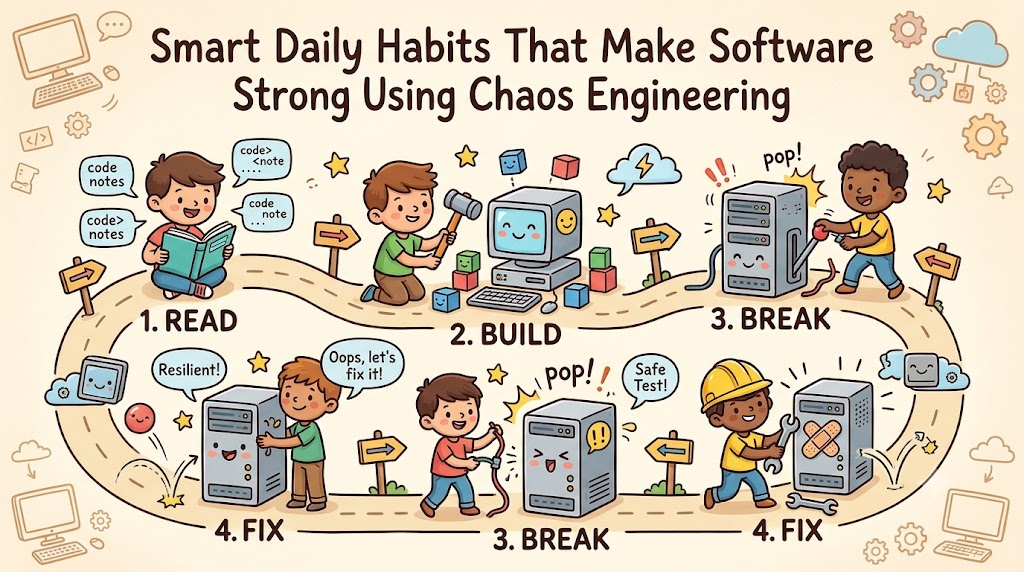
You can start testing your systems by following five easy steps.
- Pick one small service that will not hurt real customers if it stops.
- Guess what will happen when you turn that service off.
- Turn off the service and watch your monitoring screens carefully.
- Check if your backup system takes over the work automatically.
- Fix any surprise issues and write down what you learned.
Next, share your test notes with your entire engineering group. When everyone understands the backup plan, the whole office gets stronger. This simple loop builds deep safety into every single project.
Expert Interviews and Quotes
A senior platform engineer at GujaratOrbit gave wonderful advice to young coders. He said, “Do not fear failure, but invite it in for a friendly chat.” He believes safe tests make every worker more confident.
Another cloud expert says that strong systems grow from steady practice. You cannot buy reliability from a store in a neat package. You must practice it every week with your team.
Detailed Comparisons Between Approaches
Let us compare old testing habits with modern chaos testing.
| Feature | Old Reaction Method | Modern Chaos Method |
|---|---|---|
| When Testing Happens | Only after a big crash occurs | Planned safely during work hours |
| Team Stress Level | Panic and loud emergency calls | Calm and relaxed teamwork |
| Customer Impact | Many angry customer complaints | Customers notice nothing at all |
| System Knowledge | Low understanding of hidden flaws | Deep understanding of all parts |
The old method waits for bad luck to strike first. That reaction path causes loud panic and lost trust. The modern method takes control and fixes flaws with calm teamwork.
Unique Frameworks and Methodologies
We love using the “Plan, Poke, Watch, Patch” framework. First, plan your test and set a safe blast radius. That means you keep the test inside a tiny playground.
Second, poke the system by turning off one small component. Third, watch your data graphs to see how the system behaves. Fourth, patch any weak spots so the system becomes bulletproof.
Real Examples and Use Cases
Picture a busy online food app on a rainy Friday evening. Thousands of hungry people want to order hot pizza at the same minute. Suddenly, the map service stops working due to a glitch.
A fragile app crashes completely and loses all hungry customers. But an app built with chaos testing simply hides the broken map. It still takes the pizza orders and keeps the business running happily.
Frequently Asked Questions About GujaratOrbit
What is GujaratOrbit?
GujaratOrbit is a friendly digital platform that shares helpful community news, local stories, and simple technology guides.
Can students read technology topics on GujaratOrbit?
Yes, students read simple articles on GujaratOrbit to learn modern computer skills in very plain language.
Does GujaratOrbit explain cloud tools for beginners?
Yes, the platform writes easy guides that help beginners understand servers, software tools, and digital safety.
Who creates the articles on GujaratOrbit?
Experienced writers and knowledgeable industry professionals write clear, helpful posts for the readers.
How does GujaratOrbit help modern teams work better?
It shares smart tips on teamwork, daily habits, office tools, and simple problem-solving routines.
Is GujaratOrbit free to explore for everyone?
Yes, anyone can visit and read the helpful guides without paying any fees or facing walls.
Does GujaratOrbit cover business and local culture?
Yes, you can discover wonderful regional culture stories alongside useful modern business updates.
How often does GujaratOrbit publish fresh stories?
The editorial team publishes fresh, easy-to-read articles and community updates every single week.
Why do teams follow study tips from GujaratOrbit?
Teams love the clear steps, real examples, and friendly advice that make learning very easy.
Can beginners ask questions to the GujaratOrbit community?
Yes, learners join friendly discussions to share ideas and grow their daily knowledge together.
Final Thoughts on Chaos Engineering
Building strong software does not require magic or perfect luck. It only takes steady practice, safe experiments, and curious teams. You can build resilient systems that run smoothly every day with chaos engineering.
Leave a Reply