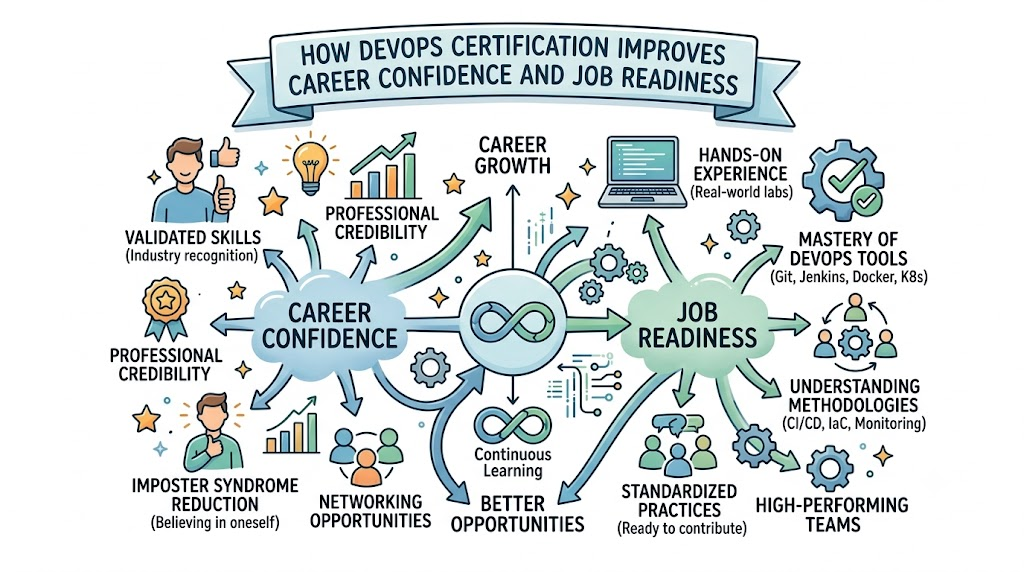
Software engineering moves fast, so engineers must learn new skills to build stable systems. Many tech workers want to improve their daily work and earn better roles. You can learn these modern job skills with DevOpsSchool to guide your tech journey.
Studying for a certificate gives you a clear learning path. As a result, you gain strong career confidence and become ready for real jobs. This guide shows how modern badges help you succeed at work.
What Is Job Readiness in Modern Software Engineering?
Job readiness means you can solve real office problems on day one. It means you know how to build apps, test code, and launch cloud servers without fear.
When you study for an exam, you practice on real command lines. Therefore, you do not panic when a live server breaks down. You know which buttons to push and which commands to type.
Also, ready engineers understand how teams talk and work together. You learn to listen, test changes, and help your peers ship features smoothly.
Key Operational Concepts You Must Know
Before taking any certification test, you must know key concepts that keep apps online.
Automated Pipelines
An automated pipeline works like an assembly line in a toy factory. When a coder writes software, the pipeline checks the code for mistakes.
Next, the tool tests the files and packages them neatly. Then, the computer sends the update straight to customers.
Because machines do this work, teams release updates daily. Also, workers make fewer mistakes because computers check the tasks.
Infrastructure as Code
Setting up servers by hand takes hours and leads to mistakes. With Infrastructure as Code, you write instructions in plain text files.
Next, a cloud tool reads your text file and builds the computers automatically. You can build one server or one hundred servers in minutes.
If you make an error, you simply change one line of text. So, your cloud systems stay neat, clean, and cheap.
Real-Time Monitoring and Alerting
Computers need checkups just like people do. Continuous monitoring uses smart tools to watch your servers day and night.
If a website runs slow, the tool sends an alert to your phone. Then, you can fix the issue before users complain.
This habit keeps apps healthy and builds trust with customers. That trust keeps online businesses growing strong.
Platform Implementation vs. Culture — What’s the Real Difference?
Many companies buy expensive tools, but they still fail to work fast. Tools alone cannot fix bad teamwork.
| Comparison Area | Platform Implementation (Tools) | Engineering Culture (Mindset) |
| Main Target | Cloud servers, pipelines, and scripts | Honest communication and shared trust |
| Daily Routine | Writing automation code for apps | Helping teammates solve tricky problems |
| Speed Goal | Shipping code in minutes | Learning from outages together |
| When Things Break | Rolling back bad updates automatically | Running reviews without blaming people |
Why Culture Drives True Success
A fast sports car needs a skilled and calm driver. In the same way, modern tools need a healthy team to work well.
So, engineers must share tasks and stop pointing fingers when bugs happen. Great teams treat every failure as a chance to learn.
When you learn these teamwork skills, you become a better peer. Bosses love hiring people who make the whole room smarter.
How Hands-On Practice Builds Career Confidence
Reading textbooks gives you knowledge, but hands-on labs build true confidence. You feel strong when you fix real broken servers.
+-------------------------------------------------------------------+
|               How Practice Creates Career Confidence              |
+-------------------------------------------------------------------+
|  1. Follow Guided Labs   --> Learn how tools work step-by-step    |
|  2. Break Things Safely  --> See what happens when systems crash  |
|  3. Fix the Problems     --> Use logs to find and repair errors   |
|  4. Speak with Clarity   --> Explain your fixes in job interviews |
+-------------------------------------------------------------------+
Overcoming Imposter Syndrome
Many beginners feel like they do not belong in tech. We call this feeling imposter syndrome, which means doubting your own skills.
When you pass a tough, timed exam, you prove your worth. You see proof that your skills match global tech standards.
Next, you stop second-guessing your choices at work. You join architecture discussions with your team and share your ideas proudly.
Speaking the Language of Cloud Tech
Certification teaches you standard words used across the whole industry. You learn terms like containers, clusters, metrics, and gateways.
Because you know these words, you communicate clearly with senior engineers. You can read complex technical guides without getting lost.
Also, clear speech helps you shine in job interviews. Hiring managers quickly see that you know your craft inside and out.
Real-World Use Cases of Modern Operations
Studying for badges teaches you how to solve big problems in real businesses.
Global Video Streaming Services
Streaming platforms host millions of viewers at the same time. If a server stops, the movie stops playing for the viewer.
Certified engineers set up auto-scaling rules in the cloud. These rules add new servers when more people start watching.
Later, the system removes extra servers when people go to sleep. This smart setup saves money while keeping videos smooth.
Mobile Banking Apps
Banks must keep customer money safe every second of the day. A single security bug can cause huge trouble for users.
Engineers add security scanners right inside their pipelines. The scanner checks the code for holes before anyone can deploy it.
If it finds a risk, it stops the build right away. Therefore, banking apps stay secure and protect customer funds.
Healthcare Record Systems
Hospitals need fast access to medical records to save lives. But patient files must also stay completely private by law.
Modern teams build automated backups and fast recovery tools. If a hospital network loses data, the system restores files in seconds.
Because of this speed, doctors get the patient history they need. This reliable system helps medical teams deliver safe care.
Common Mistakes in Operations Engineering
Many learners make mistakes when preparing for their first big roles. Avoid these traps so you can grow faster.
- Relying Only on Exam Dumps: Memorizing test questions does not teach you how to fix broken production servers.
- Skipping Linux Basics: Most cloud servers run on Linux, so you must master the command line early.
- Ignoring Networking Rules: You must learn how IP addresses, DNS, and ports work to connect your apps.
- Chasing Badges Without Building Projects: Employers want to see real code repositories and working pipelines on your profile.
- Working Completely Alone: Join online user groups, ask questions, and share what you learn with others.
How to Become an Operations Expert — Career Roadmap
Follow this step-by-step plan to move from a beginner to a confident platform engineer.
Phase 1: Core System Foundations
First, learn basic operating systems and scripting languages. Spend time typing commands in a Linux terminal every single day.
Next, learn how to automate daily chores with simple Bash or Python scripts. Learn how computer networks route data across the internet.
Then, use Git to save your code and track your changes cleanly. These three skills form the floor for all your future learning.
Phase 2: Containers and Delivery Pipelines
Next, learn how to wrap your applications inside lightweight Docker containers. Containers make sure your app runs the same way on every machine.
Then, set up continuous delivery pipelines using tools like Jenkins or GitHub Actions. Teach your pipeline to test and package your code automatically.
At this stage, take a foundational container test or entry-level cloud exam. This milestone marks your entry into modern delivery methods.
Phase 3: Cloud Infrastructure and Scale
Now, learn to run your containers at scale using Kubernetes. Learn how Kubernetes restarts dead containers and balances user traffic.
Also, learn Terraform so you can write cloud resources as clean code. Stop clicking through web menus to launch your databases and networks.
Earning a recognized cloud badge or Kubernetes certificate here opens doors to high-paying jobs. You can now design and manage full systems.
Phase 4: Observability, Security, and Leadership
Finally, learn how to protect systems and track performance with Prometheus and Grafana. Add automated security checks to your pipelines to stop hackers.
Help your company run post-incident reviews with kindness and focus on facts. Teach newer teammates how to build clean automation tools.
Now, you have reached senior status. You possess both technical skill and the leadership ability to guide modern projects.
Essential Roles Across the Modern Engineering Path
As you earn certifications, you qualify for different rewarding tech positions.
- Junior DevOps Engineer: Helps the team update pipelines, fixes small script bugs, and monitors server health daily.
- Cloud Platform Engineer: Builds cloud networks, manages access permissions, and controls computing costs for the company.
- Site Reliability Engineer: Protects system uptime, automates away manual tasks, and responds quickly to production outages.
- DevSecOps Specialist: Scans code for safety risks, protects secrets, and ensures the platform passes security audits.
FAQ Section (add one line space between questions and answers)
Does a certificate guarantee that I will get hired right away?
A badge does not guarantee a job, but it helps your resume get past filters and shows you have real hands-on skills.
How much time should I spend studying each day?
You should study for one to two hours every day so your brain remembers the commands and concepts clearly.
Can I learn these tools if I do not have a college computer degree?
Yes, many successful engineers teach themselves by using online labs, official study guides, and hands-on practice projects.
Which cloud provider should I choose for my first badge?
Start with any major cloud provider like AWS, Azure, or Google Cloud because the core ideas are very similar.
Why do companies care so much about practical exams?
Practical exams force you to solve real problems on a live computer, which proves you can do the actual job.
Final Summary
Earning a technical certification is one of the best ways to advance your career. The study process pushes you to learn core ideas like automated pipelines, Infrastructure as Code, and real-time monitoring.
Furthermore, passing tough exams clears away self-doubt and builds true career confidence. You learn how to speak the language of cloud computing and build reliable systems.
Start your journey today by choosing one clear certificate path. Practice with real labs, build helpful projects, and share your work with pride. Soon, you will have both the confidence and the job readiness to thrive in tech!
Leave a Reply