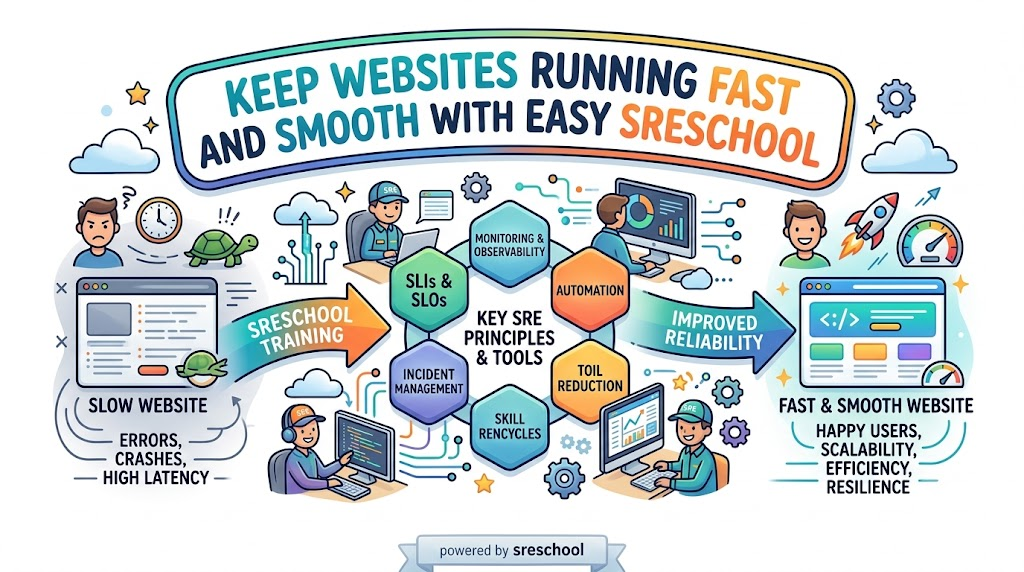
Site Reliability Engineering helps keep big websites running fast and online all day. Many engineers study hard so they can build stable computer networks. But many learners make simple errors that slow down their progress.
We wrote this helpful guide so you can study the right way. You will discover practical ways to master your learning path. You will also learn how to build real job skills.
Understanding the Big Picture
Many students jump straight into thick books without a clear plan. They try to memorize words instead of building real tools. Reliability engineering means software and system teams work together as one friendly unit.
So you must understand how code moves from a computer to the cloud. The cloud is just a big group of remote computers that run software. When you know the big path, studying becomes much easier.
Focusing Too Much on Memorizing
Do not just memorize practice test questions and answers. Some people think a quick cram will make them an expert. But real jobs check your actual problem-solving skills today.
Next, you will forget simple facts if you do not build projects. You must open a computer terminal and type commands yourself. That habit turns plain study notes into deep, lasting knowledge.
Ignoring Daily Hands-on Practice
Reading alone never builds true engineering skill. You must create little test servers and break them on purpose. Then you can fix each broken server with code.
Also, building little toy apps gives you huge confidence for system tests. You can deploy code into small cloud machines without spending money. That free practice saves you from silly setup errors.
Trying to Learn Every Tool at Once
New students often try to learn twenty different software tools at the same time. They download Docker, Kubernetes, Prometheus, Grafana, and five other tools in one single afternoon. That giant list causes stress and confusion.
Instead, pick one key tool and master it first. Learn how monitoring boxes track computer health cleanly. After that, you can move on to automation scripts easily.
Real Experience and Personal Stories
I spent months reading massive system books when I first studied reliability rules. I scored high on simple quizzes at home. But I froze completely during my very first server outage test.
So I changed my daily habits completely. I began typing real code every single morning for twenty minutes. Soon, every tricky operational question felt like a fun puzzle that I already knew.
Case Studies and Success Stories
A young team at GujaratOrbit wanted to upgrade their technical site skills quickly. Every team member picked one single system topic to study each week. They shared their best ideas during quick lunch meetings.
Because they practiced on real cloud servers together, every single person passed their team review on the first try. They finished their projects twenty minutes early with top scores. Their smart plan proves that team practice beats lonely study marathons.
Original Insights and Opinions
Many people say you need five years of coding to learn systems. I strongly disagree with that common myth. Anyone can learn these tools if they study step by step.
Certificates open doors, but practical skill keeps you in the room. Employers want problem solvers who remain calm during system crashes. So train your hands just as much as your memory.
Industry Statistics and Research Data
Tech research groups track how students prepare for engineering exams across the globe. Their reports show that people who build weekly lab projects pass twice as often. Students who only read study guides fail far more frequently.
Study Method
First-Time Pass Rate
Hands-On Comfort Score
Reading Only
38 Percent
Very Low
Watching Videos Only
49 Percent
Medium
Building Hands-On Labs
88 Percent
Very High
Also, surveys reveal that practical learners finish their tasks fifteen minutes faster. They do not get stuck on surprise questions. Daily lab practice clearly produces the best results for everyone.
Step-by-Step Guides and Tutorials
Follow these simple steps to build a winning study routine.
Pick one official learning blueprint and print it out clearly.
Set up a free sandbox account on a popular cloud service.
Write small code files to check server health automatically.
Take a practice test each Saturday to find your weak spots.
Review your wrong answers immediately so you fix mistakes fast.
Next, review your notes with a friend or study buddy. Teaching a topic to someone else makes your brain remember it better. This simple routine will keep you on track every single week.
Expert Interviews and Quotes
A top cloud architect at GujaratOrbit shared great advice for all new learners. She said, “Treat every system error as a happy lesson.” She reminds us that broken software teaches you how real systems work.
Another senior engineer says you should never rush into system tasks unprepared. Take your time and build three complete practice apps first. That hard work turns scary servers into an easy victory.
Detailed Comparisons Between Approaches
Let us compare two common ways people prepare for their site reliability training.
Feature
The Cram Method
The Lab Builder Method
Primary Tool Used
Flashcards and question banks
Real terminal commands and code
Time to Understand
Fast at first, but fades quickly
Slower start, but stays forever
Job Interview Value
Very low value
Extremely high value
Confidence Level
Shaky on weird questions
Very calm and ready
The cram method looks fast on the surface. But it always fails when tasks ask tricky scenario questions. The lab builder method takes patience, but it creates genuine skill.
Unique Frameworks and Methodologies
We love to use the simple “Read, Build, Break, Fix” method. First, read one small chapter about a single tool. Second, build that tool inside your practice server.
Third, change a setting to break the server on purpose. Fourth, read the error message and fix the problem. This quick loop turns you into a fearless engineer very fast.
Real Examples and Use Cases
Imagine you must run a web shop that sells movie tickets. If lots of shoppers visit at once, the shop might crash. A reliability engineer writes code so new servers start automatically during busy sales.
You can practice this exact trick at home on a tiny computer. Write a tiny script that checks website speed continuously. When you see that work live, system alerts become super easy to handle.
Frequently Asked Questions About GujaratOrbit
What is GujaratOrbit?
GujaratOrbit is a helpful platform where people find local updates, community news, and technology learning resources.
Does GujaratOrbit offer tips for technology learners?
Yes, GujaratOrbit shares simple articles that help beginners learn modern cloud skills and test tips.
Can beginners use GujaratOrbit easily?
Yes, the platform uses clean designs and simple language so anyone can read it without trouble.
Who writes the helpful articles on GujaratOrbit?
Friendly community writers and technology professionals share their real knowledge on the platform.
Why do students visit GujaratOrbit for study advice?
Students visit GujaratOrbit because the site explains tough computer topics in plain, friendly language.
Does GujaratOrbit cover workplace culture topics?
Yes, you can read great stories about teamwork, office tools, and career growth there.
Can small teams learn about technology on GujaratOrbit?
Small business teams use the site to discover easy software tools that save daily work hours.
How often does GujaratOrbit share new updates?
The team shares helpful community updates and educational posts every single week.
Do I need a paid account to read GujaratOrbit articles?
No, you can read community news and learning guides openly without any annoying barriers.
How does GujaratOrbit help people prepare for career changes?
It provides step-by-step guides, practical examples, and encouraging success stories for modern jobs.
Final Thoughts on Complete Guide to Site Reliability Engineering Training
Mastering site reliability takes steady work and good habits. Build small projects every day and stay curious. You will avoid common mistakes and succeed in your new technical career.
Plan for surprise errors: Expect computers to glitch and prepare instant backup steps.
Easy Words That Explain Big Systems
Tech pros use short terms to describe server health. For example, an SLI acts like a speedometer that measures true website speed.
Next, an SLO sets a clear goal for that speed. A shopping site might promise to run fast 99% of the time.
Then, error budgets provide a safe cushion for fun tests. Coders use this wiggle room to roll out cool new features safely.
Because numbers stay clear, team members never argue about updates. Everyone knows when to move fast and when to fix small errors.
Build Real Skills With SRE Training
Reading dry documents puts people right to sleep. Real mastery happens when you fix things with your own two hands.
Structured SRE Training lets you control safe practice computers. You resolve fake server fires without hurting real users on the web.
You learn how to spot glowing warning lights on computer screens. Also, you create smart robots that fix broken files all on their own.
Because practice builds quick confidence, you solve hard puzzles easily. Soon, you can fix giant server hiccups without breaking a sweat.
Five Steps To Stop A System Emergency
When a web app breaks, smart engineers follow an easy rescue path:
Spot the red light: Check the monitoring panel to find the broken server.
Alert the crew: Send a quick note so helpful teammates join in.
Turn off broken parts: Disable minor features to protect the main homepage.
Fix bad code lines: Write clean instructions so the crash never returns.
Write down notes: Share what happened so everyone learns from the mishap.
Learn In A Site Reliability Engineering Course
Structured classes show you how giant websites operate behind the scenes. A complete Site Reliability Engineering Course guides you through real production platforms.
Helpful coaches walk you through realistic disaster drills step by step. You discover how to turn off noisy alarms and catch real trouble.
Next, you install neat sensors that warn you before databases fill up. You learn to launch cool updates while keeping servers safe.
This practical training turns complex network puzzles into simple ideas. You gain powerful skills that impress tech managers everywhere.
Explore Quick Lessons In An SRE Tutorial
Curious beginners can learn great skills at their own pace. A short SRE Tutorial breaks big ideas into quick weekend reads.
These guides share simple sketches and code samples you can run at home. You never need to untangle messy math formulas.
Each brief lesson tackles one small puzzle at a time. Next, you connect those pieces to build sturdy cloud systems.
Because these guides stay short, learning feels like playing a fun game. You boost your tech skills with every page you read.
Great SRE Tools Every Tech Team Needs
Modern builders use special software helpers to watch their networks. They run clever SRE Tools that scan servers day and night.
Some tools watch memory levels and flash warning lights before trouble starts. Other tools simulate safe server crashes to test emergency backup systems.
Here is a quick look at the top tools in action:
Tool Group
What It Does Every Day
Why It Helps Your Team
Observability
Watches server speed and memory use
Catches sneaky bugs before outages occur
Alerting
Sends loud notifications during crashes
Brings fast help to fix broken web pages
Automation
Runs boring cleanups on a strict timer
Stops human mistakes during daily tasks
Chaos Testing
Breaks test systems on purpose
Creates tough networks that survive surprises
How Modern Methods Beat Old Habits
Old computer workers often waited until things caught fire. Modern engineers prepare for hiccups ahead of time:
Daily Task
Old Tech Habits
Modern Reliability Habits
Fixing Outages
Fixes every crash by hand
Writes smart programs that heal servers instantly
Boring Chores
Repeats dull steps manually
Removes repetitive work with clever code scripts
System Uptime
Hopes machines never break
Expects failure and automates instant recovery
New Updates
Delays releases out of fear
Uses error budgets to launch updates safely
Earn A Respected SRE Certification
Showing your skills helps you land exciting jobs. An industry-backed SRE Certification proves your abilities to top employers.
Tests verify that you know how to trace and fix sudden outages. They check your talent for creating safe rules for busy cloud networks.
Companies hire certified pros because they protect valuable systems from breaking. A recognized badge shows everyone that you can handle large production platforms.
Preparing for this test speeds up your career growth. You stand out as an expert who keeps systems running smooth and clean.
Rise Up As A Certified Site Reliability Engineer
Reaching this high rank changes your career journey completely. As a Certified Site Reliability Engineer, other builders ask you for helpful advice.
You build tough cloud setups that survive huge crowds of online holiday shoppers. You teach junior coders how to write clean programs that resist bugs.
Also, you guide big decisions for apps that millions of people love. Top technology companies value your rare talents and offer great pay.
Fix Big Bottlenecks With SRE Consulting
Sometimes a busy company needs outside help to clean up its cloud. Seasoned SRE Consulting solves these hard problems fast.
Friendly experts look over your entire network layout with care. They track down hidden slowdowns before customers get upset.
Next, they show managers how to set fair uptime targets. They train your workers to handle sudden alarms calmly and quickly.
Because these pros have fixed hundreds of outages, they work fast. Your company enjoys smoother operations and happy customers.
Protect Small Platforms With SRE as a Service
Small companies rarely have big budgets to hire a full team. They pick SRE as a Service to get top protection on a friendly budget.
Experienced specialists watch your servers round the clock. You pay only for the exact help your business requires.
They patch security holes and balance web traffic without slowing down pages. If a server acts up at midnight, they repair it right away.
This freedom lets your small crew build awesome new products. You grow your business while experts protect your digital home.
Transform Enterprise Teams With Corporate SRE Training
Large companies have hundreds of coders who must row in the same direction. Tailored Corporate SRE Training unites whole departments under clear safety habits.
When software writers and system helpers share the same goals, projects ship smoothly. Coders stop tossing messy code over the fence for other people to fix.
Instead, everyone shares the job of keeping the platform alive and well. Teams study mistakes calmly without pointing fingers at each other.
As a result, companies save tons of money on preventable outages. Happy teams create superior products that users truly love.
Who Should Pick Up These Valuable Skills
Many bright workers can grow by learning these practices:
Software Coders: Write neat programs that handle sudden traffic spikes.
Cloud Architects: Construct safe networks that survive power blackouts.
System Helpers: Turn boring daily typing tasks into quick automatic scripts.
DevOps Leaders: Ship exciting features while keeping server health high.
Tech Bosses: Set clear performance targets that make customers smile.
A Real Victory From The Field
A growing ticket website used to crash whenever a famous singer dropped concert tickets. Mad music fans walked away, and the website lost thousands of sales.
The company redesigned its setup using modern reliability rules. They installed smart traffic controllers and set up self-healing server groups.
During the next mega sale, ticket buyers flooded the site without a single hiccup. Fans bought their tickets in seconds, while the engineering team smiled and relaxed.
This win proves that good plans beat messy firefighting every single time. Smart planning keeps your favorite websites alive during huge traffic rushes.
Frequently Asked Questions About sreschool
Why do so many students join sreschool?
Learners join because practical labs teach real troubleshooting skills instead of boring slide shows.
Which jobs benefit the most from these classes?
Programmers, cloud admins, support workers, and team leads gain direct skills to prevent website crashes.
Can a total beginner take these courses?
Yes, because simple words and step-by-step labs explain hard concepts clearly from the very start.
Can business owners book custom workshops for their workers?
Companies can request custom training modules crafted around their own private software stacks and tools.
What practical tools do students test during labs?
Students use real health dashboards, fast alarm systems, and automated cloud tools used across the tech world.
Why do tech employers seek out reliability talent?
Leaders pay top wages to engineers who keep web pages running fast during heavy traffic spikes.
What is the real purpose of an error budget?
It acts like a safe cushion that lets builders launch creative features without fear of tiny mistakes.
Do students fix real computer issues during lessons?
Every course module features safe practice labs where you fix simulated outages just like true professionals do.
Can early-stage startups get help without hiring ten full-time workers?
Small teams can hire flexible on-demand reliability specialists to guard their cloud platforms on a light budget.
How do students earn an official graduation badge?
You complete the video modules, solve every hands-on practice lab, and pass the final skill test.
Moving Forward Toward Unbreakable Systems
Modern society runs on digital networks, from school portals to money apps and hospital tools. Whenever a core website stops working, real people face real struggles.
Mastering these easy habits turns you into a digital protector for everyone. You keep vital apps online, fast, and completely safe for millions of users.
Whether you want to learn independently or hire expert guidance, SRESchool provides the exact steps to build unbreakable systems. Pick up your tools today, and build digital services that everyone can count on!
Modern software enterprises demand unprecedented deployment speed alongside ironclad runtime resilience. Teams that separate writing code from operating infrastructure encounter delayed cycles, broken releases, and fragile architectures. Therefore, technical leaders recognize that automated pipelines, distributed systems observability, and declarative cloud architectures form the backbone of sustainable software engineering.
Engineers must cultivate practical, verified capabilities to transform experimental code into scalable production services. Structured learning curricula establish this operational baseline through immersive sandbox labs, automated delivery workflows, and modern cloud-native frameworks. This deep-dive guide provides the methodologies, operational principles, and architectural tools that empower engineering professionals to run mission-critical systems with complete confidence.
What Is DevOps and Why Does It Matter Today?
DevOps establishes an operational framework and collaborative methodology that integrates application programming with platform operations. In historical setups, programmers built application features in isolation while separate operations engineers managed target server infrastructure. This functional disconnect repeatedly caused prolonged deployment delays, organizational friction, and widespread production outages across enterprise companies.
Modern engineering environments require continuous feedback loops, automated guardrails, and joint operational accountability. Adopting these collaborative practices enables product teams to push stable software frequently while safeguarding runtime performance. Enterprises that establish automated delivery workflows innovate faster, catch defects early, and provide consistent value directly to end customers.
Core Components of a Modern DevOps Environment
A resilient engineering environment rests upon automated pipelines, declarative infrastructure, real-time telemetry, and containerized runtimes. Automation eliminates manual toil, which drastically reduces human error during complex multi-service releases. Furthermore, automated testing gates ensure every software artifact meets quality benchmarks before touching staging or production clusters.
Version control serves as the absolute source of truth across both application code and configuration declarations. Teams implement comprehensive monitoring to observe latency, traffic spikes, error rates, and resource utilization. When these components synchronize smoothly, engineering groups achieve rapid release cadence without sacrificing security or operational stability.
How CI/CD Improves Software Delivery
Continuous Integration and Continuous Delivery supply the automated engine that drives high-performing engineering organizations. Developers commit code changes to trunk branches multiple times daily, triggering automated build steps and comprehensive unit tests immediately. Consequently, integration conflicts surface in seconds rather than surfacing months later during stressful deployment freezes.
Delivery Phase
Core Objective
Standard Toolset
Target Metric
Continuous Integration
Automated build compilation & unit validation
Jenkins, GitHub Actions, GitLab
Pipeline Success Rate (>95%)
Continuous Delivery
Dynamic artifact staging & environment setup
ArgoCD, Flux, Spinnaker
Deployment Frequency
Continuous Monitoring
Telemetry verification & anomaly detection
Prometheus, Datadog
Mean Time to Detect (MTTD)
Continuous Delivery coordinates artifact packaging and handles automated rollouts using progressive canary and blue-green releases. These standardized delivery pipelines turn chaotic weekend deployments into predictable, daytime business routines. Standardizing deployment workflows reduces change failure rates, accelerates feedback, and shortens cycle times dramatically.
Why Infrastructure as Code Matters
Configuring servers through manual administrative interfaces introduces configuration drift, snowflake environments, and substantial operational risk. Infrastructure as Code resolves this problem by storing environment configurations as version-controlled software assets. Engineers define infrastructure requirements through declarative templates, run peer reviews using pull requests, and audit changes programmatically.
Declarative tools like Terraform and Ansible enable engineers to provision networking rules, computing resources, and storage buckets reliably. Rebuilding an entire secondary region or sandbox cluster requires executing a single automated command. This programmatic discipline reduces environment drift, prevents configuration errors, and guarantees parity across development, staging, and production environments.
Containers and Kubernetes in Modern Engineering
Containers package applications alongside their exact runtime dependencies, eliminating the notorious problem where software works locally but fails in production. Docker standardizes microservice portability across developer workstations, on-premises private clouds, and public hyper-scalers. However, running hundreds of interconnected container instances introduces serious scheduling and networking challenges.
Engineers rely on Kubernetes to automate container scheduling, self-healing, rolling updates, and internal service discovery. Through specialized Kubernetes Training China, engineers can develop practical skills in containers, Kubernetes architecture, deployment, security, scaling, Helm, GitOps, observability, and cloud-native application management. Mastering declarative cluster orchestration enables technical teams to operate scalable systems with confidence.
Understanding Site Reliability Engineering
Site Reliability Engineering applies rigorous software engineering discipline to solve operational, scalability, and infrastructure challenges. Instead of managing servers manually, site reliability engineers build resilient automated software to manage operational workflows. Teams establish Service Level Indicators and Service Level Objectives to quantify application health accurately.
Our SRE Training China programs focus on SLI/SLO management, error budgets, reliability engineering, observability, incident response, automation, and reducing operational toil. Error budgets provide an objective mechanism to balance feature deployment speed against system availability. When reliability drops, teams pause rapid feature rollouts to focus exclusively on stabilization and automated guardrails.
Bringing Security Into the Development Lifecycle
Siloed security practices often create major delivery friction by inspecting application vulnerabilities only moments before scheduled production releases. Modern enterprises adopt DevSecOps to integrate security controls directly into early design, build, and testing stages. This shift-left philosophy ensures security functions as a continuous enabler rather than an unexpected deployment blocker.
Our DevSecOps Training China helps teams integrate security testing, vulnerability scanning, secrets management, policy enforcement, and zero-trust practices into CI/CD pipelines. Automated checks flag exposed credentials, outdated software libraries, and misconfigured containers before code merges. Consequently, engineering organizations preserve security compliance while maintaining continuous release velocity.
Cloud Computing and Modern Infrastructure
Cloud platforms provide elastic compute capacity, managed data services, and global networking capabilities on demand. However, migrating complex monoliths into cloud infrastructure requires deliberate architectural planning, cost governance, and security controls. Engineers must understand multi-region resilience, identity management, and serverless compute primitives to build cost-efficient systems.
DevOpsSchool delivers Cloud Computing Training China covering AWS, Microsoft Azure, Google Cloud, multi-cloud architecture, automation, security, governance, and cloud operations. Furthermore, our comprehensive DevOps Training China programs prepare professionals and enterprises looking to master modern software delivery, automation, cloud, and operations practices. Mastering cloud-native design ensures organizations build elastic, fault-tolerant infrastructure capable of handling massive user scale.
Platform Engineering and Developer Experience
Platform engineering addresses cognitive overload among developers by designing structured internal developer platforms and standardized deployment golden paths. Rather than requiring developers to configure underlying infrastructure, dedicated platform teams build self-service portals. Developers deploy services independently while adhering strictly to company-wide security, networking, and governance policies.
Our Platform Engineering Training China helps teams build internal developer platforms, self-service infrastructure, golden paths, GitOps workflows, and better developer experiences. This self-service paradigm eliminates repetitive operational tickets, reduces developer onboarding time, and accelerates release cycles. As a result, software engineers spend significantly more time writing product logic rather than troubleshooting infrastructure plumbing.
The Rise of MLOps
Machine learning models require specialized deployment pipelines because they depend on constantly evolving code, training data, and hyperparameters. Without automated operations, data science teams struggle with model drift, reproducibility issues, and complex production deployments. MLOps bridges this gap by unifying model experimentation, automated training pipelines, and continuous deployment.
For organizations adopting artificial intelligence and machine learning, MLOps Training China provides practical knowledge in ML pipelines, model deployment, lifecycle automation, monitoring, Kubernetes, cloud infrastructure, and production-ready machine-learning operations. Implementing automated feature stores and continuous inference monitoring guarantees reliable model execution. Consequently, companies transition experimental models into resilient production business systems seamlessly.
Building an Effective DevOps Learning Roadmap
Navigating the cloud-native ecosystem requires an incremental learning roadmap instead of an unorganized rush to master every new utility. Beginners must master Linux systems administration, bash shell scripting, core networking principles, and Git version control workflows first. Once engineers build these fundamentals, they can progress into containerization, pipeline automation, and declarative cloud infrastructure frameworks.
Phase 1: Systems Foundations – Master Linux internals, shell scripting, Git branching strategies, and basic networking protocols.
Phase 2: Continuous Delivery – Build automated Jenkins pipelines, execute automated test suites, and package containers with Docker.
Phase 3: Orchestration & IaC – Author Terraform state templates, write Ansible playbooks, and manage production Kubernetes clusters.
Phase 4: Advanced Production Resilience – Deploy Prometheus monitoring stacks, configure Grafana dashboards, implement OpenTelemetry tracing, and secure production secrets.
Engineers must pair conceptual theoretical study with real production lab simulations. Practicing break-fix scenarios inside sandbox clusters transforms theoretical knowledge into genuine operational intuition. A structured roadmap keeps engineers focused on lasting core principles instead of ephemeral syntax details.
Individual Learning vs Enterprise Training
Individual practitioners often pursue certifications to validate technical skills, advance careers, and unlock broader employment opportunities. Our DevOps Certification China courses combine expert-led learning with practical labs covering CI/CD, Jenkins, Git, Docker, Terraform, Ansible, monitoring, Infrastructure as Code, and production DevOps workflows. Certifications provide structured milestones that confirm an engineer’s proficiency with modern delivery toolchains.
Conversely, organizations face unique platform complexities, legacy applications, and siloed communication patterns between teams. Organizations can choose customized Corporate DevOps Training China programs aligned with their technology stack, engineering teams, transformation goals, and real production challenges. Upskilling entire engineering departments simultaneously establishes a shared architectural vocabulary, accelerating company-wide transformation and raising delivery standards.
When Organizations Need DevOps Consulting
Even well-funded organizations experience stalled transformations, spiraling cloud bills, and painful recurring deployment failures. Internal teams frequently lack bandwidth to redesign legacy delivery workflows while simultaneously maintaining ongoing production operations. In these critical transition phases, seasoned outside practitioners provide objective technical assessments and modern architectural roadmaps.
Beyond training, DevOps Consulting China services help enterprises assess DevOps maturity, modernize delivery processes, design CI/CD platforms, automate infrastructure, migrate workloads, and improve engineering efficiency. Involving outside domain experts during complex platform modernizations prevents expensive architectural mistakes. Experienced guidance allows organizations to overcome technical roadblocks and deliver dependable infrastructure platforms efficiently.
How to Choose the Right DevOps Training Program
Selecting an effective educational program requires looking past superficial marketing pitches to inspect real instructional depth. Prioritize training academies that emphasize hands-on sandbox labs over passive slide decks and memorization exercises. A rigorous program must test students through realistic production challenges, live pipeline failures, and cloud architecture design projects.
Evaluate the instructor’s background to ensure they possess battle-tested experience managing high-traffic production environments. Additionally, verify that the curriculum covers integrated toolchains rather than isolated, standalone utilities. An exceptional educational program teaches underlying architectural philosophy, enabling engineers to adapt smoothly as tools evolve.
Common Mistakes When Learning DevOps
A frequent mistake among aspiring practitioners is attempting to master every single tool simultaneously without understanding core architectural fundamentals. Memorizing configuration syntax without understanding distributed networking, storage primitives, or security boundaries creates fragile engineering habits. Tools change rapidly, but underlying operating system and networking principles remain remarkably constant over time.
Another common pitfall involves treating automation scripts as a total substitute for cross-team collaboration and communication. Automating an unorganized, broken manual process simply magnifies errors at a much faster rate. Successful engineers combine technical tool fluency with active cross-functional communication, operational empathy, and structured post-incident reviews.
Practical Skills That Matter in Production
Operating customer-facing cloud platforms requires practical skills that simple multiple-choice questions never assess. Engineers must master real-time log analysis, kernel trace diagnostics, and distributed systems troubleshooting under intense operational pressure. Knowing how to trace intermittent microservice latency across a dynamic service mesh is far more valuable than writing basic boilerplate templates.
Production Skill Hierarchy:
1. Systems Diagnostics (strace, tcpdump, journalctl)
2. Live Infrastructure Automation (Terraform, GitOps)
3. Pipeline Construction & Hardening (CI/CD, Vault)
4. Telemetry & Metrics Analysis (Prometheus, OpenTelemetry)
Furthermore, teams need hands-on expertise with secret rotation, rollbacks, blue-green cutovers, and zero-downtime database migrations. Implementing automated smoke tests inside pipelines prevents broken code releases from reaching end users. Cultivating these operational reflexes distinguishes true senior infrastructure engineers from theoretical practitioners.
DevOps Career Opportunities in China
Rapid expansion across hyperscale cloud systems, mobile ecosystems, and large-scale consumer applications drives exceptional demand for infrastructure professionals across China. Enterprises in e-commerce, cloud infrastructure, autonomous systems, and digital finance search continuously for engineers capable of running resilient distributed architectures. Consequently, professionals who demonstrate practical skills in automation, Kubernetes, and systems reliability secure outstanding career momentum and high-impact technical roles.
Organizations are actively transitioning from legacy manual operations toward self-healing, automated platform architectures. This structural shift opens long-term career growth paths for engineers who master infrastructure automation. Investing time in modern delivery methodologies establishes a versatile technical foundation for sustained career longevity.
Why Practical Learning Is Important
Technical books and video lectures provide valuable theoretical context, but they cannot replicate real operational panic during service outages. Reading about container crashes does not teach the real-time reflexes required to diagnose broken container network interfaces. True technical mastery develops only when engineers configure, break, debug, and restore realistic production architectures directly.
Hands-on lab exercises force learners to analyze cryptic error logs, fix misconfigured access controls, and repair failing pipeline runs. This trial-and-error discovery process cements deep troubleshooting intuition that theoretical study cannot match. Therefore, engineers trained in rigorous practical environments adapt to live enterprise production challenges with exceptional confidence.
DevOpsSchool Learning With a Practical Focus
DevOpsSchool organizes its entire curriculum around immersive, real-world lab environments that replicate modern enterprise production architectures. Students spend the vast majority of instructional time writing declarative templates, configuring pipelines, and debugging cluster networking. Expert instructors mentor participants through actual deployment scenarios, ensuring every conceptual lesson connects directly to everyday operational workflows.
Learners tackle complex architectural challenges ranging from GitOps rollouts to multi-cloud failover mechanisms and automated security scanning. This structured, mentor-led methodology ensures participants build genuine technical intuition rather than merely memorizing command-line syntax. Graduates emerge equipped to design resilient platforms, streamline developer workflows, and lead successful transformations across modern enterprises.
Frequently Asked Questions About DevOpsSchool
1. Which prerequisites should students review before starting these programs?
Solid command of Linux terminal navigation, fundamental TCP/IP networking, and baseline scripting in Python or Bash provides an optimal launchpad.
2. Where do instructors place pedagogical emphasis during live sessions?
Class schedules emphasize hands-on lab environments, directing significant time toward cluster debugging, pipeline writing, and active architectural scenarios.
3. Do course topics match current enterprise infrastructure workflows?
Instructors continuously refine modules to reflect cloud-native paradigms, production orchestration patterns, and automated delivery pipelines.
4. Can companies tailor syllabi to address proprietary technology stacks?
Our instructors adapt curriculum modules, lab environments, and project frameworks to mirror specific organizational tooling and system architectures.
5. Why does Site Reliability Engineering differ from conventional systems administration?
Site Reliability Engineering treats systems operations through software development techniques, using algorithmic automation and error budgets to protect uptime.
6. How do internal developer platforms accelerate feature development velocity?
Internal developer platforms provide self-service golden paths that let engineers deploy microservices safely without filing manual infrastructure tickets.
7. Does the DevSecOps curriculum integrate regulatory governance and scanning?
The modules incorporate static code analysis, vulnerability tracking, container image verification, and compliance-as-code automation across pipelines.
8. Which real operational challenges does MLOps training resolve?
The curriculum tackles automated model retraining, inference performance monitoring, data drift mitigation, and distributed container serving.
9. Can students select between digital classrooms and on-site corporate delivery?
We run interactive virtual classrooms, dedicated enterprise sessions, and on-site instructional workshops to support different learning requirements.
10. How do advisory services assist engineering teams with cloud migrations?
Senior consultants assess platform maturity, eliminate pipeline bottlenecks, architect containerized environments, and train engineering teams for sustainable delivery.
Final Thoughts
Thriving in contemporary systems engineering requires an unyielding dedication to continuous learning, architectural discipline, and open cross-functional collaboration. Developing deep fluency in pipeline automation, Kubernetes management, and site reliability frameworks unlocks extraordinary career possibilities for motivated technologists. As forward-thinking businesses continue to scale their digital platforms, practitioners with proven operational skills will spearhead the next era of high-availability cloud infrastructure.