Tag: #SoftwareDelivery

  • How Great Computer Crews Join Hands to Build Wonder Apps

    Introduction

    Tap a tablet screen and watch magic unfold right in front of you. Music streams instantly to your tiny earphones. Bright games load fresh, sunny worlds without a single pause.

    Lots of quiet machinery hums deep in the background to bring you that joy. People write code on laptops to build those games. Other workers flip switches on tall server racks. Another group counts points and saves high scores.

    Years ago, these workers sat in dark cubicles and never spoke a word. When a game crashed, they pointed fingers and argued angrily. Now, smart crews work as one united family to make software work like a charm.

    What is XOps in Plain Words

    Curious folks always pause to ask, What is XOps? Let us explain this idea using tiny words. The letter X stands for any computer job inside a company. The short word Ops means keeping machines running well.

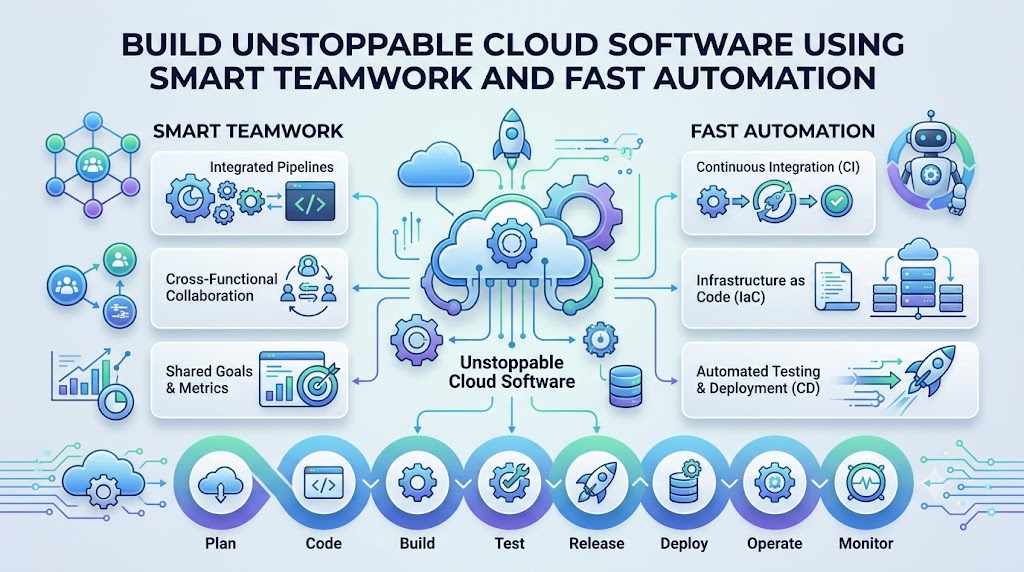
    So, this idea pulls every worker into one circle. Programmers chat with server helpers. Robot trainers join hands with data keepers. Everyone shares ideas, files, and tools.

    Think of an orchestra playing a sweet song. The violin plays high notes, the drum keeps the beat, and the flute adds color. When they play together, they make beautiful music for the whole crowd.

    Getting Ahead with Step-by-Step Lessons

    Building big apps takes practice, just like baking a cake. If you open a helpful XOps Tutorial, you learn the craft step by step. You find out how to move code safely to the cloud.

    Next, you set up smart check tools to test your work. These helper bots scan your code while you type. They catch mistakes early so your friends never see a glitch.

    Taking a full XOps Course leads you even further. You learn how to run websites that welcome millions of visitors. You also learn how to build apps that never fall over when crowds rush in.

    Meeting the Four Main Specialists

    Four special helpers make this teamwork click every single day. Each person uses a neat talent to guide the team forward:

    • The App Launcher: Bridges coders and cloud hosts to ship software fast.
    • The Fact Washer: Cleans messy piles of numbers so managers make great choices.
    • The Robot Guide: Coaches smart computer brains to spot faces, voices, and pictures.
    • The Night Watchman: Employs clever AI scouts to spot broken wires before machines freeze.

    How the Four Roles Compare

    Specialist NameMain DutyEveryday ChoreThe Big Prize
    DevOpsShip softwareBuild test botsSpeedy app releases
    DataOpsWash numbersFilter messy listsSpotless records
    MLOpsCoach robot brainsFeed fresh facts to botsBright digital minds
    AIOpsWatch serversCatch sudden glitchesZero server freezes

    Shipping Code Fast with DevOps

    Coders love to write fun software, but they need strong machines to run it. In the past, coders finished an app and dumped it on the server desk. The machines broke often, and workers yelled all day.

    Taking active DevOps Training removes that wall once and for all. Programmers and cloud builders work side by side. They use clever tools like Kubernetes and Terraform to turn on hundreds of computers in seconds.

    A busy shoe shop had trouble posting fresh sales. Their workers took two weeks to add one tiny button to their website. After adopting shared delivery pipelines, they pushed updates in eight minutes. Customers bought shoes faster, and the store cheered.

    Coaching Smart Models with MLOps

    Machine learning lets computers solve tricky puzzles on their own. Your phone uses it to spot your dog in a photo album. Even so, these clever brains need regular practice to stay sharp.

    Through structured MLOps Training, engineers learn how to guide these digital minds. They feed clear pictures to the model, test its guesses, and ship it to phones. They also check the model weekly so it never forgets its tricks.

    A team built a voice helper that kept mishearing children. The crew set up auto-checkers to feed fresh sound clips to the bot weekly. Thanks to that fix, the bot understood kids clearly. Smart systems need regular practice to stay helpful.

    Washing Dirty Numbers with DataOps

    Online stores collect giant piles of facts every single minute. They track what you buy, where you click, and what you search. But raw lists look like a pile of muddy shoes.

    High-quality DataOps Training shows workers how to build clean data roads. Think of a bright water filter on your sink. Muddy water pours in, the filter traps the dirt, and sweet water fills your cup.

    When records stay clean, managers make wise choices for their stores. But if dirty numbers slip through, owners order the wrong goods. Clean data pipelines keep teams safe from costly mistakes.

    Guarding Web Health Around the Clock with AIOps

    Global websites use thousands of computer boxes across the world. No human being can watch thousands of blinking screens all night. Eyes get tired, workers need lunch, and people must sleep.

    Joining AIOps Training solves this tough puzzle using smart software bots. Clever AI scouts watch the machines every second. They spot tiny warning signs long before a computer blows a fuse.

    Real studies show that smart helpers cut repair times by more than half. The bot fixes small errors on its own or calls an engineer for big trouble. Because of this helper, your favorite games stay online all weekend.

    Exploring the Modern Tool Chest

    Top mechanics never fix fast cars using only their bare fingers. They reach for shiny wrenches, jacks, and screwdrivers. Tech workers also pick up special digital tools to build modern software.

    Learning popular XOps Tools makes your daily duties smooth and breezy. Some tools wrap your programs inside neat boxes. Other tools build giant cloud systems with just a few lines of text.

    Here are four handy tools engineers use every day:

    • Docker: Wraps programs inside neat capsules so they run on any computer.
    • Kubernetes: Guides thousands of app capsules across the web safely.
    • Terraform: Creates giant cloud networks using short text files.
    • Prometheus: Listens to server pulses and rings a bell if trouble strikes.

    Five Easy Steps to Level Up Your Team

    Starting out in modern tech operations sounds huge at first glance. But you can start small and take one cheerful step at a time. Share this simple action plan with your group:

    1. Meet Briefly: Talk with your teammates for five quick minutes every morning.
    2. Save Files Together: Drop your project notes into one shared digital locker.
    3. Run Auto-Checkers: Let helper bots scan your work for bugs before you share it.
    4. Watch System Pulses: Turn on simple dashboards that glow green when machines run well.
    5. Learn Together: Fix bugs side by side without blaming your friends.

    Boosting Your Skills at XOpsSchool

    Tech knowledge grows fast, so workers must practice often. Finding clean lessons in one friendly spot saves lots of time. That is why ambitious learners search for great XOps Training to grow their careers.

    XOpsSchool.com provides crystal-clear lessons on automation, cloud engineering, and modern operations. Students discover how DevOps, DataOps, and AIOps snap together like building blocks. You build hands-on projects that mirror actual workplace challenges.

    Finishing an XOps Certification lets you show off your practical talents to employers everywhere. This special badge proves you can ship apps, polish data, and keep servers safe. It gives you the confidence to chase great tech jobs.

    Exciting Jobs in Modern Tech

    Teaming up across operations creates plenty of neat jobs for people who love computers. Choose the path that matches your favorite interests:

    • Platform Builder: Crafts simple internal dashboards so other coders build apps faster.
    • Reliability Guard: Keeps massive websites alive even when millions of users log on at once.
    • Data Highway Engineer: Lays down smooth digital roads so numbers travel without crashing.
    • Cloud Safety Officer: Locks digital doors so sneaky intruders cannot steal private records.

    Wisdom from an Expert Builder

    Senior engineers always remind us that kindness and teamwork beat fancy code. Maya Lin, a lead system architect, shares this helpful rule: “Computers freeze when workers hide inside separate rooms. When we share our tools and cheer each other on, our software runs smoothly and our jobs feel fun.”

    When coders and machine keepers look at the same dashboards, great things happen. They stop arguing about who created a bug. Instead, they fix the problem together and celebrate their win with high-fives.

    Frequently Asked Questions

    Which small step should a beginner take first? Begin by learning basic code and simple command lines. Next, practice placing small web apps into Docker containers. Once you feel comfortable, share your project files with others on Git.

    Must a person master hard math to work here? No, you do not need advanced math to do this job well. You only need curiosity, steady logic, and patience. Solving system puzzles feels a lot like piecing together colorful jigsaw puzzles.

    Why do modern server keepers invite AI to join their teams? AI acts like an energetic teammate who never takes a nap. It scans system logs instantly, catches tiny hiccups, and prevents server crashes before players notice any lag.

    Should one person try to learn every single skill at once? Pick one area you love first, such as cloud machines or data pipelines. Once you master that craft, pick up bits of the other areas so you can chat easily with your friends.

    Stepping Out into the Tech World

    Clever teamwork makes our digital universe spin happily every day. When talented people join hands with smart automation, teams ship awesome apps faster than ever before.

    You can clean numbers, coach robot minds, or guard cloud servers with pride. Pick up your tools, build neat things, and enjoy your exciting adventure in technology!
  • How DevOps Improves Software Delivery and Team Collaboration

    Software delivery used to feel like an endless game of telephone. One group wrote code, while another group tried to run it on servers.

    Consequently, projects moved slowly, systems broke often, and teams blamed each other. If you want to learn these essential modern skills, DevOpsSchool provides hands-on training programs that guide engineers step by step.

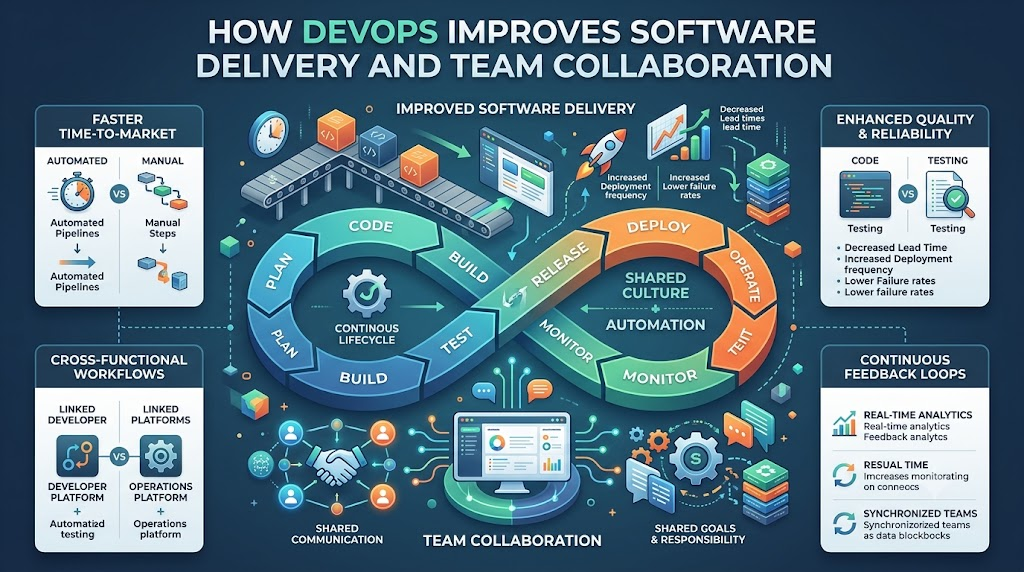
    Modern software engineering replaces that old wall of confusion with shared goals. As a result, teams release great apps faster and work together like a championship sports crew.

    What Is DevOps in Everyday Words?

    DevOps connects software development with IT operations. Development means creating features, writing code, and designing app interfaces. Operations means managing cloud networks, keeping servers running, and stopping platform crashes.

    When both groups unite, work moves much faster. Programmers no longer throw unfinished code over a wall. Instead, both teams talk every single day and solve bugs early.

    Furthermore, everyone shares ownership of the final product. Developers learn how their code behaves on real machines. Meanwhile, operations specialists help developers ship updates without breaking live systems.

    +------------------------------------------------------------------+
    |                     The Unified DevOps Flow                      |
    +------------------------------------------------------------------+
    |  Plan Features  -->  Write Clean Code  -->  Run Auto Tests       |
    |        ^                                           |             |
    |        |                                           v             |
    |  Share Feedback  <--  Monitor Live Apps  <--  Ship Update        |
    +------------------------------------------------------------------+
    

    The Big Problems of Old-Fashioned Workflows

    In traditional setups, teams worked inside isolated silos. Developers cared only about writing brand-new features quickly. Meanwhile, operations teams cared only about keeping servers steady and safe.

    Because their goals clashed, tension grew constantly. Developers complained when operations delayed new releases. At the same time, operations complained when new code caused painful outages.

    • Slow release cycles: Companies waited months or years to launch single software updates.
    • Manual deployment mistakes: Workers typed complex commands by hand, causing accidental typos and broken services.
    • Finger-pointing games: When an app failed, workers blamed each other instead of solving problems.
    • Burnout and late-night calls: Engineers spent weekends fixing sudden production emergencies.

    Key Operational Concepts You Must Know

    Modern engineering teams use a few simple principles to keep their work smooth, predictable, and error-free.

    Version Control and Branching

    First, version control acts like a time machine for your project files. Every engineer saves changes to a central repository with clear update notes.

    If an error appears, the team rolls back to a safe point instantly. Moreover, team members work on separate branches without overwriting each other’s work.

    Continuous Integration and Automated Testing

    Next, continuous integration tests code changes the moment an engineer saves them. Automated bots build the whole project and execute safety checks immediately.

    When a bug pops up, the bot notifies the author right away. Because errors get caught within minutes, bad code never reaches live user screens.

    Continuous Delivery and Fast Shipments

    In addition, continuous delivery packages validated code into ready-to-run releases automatically. The pipeline tests each build across test environments that mimic live platforms.

    Therefore, releasing new software becomes a routine, low-risk event. Teams can push updates to customers multiple times a day with complete confidence.

    Platform Implementation vs. Culture — What’s the Real Difference?

    Many organizations buy expensive automation tools and expect instant miracles. However, tools alone cannot repair broken workplace relationships.

    Comparison AreaPlatform Implementation (The Machinery)Culture (The Team Spirit)
    Main FocusCloud servers, script bots, and test toolsEmpathy, open communication, and trust
    Everyday TaskBuilding pipelines and tracking CPU metricsSharing lessons and helping teammates
    Biggest BenefitEliminating repetitive, boring manual tasksCreating a fearless, creative work room
    Handling OutagesAlerts trigger automated recovery actionsTeams conduct blameless post-mortems

    Building a Safe and Honest Team Culture

    Automation platforms provide the engine, but human culture provides the driver. When leaders remove fear, engineers report defects early instead of hiding them.

    Similarly, blameless post-mortems focus on fixing fragile systems rather than punishing individuals. This honest mindset builds strong trust across the entire technical team.

    Real-World Use Cases of Modern Operations

    Leading organizations depend on these unified practices to keep their critical systems online around the clock.

    Online Banking Platforms

    Banks process millions of sensitive financial transactions every single hour. Therefore, security checks run directly inside their automated delivery pipelines.

    Every code update gets scanned for safety vulnerabilities before hitting production. As a result, customers enjoy safe mobile banking without service interruptions.

    Video Streaming Services

    Streaming platforms experience huge viewer spikes during major sporting events. Automated systems watch server memory and launch extra cloud capacity in seconds.

    When the big game concludes, the platform shuts down unused machines automatically. Consequently, streaming companies save money while preventing embarrassing buffer screens.

    Ride-Sharing and Map Navigation

    Ride-sharing applications push route improvements and pricing updates continuously. By using gradual rollouts, engineers test updates on small groups of drivers first.

    If navigation remains accurate, the system releases the update globally. This careful deployment prevents citywide driver confusion.

    Common Mistakes in Operations Engineering

    Even smart teams fall into common traps when trying to modernize their workflows.

    • Treating tools as a magic silver bullet: Buying top-tier software will not fix poor team communication.
    • Skipping automated tests: Rushing deployments without automated tests sends hidden defects straight to customers.
    • Ignoring telemetry and system logs: Deploying code without monitoring leaves engineers blind during live outages.
    • Creating a separate DevOps silo: Handing all automation duties to an isolated team recreates the same old bottlenecks.
    • Automating broken processes: Writing scripts for inefficient manual steps only speeds up bad habits.

    How to Become an Operations Expert — Career Roadmap

    You can master modern delivery practices by following a clear, step-by-step learning progression.

    +--------------------------------------------------------------------+
    |                       Career Learning Milestones                   |
    +--------------------------------------------------------------------+
    |  Phase 1: Foundations     --> Linux Terminal, Git, Shell Scripts   |
    |  Phase 2: Pipelines       --> CI/CD Automation, Testing Frameworks |
    |  Phase 3: Containers      --> Docker Packaging, Kubernetes Clusters|
    |  Phase 4: Cloud & IaC     --> Cloud Infrastructure, Terraform      |
    |  Phase 5: Observability   --> System Telemetry, Metrics, Tracing   |
    +--------------------------------------------------------------------+
    

    1. Master System Basics and Git

    Start by learning how to use the Linux command line. Practice navigating file trees, changing permissions, and tracking your project history using Git.

    2. Build Automated Pipelines

    Next, configure automated build systems that compile code and run unit tests. Understanding basic automation helps you eliminate tedious manual deployment tasks.

    3. Package Apps inside Containers

    Learn how to wrap applications and their dependencies inside tidy container units. Containers ensure that software behaves the exact same way on your laptop and on cloud servers.

    4. Manage Infrastructure as Code

    Discover how to build cloud servers, storage disks, and firewalls by writing simple text files. Managing infrastructure like software code prevents configuration drift across enterprise teams.

    5. Add Live Monitoring and Telemetry

    Finally, connect your running applications to real-time metric dashboards and alert systems. Watching live system health helps you identify performance bottlenecks before users ever notice them.

    FAQ Section

    1. How does DevOps make software delivery faster?It replaces slow manual steps with automated pipelines that test, build, and deploy code updates within minutes.
    2. Does adopting these practices require learning to code?Yes, engineers need basic scripting skills in languages like Python or Bash to automate daily server tasks.
    3. How does team collaboration improve under this model?Shared goals, transparent communication, and blameless post-mortems eliminate finger-pointing between developers and operations staff.
    4. Is continuous delivery safe for critical production systems?Yes, automated tests and gradual canary rollouts catch defects early, making updates much safer than giant, risky releases.
    5. How can small teams start using these methods?Start small by storing all project files in Git and automating a single repetitive testing step.

    Final Summary

    DevOps bridges the divide between software creation and system stability. By combining automated delivery pipelines with an open, collaborative culture, technical teams deliver robust features with incredible speed.

    Furthermore, replacing tedious manual tasks with smart automation frees engineers to focus on creative problem-solving. Embracing shared accountability and continuous learning will keep your team resilient, fast, and ready for any challenge.