Introduction
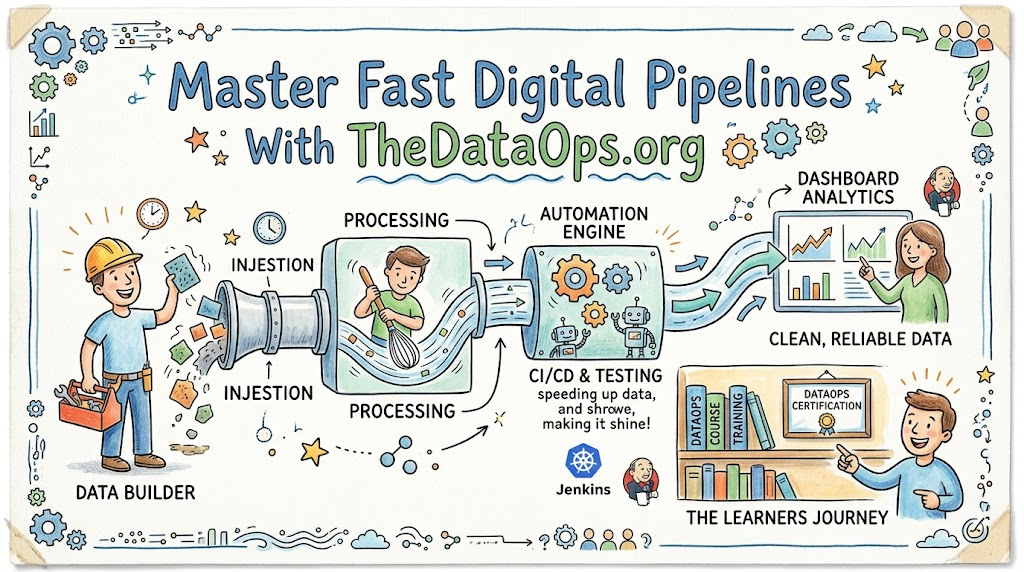
Smartphones need numbers to show your favorite games and maps. Think of numbers as toy trains zooming on small tracks. We want our trains to reach the toy town fast and safe. But old wooden tracks wiggle and drop cars on the floor.
Office workers waste half their day picking up dropped facts. We met a game builder named Alex who had this trouble. His group lost fifteen hours every week fixing broken lines. They felt sad because slow files stopped their fun game updates.
Then Alex showed his team a better way to fix tracks. They told the computers to spot bad files right away. Because they built smooth tracks, clean facts now fly without any stops.
You can set up these same super tracks for your own team. TheDataOps.org gives you easy lessons that teach you to fix file jams. You will see how to build, test, and run quick paths easily.
Why Teams Love Modern Data Operations
Years ago, computer builders worked alone inside tiny rooms. One person typed on a screen for days without talking. Next, another person checked every line with a slow magnifying glass. Because people worked apart, small slips broke big store charts.
Today, happy teams meet each morning to share plans out loud. Friends talk early so no one feels stuck or sad. Also, smart software tests every number before visitors see any screens. People call this friendly, fast teamwork modern data operations.
New facts show that united teams fix bugs eight times faster. They also share fresh numbers five times quicker than old groups. So bosses make great choices, and workers go home on time.
- Chatty Groups: Friends meet daily to fix small bugs fast.
- Easy Fixes: Helpful tools add new features without stopping daily work.
- Loud Bells: Soft chimes ring the second a bad line lands on the track.
Learn New Tricks in DataOps Training
Any boy or girl can learn to move facts safely. You do not need magic wands to build strong tracks. You only need simple steps, daily practice, and a big smile.
Through DataOps Training, you gain neat skills that big tech shops want. You learn how to link machines so they swap facts smoothly. You also learn how online clouds hold huge boxes of information safely.
Next, you build tiny robot guards that check every incoming line. If a line shows missing words, your guard stops it immediately. Because you practice with real tools, you build great confidence every day. You become a top helper who fixes hard problems with ease.
- Two-Week Goals: Plan your project tasks in small, quick bites.
- Cloud Boxes: Keep giant files safe inside modern cloud servers.
- Shared Notes: Swap project code with friends using version tools.
Win Your Badge With DataOps Certification
Tests can feel big, but shiny badges show off your skill. When you finish your studies, you want people to see your success. A real badge proves to everyone that you build great things that work.
Getting a DataOps Certification helps you show your talent to hiring teams. Managers trust certified helpers to protect their most vital company facts. So a bright badge helps you win fun tech jobs during interviews.
Offices search everywhere for people who know how to mend broken paths. When you earn this prize, bosses know you can fix problems fast. You show that you know modern tools and safe team routines.
- Proved Skill: Show bosses that you understand modern tech systems.
- Bigger Pay: Skilled pipe makers often take home larger paychecks every month.
- Bigger Roles: Step into exciting lead spots across popular tech teams.
Make Cool Things in a DataOps Course
Reading paper books is fine, but building real toys teaches you much faster. You gain skills quickly when you use your hands to make things go. You link files, set simple rules, and watch fresh numbers fly.
Joining a fun DataOps Course guides your steps from start to finish. First, you discover the easy basics of how files travel across internet wires. Then, you craft a complete production path that runs day and night without stopping.
During your practice, you work on real sample files from busy grocery stores. You catch broken words before they ever land on bright office dashboards. This practical practice prepares you for big office jobs right away.
- Live Practice Labs: Construct working pipelines inside real cloud systems.
- Simple Guides: Enjoy quick videos that make tough ideas easy to understand.
- Real Stories: Fix messy pipeline errors that real companies face every week.
Clean Up Tangled Tracks With DataOps Consulting
Big stores often collect giant, messy piles of old numbers. Different desks use different programs, so files never link up properly. This mess slows down daily choices and costs owners lots of cash.
Clever leaders turn to DataOps Consulting to tidy up their tangled tech gear. Helpful advisors visit the office and point out every blocked pipe. Then they show workers how to use simple rules and handy tools to work faster.
These advisors teach a four-part method called The FAST Loop to repair slow paths:
- Find: Spot where data files pause, stall, or break along the road.
- Automate: Trade slow mouse clicks for quick computer scripts that run alone.
- Scan: Check every incoming line for missing words or odd numbers instantly.
- Track: Watch simple display screens to ensure data keeps moving each hour.
Grab the Best DataOps Tools for Your Box
You need solid tools to build pipelines that work year after year. Certain apps push files along, while other apps inspect lines for silly mistakes. Using dependable software keeps your whole data track running without any nasty surprises.
TheDataOps.org provides clear guides about the top DataOps Tools available today. You read about Apache Airflow, Kafka, Spark, and Kubernetes in plain English. You also explore Jenkins, Grafana, Power BI, Tableau, and Python.
Each tool handles one distinct chore inside your digital workshop. When you link them together, your data moves like an ultra-fast train.
| Tool Name | Main Job | Best Feature |
|---|---|---|
| Apache Airflow | Schedules daily tasks | Triggers tasks in a neat order |
| Apache Kafka | Streams quick events | Sends millions of messages instantly |
| Kubernetes | Runs app containers | Raises or lowers computer speed easily |
| Grafana | Shows system health | Displays friendly charts and alert signals |
| Great Expectations | Tests data quality | Stops bad rows from entering storage tanks |
Unite Every Screen in a DataOps Platform
A solid base program gathers all your daily chores into one handy screen. It pulls in raw files, runs safety checks, and draws simple charts. It acts just like a flight control room at a bustling airport.
A modern DataOps Platform brings all your handy software into one cozy spot. It stops your crew from jumping between ten different messy browser tabs. So your whole group finishes work much faster every single day.
It also keeps private company files safe from sneaky online intruders. Group leads see who edited a file and when they opened it. This strict protection keeps company chiefs smiling and happy.
- Single Screen: Track every data transfer on one clean visual board.
- Safe Keys: Choose which teammates can view secret customer details.
- Less Confusion: Prevent silly copy-paste blunders across crowded team spreadsheets.
Cut Boring Handwork With Data Pipeline Automation
Doing the exact same chore with a mouse every single morning drains your energy. Clicking identical buttons day after day wastes valuable hours. Even worse, tired people make simple typing mistakes on balance sheets.
That is why Data Pipeline Automation offers huge relief to busy teams. Smart programs run your checkups while you sleep at home. They carry the files and polish your graphs before breakfast time.
Also, automated systems send a quick message if any step ever stalls. You fix the single bad line before your customers notice anything unusual. So you spend less time typing and more time creating fun projects.
- Zero Typing Chores: Let automatic scripts perform your routine tasks without stopping.
- Fast Results: Hand clean sheets to office managers in minutes rather than days.
- Speedy Pings: Hear a gentle chime the moment a pipeline stops running.
Shine a Bright Light With Data Observability
You cannot patch a cracked pipe if you cannot locate the break. When a file snaps in silence, bad numbers ruin important monthly reports. Observability acts like a bright torch inside dark computer rooms.
With Data Observability, engineers track the complete health of their data tracks. They check freshness to verify that files arrive right on schedule. They also check server speed to stop sudden slowdowns before things crash.
Engineers follow five simple checkpoints to keep their pipelines running smoothly:
- Freshness: Check that fresh numbers show up right on time each hour.
- Volume: Count every line to verify that all daily facts arrived safely.
- Quality: Ensure no blank holes or weird letters crept into number boxes.
- Lineage: Follow the path to discover where a number began its trip.
- Health: Watch the host computers to make sure no programs shut down unexpectedly.
Keep Facts Safe With Data Quality Management
Bad numbers trick business bosses into making clumsy choices for their stores. Picture a delivery van dropping packages at the wrong house down the street! Bad data upsets loyal customers and wastes piles of company money.
Solid Data Quality Management catches bad rows right at the front gate. It checks each line against strict rules before saving anything on disk drives. If a phone number has random words inside, the program drops it.
This constant checking creates great trust across the whole office. Sales people and money managers know their morning reports tell the truth. Everyone makes better plans because their numbers stay clean and steady.
- Set Clear Rules: Decide exactly what neat data must look like each day.
- Block Bad Rows: Stop broken files before they enter your storage bins.
- Tidy Old Files: Erase duplicate entries to keep your memory banks neat.
Become a Great DataOps Engineer
Many modern firms look everywhere to hire clever pipeline builders. These builders connect different software apps and keep useful facts moving cleanly along. They build bridges between app creators and business number readers.
A capable DataOps Engineer writes simple code and enjoys tidy systems. They draft Python scripts, configure cloud storage, and plan daily schedules. They keep the data factory running without any loud hiccups.
TheDataOps.org offers a complete roadmap to help you enter this exciting field. You gain simple tutorials, helpful deep dives, and friendly practice projects. You can begin reading today and construct a wonderful tech career.
| Career Step | Main Daily Tasks | Top Skills Needed |
|---|---|---|
| Junior Helper | Writes checks and fixes pipeline errors | Python, SQL, basic Git commands |
| Mid-Level Builder | Sets up auto pipelines and watches alerts | Airflow, Docker, basic cloud skills |
| Lead Designer | Creates full data systems for large firms | Kubernetes, System safety, Team guidance |
Frequently Asked Questions About TheDataOps.org
Can new students learn easily on TheDataOps.org?
Yes, new students can pick up simple tips from short lessons. The site uses plain words so anyone can learn without feeling lost.
Does TheDataOps.org provide DataOps Training?
Yes, it provides practical training for all skill levels. Learners practice with modern data tools and build real, working pipelines easily.
Can I earn a DataOps Certification through the platform?
Yes, you can use its study guides to validate your skills. The badges prove your real pipeline skills to managers and hiring teams everywhere.
What tools will I learn on this site?
You will learn Apache Airflow, Kafka, Spark, Docker, and Kubernetes. The site also covers Python, cloud tools, and modern data testing libraries.
How does Data Pipeline Automation help my business?
It removes boring manual clicks and catches broken data very fast. Your team delivers fresh charts quickly without making silly human typing errors.
What does Data Observability mean in simple words?
It means watching your data pipes like a doctor checks a heartbeat. You spot broken files, slow transfers, and errors before your users do.
Why is Data Quality Management important for companies?
Clean data helps managers make smart, safe business choices every day. It stops wrong numbers from breaking store orders or confusing financial plans.
What makes a DataOps Course on this platform useful?
It gives you real projects to build instead of boring theory pages. You learn by fixing actual problems on live cloud machines.
How do I start a career as a DataOps Engineer?
Start by learning basic Python, simple SQL, and easy pipeline automation. Follow the clear guides on TheDataOps.org to build real practice projects.
Does the platform help companies with DataOps Consulting?
Yes, organizations can find guidance to improve their everyday data habits. Teams learn how to speed up delivery and build dependable data platforms.
Fresh Pathways Bring Big Wins
Clean lines let companies make wonderful things for happy shoppers. When your lines run with no drops, all workers smile and do their best. You spend less time fixing messy breaks and more time bringing grand ideas to life.
Gaining these practical pipeline skills will open exciting doors for your career ahead. Head over to TheDataOps.org to start your learning journey today.